


1. Market Trends: Home Elevators Are Becoming Standard
The UAE villa elevator market is in a phase of robust growth. The UAE elevator and escalator market reached 16,153 units in 2024 and is projected to grow to 19,137 units by 2030, at a CAGR of 2.87%, with the residential sector accounting for the largest share-38. Demand is particularly strong in Dubai and Abu Dhabi, driven by extensive luxury villa construction and rapid adoption of smart-home technologies-2.
Perhaps the most significant change is perceptual. Home lifts were once linked primarily to prestige homes, but are now increasingly treated as part of practical home planning in the UAE residential market-1. As Abdullah Younis, Managing Director (MENA) at Cibes Lift LLC, puts it: "In Dubai and Abu Dhabi, homeowners are approaching home lifts in a more practical way than before. They are looking not only at design, but also at long-term usability, local support, and whether the supplier has real experience in the UAE market."-1
Key drivers include aging-in-place and accessibility for multigenerational households, everyday convenience for carrying groceries and luggage between floors, and the lift as a design feature that complements contemporary interiors-37. Research indicates that the luxury home elevator segment in the UAE will grow at nearly 8% annually, well above the overall market rate-.
2. Main Elevator Types: Which Suits UAE Villas Best?
Four main technologies dominate the UAE villa elevator market, each with distinct trade-offs-4.
Screw-driven lifts are the most mainstream choice for UAE villas. An electric motor turns a nut that travels along a fixed steel screw, moving the platform or cabin up and down-4. The key advantage is that the drive system is integrated within the shaft, requiring no separate machine room and, in many models, no pit—allowing installation on finished floors. Modular shafts in glass or steel can be installed in as little as 5 to 10 days-32. Cibes offers 41 sizes starting from 1 square metre, serving up to six stops-1.
Vacuum (pneumatic) lifts have emerged as a growing option. A turbine at the top creates pressure differences that move the cabin, requiring no pit or shaft and offering exceptional installation flexibility-4. However, the round cabin limits capacity and size options. In the UAE, vacuum lifts have moved from a novelty to a genuine mainstream option for villa owners-5.
Traditional traction lifts are scaled-down versions of commercial elevators, offering larger cabins and higher speeds, but typically need a built shaft, a pit, and more space-4.
Hydraulic lifts hold a share of the UAE residential market, suited to low-rise homes but with higher noise levels and long-term maintenance costs-.
For most UAE villas, screw-driven lifts are considered the best fit due to their pitless design, fast installation, and high space efficiency-4.
3. Installation Process: From Survey to Handover
Villa elevator installation in the UAE follows a clear process. It begins with a technical site survey assessing space, floor openings, ceiling height, and electrical supply-13. The supplier then prepares engineering drawings showing footprint, openings, and structural requirements.
Approvals from local authorities may be required depending on the emirate and community. Dubai follows the Dubai Universal Design Code, while Abu Dhabi applies the Abu Dhabi International Building Code-13. Some projects require a No Objection Certificate from Dubai Municipality or the relevant community developer-.
Once approved, installation begins. With self-supporting modular shaft systems, civil work is minimal—typically limited to opening floors, levelling the base, and ensuring power supply matches lift requirements. Factory-trained technicians typically complete a 2-3 stop installation in 5 to 10 days-32. Safety testing follows, including sensor checks, emergency lowering verification, and full system testing before handover-13.
4. Safety Standards and Compliance
The UAE's villa elevator safety framework combines international standards with local regulations. The core international standard is EN 81-41, which applies to electrically powered vertical lifting platforms, covering screw-and-nut, traction, and hydraulic drives, and is intended for use by persons with impaired mobility-23. The UAE Fire and Life Safety Code, issued by UAE Civil Defense, also sets fire safety requirements for home lift installations-13.
In Dubai, every lift must be under a maintenance contract with an approved company and pass annual third-party inspection by an EIAC-accredited body independent of the installer-. Abu Dhabi enforces detailed requirements for accessible elevator dimensions and door-open times through the Abu Dhabi International Building Code, administered by the Department of Municipalities and Transport (DMT)-.
When choosing a lift, homeowners should focus on several safety dimensions: drive and stopping method, door interlocks and obstruction protection, emergency lowering and communication, rated load and usable space, and the maintenance plan-23. Request full compliance documentation at handover and personally test the emergency lowering procedure.
5. Cost Budget: How Much Should You Prepare?
Home elevator prices in the UAE span a wide range. 2026 market guidance places the broad market at approximately AED 70,000 to AED 300,000, with Cibes configurations at about AED 80,000 to AED 250,000-. Price varies significantly by technology: open platform lifts start from around AED 35,000, while cabin-style models begin at AED 120,000-.
Core cost factors include drive system type, number of stops, cabin finish level, shaft type and material, door configuration, and the extent of civil work required-. It is important to note that the lift unit itself is only part of the total project cost. Homeowners should budget for approval fees, civil modifications, electrical upgrades, and ongoing maintenance.
6. Design Trends and Smart Features
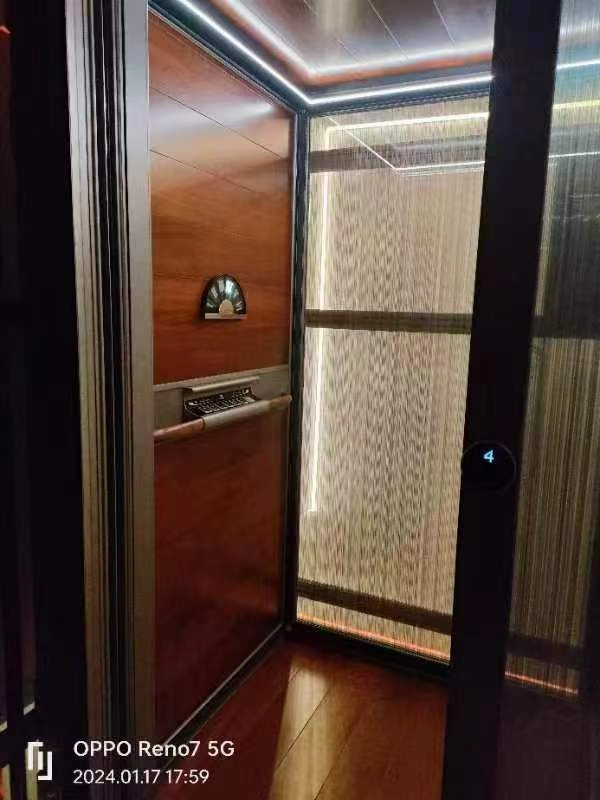
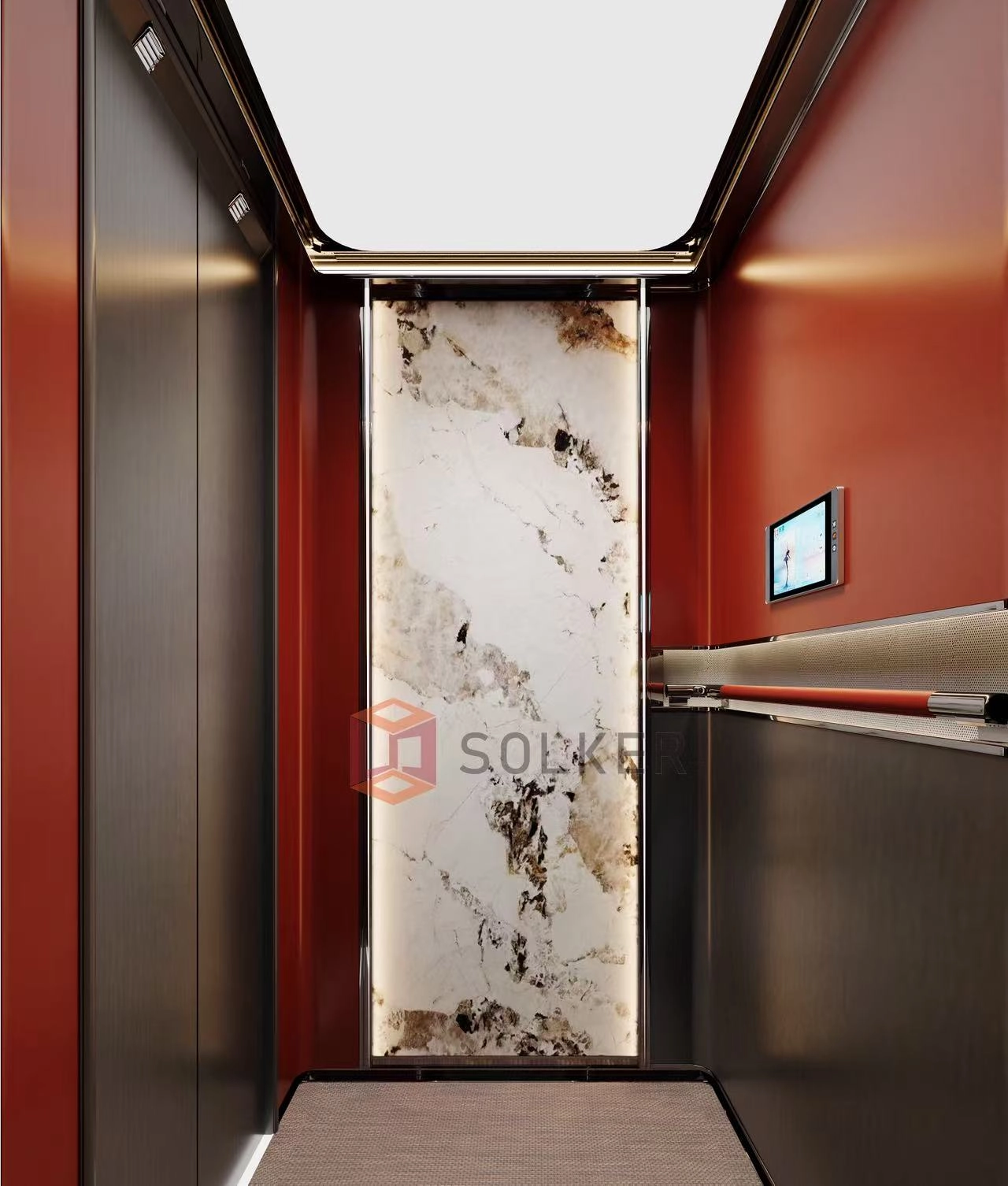
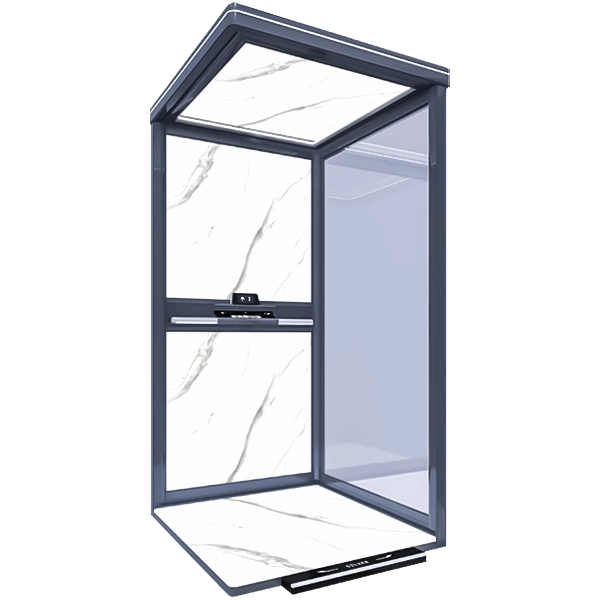
Several distinct design trends are shaping UAE villa elevators today. Panoramic glass elevators are among the most popular categories, with transparent cabins that introduce natural light, open sightlines, and serve as a visual centrepiece-37. Custom interiors are equally sought after—from wood veneer and brass handrails to leather wrapping and backlit panels, homeowners increasingly want the lift to harmonise with the overall interior design-37.
On the smart technology front, modern home elevators commonly support smartphone controls, wireless remotes, and home automation integration. Newer models feature touchscreen control panels that support custom screen backgrounds, lighting control, fan control, child lock, and floor naming-. Some brands have introduced IoT-based remote monitoring and predictive maintenance capabilities, allowing homeowners to track lift status in real time-.
Conclusion
In the UAE villa market, home elevators are transitioning from "nice-to-have luxury" to "worthwhile practical investment." When selecting a lift, the most important considerations are not the flashiest brand or the most elaborate features, but a rational assessment of your home's spatial constraints, your family's long-term needs, and the supplier's local service capability in the UAE. A thoughtfully specified home elevator enhances everyday living and adds lasting value to your property.




 Taiwan, China
 No. 21, Lane 38, 206 Yingtai Road, Yingge District, New Taipei City
 +886 0975-299-830
 United Arab Emirates
 Ceo@maharacare.com
 Melbourne, Australia
 19/12 Natalia Av, Oakleigh South, VIC 3167
SOLKER
SOLKER