


A Home Elevator Buyer‘s Guide for Chinese Villas: Safety First, Aesthetics Later
Home elevators are shifting from a luxury to a practical necessity for many Chinese villa owners. But residential lifts differ fundamentally from commercial elevators in standards, sizing logic, and maintenance requirements. This guide covers five essentials—national certification, drive systems, space planning, brand after-sales, and routine maintenance—to help villa owners in China avoid the most common pitfalls.
1. Standards Before Aesthetics
The first line of defense is compliance. China’s dedicated home elevator standard is GB/T 21739-2025, Safety Rules for the Construction and Installation of Home Lifts, effective March 1, 2026. It applies to home elevators with a rated load not exceeding 400 kg, a speed not exceeding 0.63 m/s, and a travel height not exceeding 18 m-9. A compliant villa elevator should carry clear documentation of conformity. Many low-cost products silently downgrade commercial standards and omit critical safety features—always request certification documents before signing.
Three safety features are non-negotiable: door-lock interlocking (the car will not move unless the door is fully closed), floor positioning (the door will not open unless the car is at the designated level), and anti-pinch protection (the door reverses upon detecting an obstruction)-2. Automatic rescue on power failure is also strongly recommended: the system should bring the car to the nearest floor and open the doors within 10 seconds of an outage. For households with elderly residents riding alone, this feature alone justifies the investment-2.
2. Drive Systems: Three Main Technologies
The Chinese villa elevator market is dominated by three drive types: traction, screw-driven, and hydraulic.
Traction elevators are the mainstream choice. They run smoothly with low noise and moderate speed, but require a dedicated shaft, pit, and sufficient headroom—the highest civil-work demand of the three-19. Best suited for new-build villas with adequate shaft provision.
Screw-driven elevators use a nut-and-screw mechanical engagement that, by physical design, cannot free-fall-2. They require no pit and no machine room, with a minimum footprint of approximately 0.9 m², making them ideal for retrofits and space-constrained projects-2. The trade-off is slower speed (typically 0.15–0.3 m/s) and long-term screw wear under load-19.
Hydraulic elevators offer high load capacity but need a separate pump station and a deeper pit, and carry hydraulic fluid leakage risks. They are increasingly rare in newly delivered villas-19.
A practical rule: if there are elderly residents or long-term self-occupancy is planned, the safety redundancy and civil-work friendliness of screw-driven systems merit serious consideration. If ride quality and speed matter most and civil conditions allow, traction is the proven option.
3. Shaft Dimensions: Err Larger, but “Adequate” Beats “Oversized”
Shaft sizing is where villa owners most often regret their choice. Many select the smallest specification to save budget, only to find that a wheelchair cannot enter, furniture is difficult to move, and a stroller must be folded to fit-5.
A reasonable benchmark: traction elevators should have a shaft net dimension of at least 1,600 mm × 1,600 mm to accommodate a standard car and wheelchair access-19. Screw-driven units can be as compact as 1,200 mm × 1,200 mm, though the car area is limited to one or two occupants-19. If conditions permit, going above 1,200 mm × 1,200 mm significantly improves long-term usability-5.
Shaft planning must be completed during the design phase. Pit depth, headroom, and power supply location—over 20 parameters in total—should be locked in before civil works begin. The cost of post-hoc rectification far exceeds any upfront “waste” in reserved space-.
4. Brand and After-Sales: The “Second Half” Matters More
A villa elevator has a service life typically exceeding 15 years, making after-sales support more consequential than the purchase price. Confirm three things: whether the brand has a direct or authorized service network in China, whether spare parts inventory is adequate, and whether response time commitments are explicit-2.
The worst scenario is choosing a low-cost out-of-town brand, only to wait days for a repair technician when the elevator breaks down-5. Prioritize brands with local service coverage—a slightly higher price buys far greater long-term certainty.
In the current Chinese market, imported brands such as Cibes and Aritco offer mature screw-driven product lines, while domestic players like Longchuang and Vitarte cover integrated solutions and high-end customization respectively. Showroom visits are far more informative than spec-sheet comparisons-. Equipment-plus-installation pricing for mainstream villa elevators typically falls in the RMB 100,000–200,000 range. Prices significantly below that often signal compromises in safety configuration-.
5. Maintenance: No Mandatory Annual Inspection, But Never “No Inspection”
Chinese regulations currently impose no mandatory annual inspection requirement on home elevators, but that does not mean maintenance is optional-38. The core objective is keeping the safety system, core components, and emergency functions continuously effective. At least one professional on-site maintenance visit per year is recommended, with higher frequency for heavier usage-38.
Maintenance should focus on: functional testing of safety devices (governor, buffers, door locks), wear inspection of drive components, and verification of the electrical control system and power-failure rescue device-38. Non-professionals must never dismantle or adjust safety devices—unauthorized adjustment of a governor spring, for instance, can render the safety protection entirely ineffective-.
The bottom line: A villa elevator is not “buying a machine”; it is “choosing a long-term safety solution.” Hold the national standard as your baseline, select the drive type and dimensions according to your household’s actual needs, and anchor after-sales support in a local service network. Get these three steps right, and the rest is easy.
FAQ
Can I still install a villa elevator after the house has been fully renovated?
Yes, subject to on-site assessment. A screw-driven elevator is the optimal solution for retrofitting a renovated villa. The biggest obstacle to retrofitting a renovated villa is civil-work damage: traction elevators require a deep pit (typically 300 mm or more), and excavation would destroy existing underfloor heating, waterproofing layers, and basement structures—an extremely costly proposition. Screw-driven elevators require no deep pit—only a 50 mm shallow pit or even flat-floor installation—and no machine room overhead. With an integrated shaft, they can be flexibly installed in stairwells, corners, or light wells. Installation time is also dramatically shorter, typically just 3–5 days. That said, feasibility ultimately depends on a site survey. Have a professional team assess the installation location, power supply, and structural load-bearing capacity before making a decision. With proper planning and professional evaluation, a fully renovated villa can still accommodate a home elevator.
How often does a home elevator need maintenance, and what does it cost annually?
The standard maintenance cycle is quarterly routine service plus an annual deep inspection, with annual costs typically ranging from RMB 2,000 to 6,000. Home elevators follow a completely different maintenance logic from commercial ones. Public elevators require service every 15 days due to heavy, all-day usage; home elevators have low loads and fewer start-stop cycles, so quarterly maintenance meets safety standards. Quarterly service covers door operation, button sensitivity, guide rail lubrication, brake devices, and emergency lighting. The annual deep inspection focuses on core safety components: traction system, safety gear, buffers, main control system, and wiring aging. For high-usage households or elevators in damp locations, monthly-to-bimonthly service intervals are recommended. In terms of cost, annual routine maintenance typically ranges from RMB 2,000 to 6,000, with manufacturers often providing free service during the warranty period. Traction elevators also incur periodic parts replacement costs: wire ropes every 5–8 years (RMB 3,000–5,000), and door operator belts and lock assemblies every 3–6 years (RMB 800–2,000). Notably, there is no mandatory annual inspection requirement for home elevators in China, but for safety, keeping maintenance records and conducting regular safety function tests is strongly advised.
For a household with elderly residents, is a screw-driven or traction elevator more suitable?
First check the two hard constraints—shaft size and headroom—then consider comfort and long-term cost. For households with elderly residents, ride smoothness and emergency safety are the top priorities. The first step is not comparing product specifications but assessing on-site conditions. If the shaft is size-constrained (e.g., smaller than 1.2 m × 1.2 m) or headroom is under 2.6 m, a screw-driven elevator is the only feasible option—its minimum installation footprint is 0.9 m × 1.0 m, with virtually no headroom requirement since the drive unit is integrated into the car side. If shaft and headroom conditions are adequate, traction elevators offer clear advantages in ride smoothness, load capacity, and long-term operating costs, providing a more comfortable experience for elderly passengers. On safety, each drive type has distinct strengths. Screw-driven elevators rely on mechanical nut-and-screw engagement and cannot free-fall by design, offering the highest physical safety margin. They also come standard with backup batteries that allow approximately 50–80 additional trips after a power outage. Traction elevators use governor-and-safety-gear linkage for overspeed protection and run more quietly and smoothly, but depend more heavily on power-failure rescue devices—when purchasing, confirm that automatic rescue on power failure is standard, not optional. If both types are feasible, a practical criterion for elderly households is this: the elderly passenger‘s sense of psychological security matters more than speed. The slow, self-locking motion of a screw-driven elevator often gives older users greater peace of mind than a traction elevator. Bring the elderly family members to experience both types in person before making a final decision.
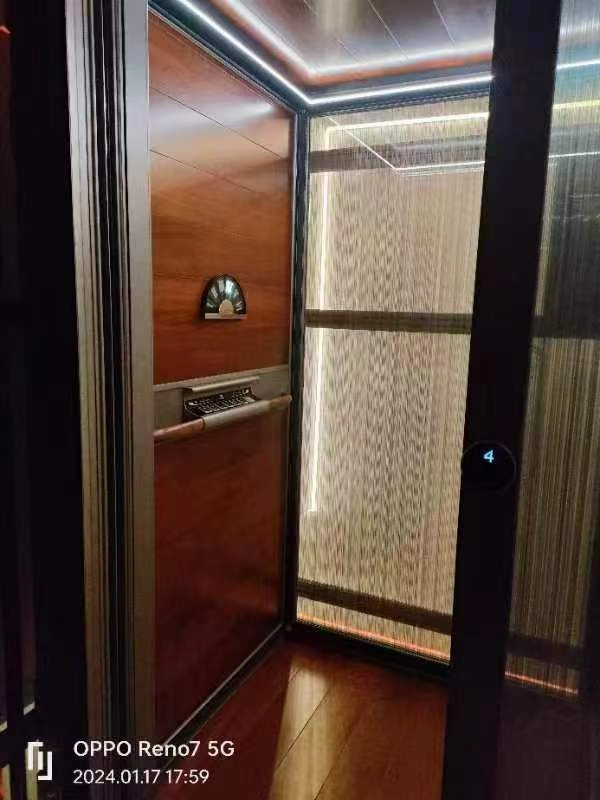
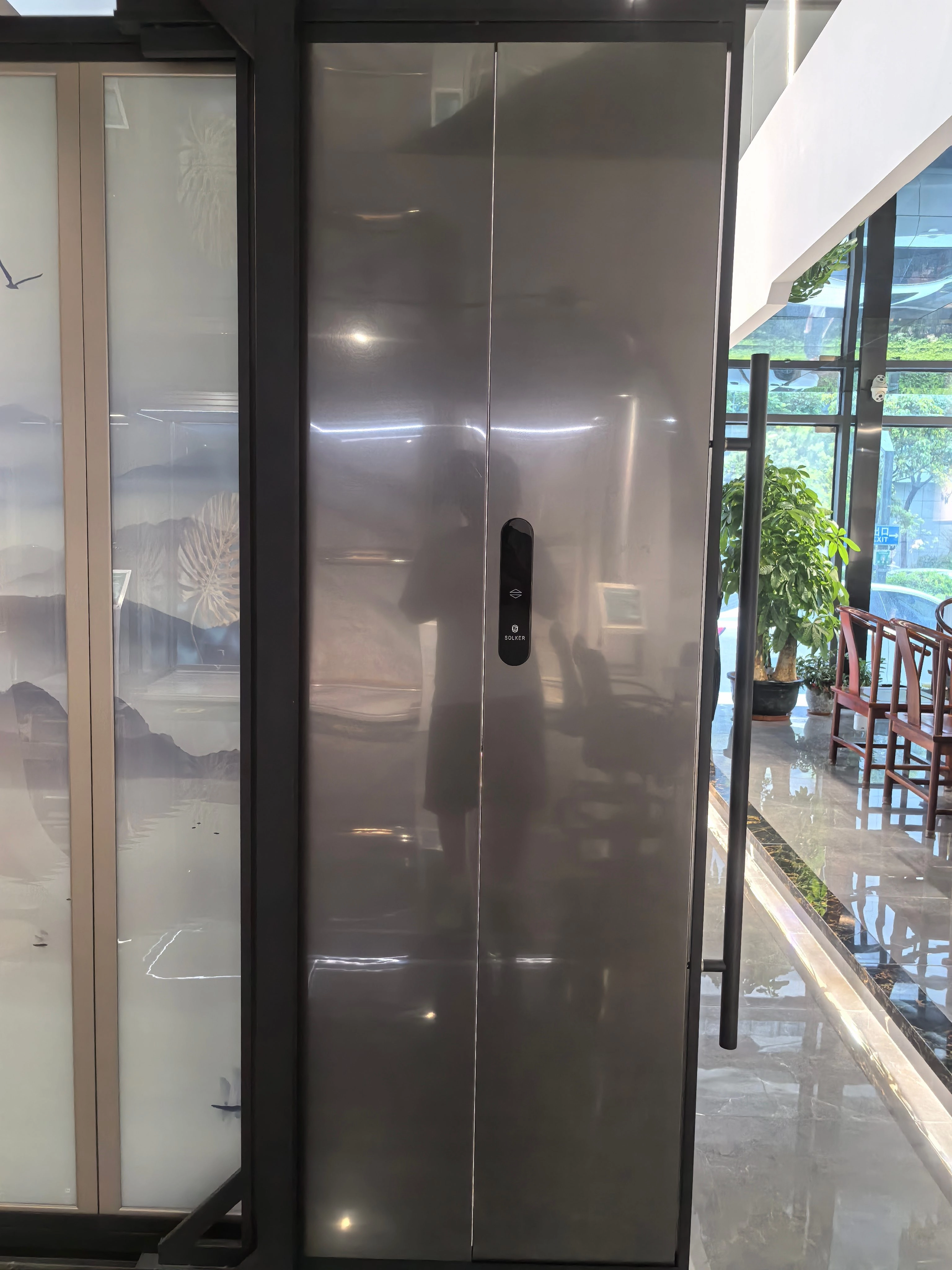

Customize
Can the elevator design be matched to my home's architecture?
Absolutely. Our designers tailor each cabin to complement your interior layout and style.
Can I choose specific materials or colors for the cabin?
Yes. We offer a wide range of premium materials and finishes — from stone to wood to glass.
Do I need architectural drawings to start customization?
Not required initially. We can start with basic dimensions or photos and assist with full planning.
Product
How long is the production date required?
Under normal circumstances, the production time is 35 to 45 days.
How to install an elevator and what is the warranty?
We have overseas technicians who are at your service 24 hours a day, 365 days a year.
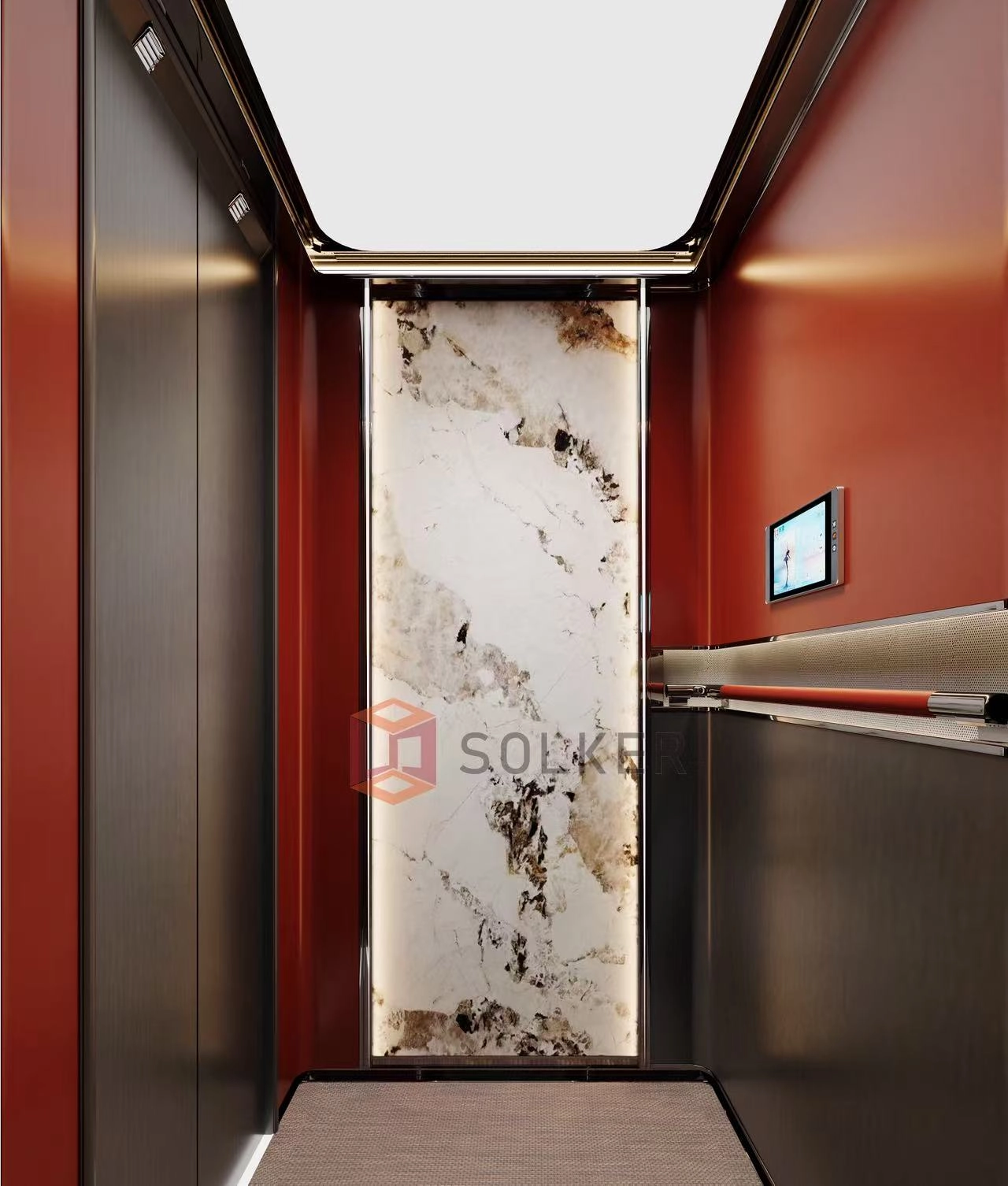
The SOLKER Model-Q3 villa elevator features a Bordeaux Red cabin interior, harmonizing the natural texture of Pandora stone with linen-textured elegant grey stainless steel, accented by refined metal trims. SOLKER's exclusive fully curved seamless integrated forming technology delivers a fluid, joint-free cabin that enhances both safety and aesthetics. Equipped with a built-in HD smart display, every ride becomes a premium experience where technology and artistry converge.

The Model A is a home villa elevator in the Italian minimalist style. It features the most advanced elevator technology and has comprehensive safety protection measures. It is the most reliable guarantee for your passage in villa homes.

The Model-Mini is a home villa elevator in the Italian minimalist style. It features the most advanced elevator technology and has comprehensive safety protection measures. It is the most reliable guarantee for your passage in villa homes
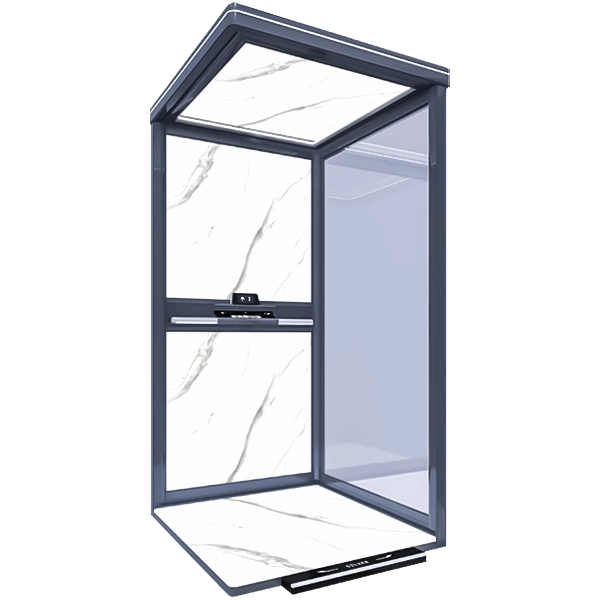
The Model-S is a home villa elevator in the Italian minimalist style. It features the most advanced elevator technology and has comprehensive safety protection measures. It is the most reliable guarantee for your passage in villa homes.
Looking for custom villa lifts manufacturing solutions?
We provide full-service OEM & ODM solutions—from concept to delivery.
Design, prototyping, production, and shipping—all in one place.
Fill out the form below for a free quote or consultation.
👉 Contact us today to start an exclusive customized partnership.
📦 Get product catalogs and wholesale prices.
🔧 Submit your design requirements for 1-to-1 exclusive matchmaking.
🌍 Become our global distribution partner.
Rest assured that your privacy is important to us, and all information provided will be handled with the utmost confidentiality.
Let's get in touch
Email: lin@solkerelevator.com
Tel: +86 133 1668 7566
Address: Floor 1, Building D, Nanxin Industry International, Nancheng District, Dongguan, China.
 Taiwan, China
 No. 21, Lane 38, 206 Yingtai Road, Yingge District, New Taipei City
 +886 0975-299-830
 United Arab Emirates
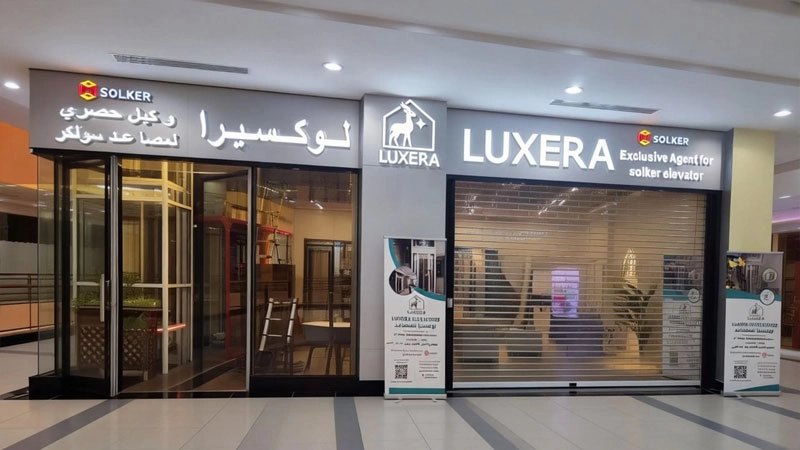
Capital Mall, Abu Dhabi, United Arab Emirates, 3rd floor, Luxera elevator +971 52 541 4685 Ceo@maharacare.com
 Melbourne, Australia
 19/12 Natalia Av, Oakleigh South, VIC 3167
+61 1300 771 86 sales@goldenhomelifts.com.au
Sydney, Australia
U28/323 Chisholm Road, Auburn, NSW 2144
+61 1300 771 86 sales@goldenhomelifts.com.au
SOLKER
SOLKER