


Deepening Global Presence with Technical Excellence – SOLKER Elevator Concludes Successful Technical Training for UAE Distributors
In an increasingly competitive global elevator industry, SOLKER Elevator adheres to its strategy of “technology-driven, serving the world.” In August 2026, we welcomed our core distributor team from the United Arab Emirates for a ten-day intensive technical training and hands-on exchange. Covering everything from high/low-speed car adjustment to shaft measurement, from fault diagnosis to outdoor elevator installation, this training not only strengthened technical synergy between both sides but also demonstrated SOLKER’s firm commitment to overseas markets through solid engineering capabilities.
- I. Crossing Miles, Gathering for Technical Excellence
- II. Hands-on Practice: From High/Low-Speed Car Tuning to Car-Top Wiring
- III. Mini Elevator Special Training and Software Operation
- IV. Shaft Measurement: The “Core Skill” of Foundation Work
- V. Installation Techniques: Brick-Concrete Structures and Outdoor Elevators
- VI. Panoramic Elevator Shaft Measurement and Gantry Structure Installation
- VII. Final Assessment and Successful Completion
- Conclusion
- FAQ
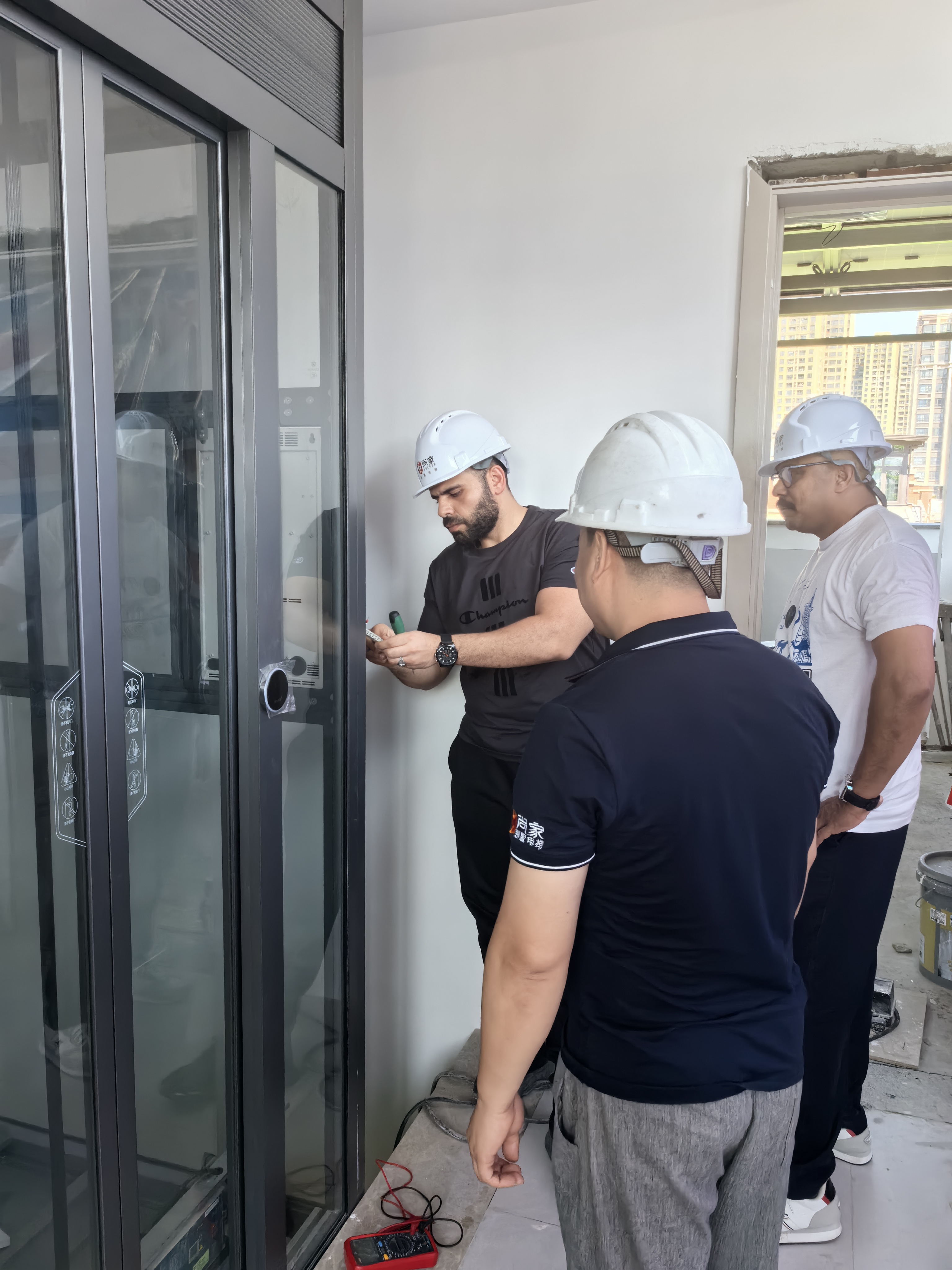
I. Crossing Miles, Gathering for Technical Excellence
On August 9, the UAE distributor team arrived in China, marking the official start of this technical training journey. As a key partner of SOLKER Elevator in the Middle East, the UAE distributor has maintained close cooperation with us over the years. Their market demands extremely high standards for installation, commissioning, and maintenance of premium elevator products. To meet these expectations, SOLKER’s Technical Center developed a systematic and practice-oriented curriculum, ensuring that every participant would “come with questions and leave with solutions.”
II. Hands-on Practice: From High/Low-Speed Car Tuning to Car-Top Wiring
On August 10–11, the training entered its core practical phase. At the factory test tower, the distributor team personally performed dynamic adjustments on both high-speed and low-speed elevator cars, gaining in-depth understanding of inverter parameter settings, motion curve optimization, and braking resistor matching. Simultaneously, the car-top wiring test strictly simulated on-site conditions, covering safety circuits, door-lock circuits, and standardized connection and verification of communication cables. After two full days of real-machine practice, the participants acquired a more intuitive and profound grasp of SOLKER’s electrical logic and mechanical responses.
III. Mini Elevator Special Training and Software Operation
On August 12, the focus shifted to SOLKER’s star product – the mini elevator. Under instructors’ guidance, the distributor trainees independently completed mini elevator high/low-speed car adjustments, with special emphasis on rapid troubleshooting of common fault codes (e.g., overcurrent, overvoltage, encoder loss, leveling sensor anomalies). In addition, systematic training was provided on the accompanying elevator monitoring software and debugging tools, including parameter reading/writing, operation log analysis, and remote fault pre-warning functions – enabling the distributor team to upgrade from “reactive repair” to “proactive prevention” in service delivery.
IV. Shaft Measurement: The “Core Skill” of Foundation Work
On August 13, training moved to shaft measurement. At a real construction site, trainees used laser distance meters, plumb lines, and spirit levels to precisely measure verticality, clear dimensions, reserved holes, and pit depth of brick-concrete structure shafts. The instructors emphasized that shaft measurement is the “first lifeline” of elevator installation – any micron-level deviation can affect ride smoothness. Through group practice and data cross-checking, the team’s measurement accuracy and efficiency improved remarkably.
V. Installation Techniques: Brick-Concrete Structures and Outdoor Elevators
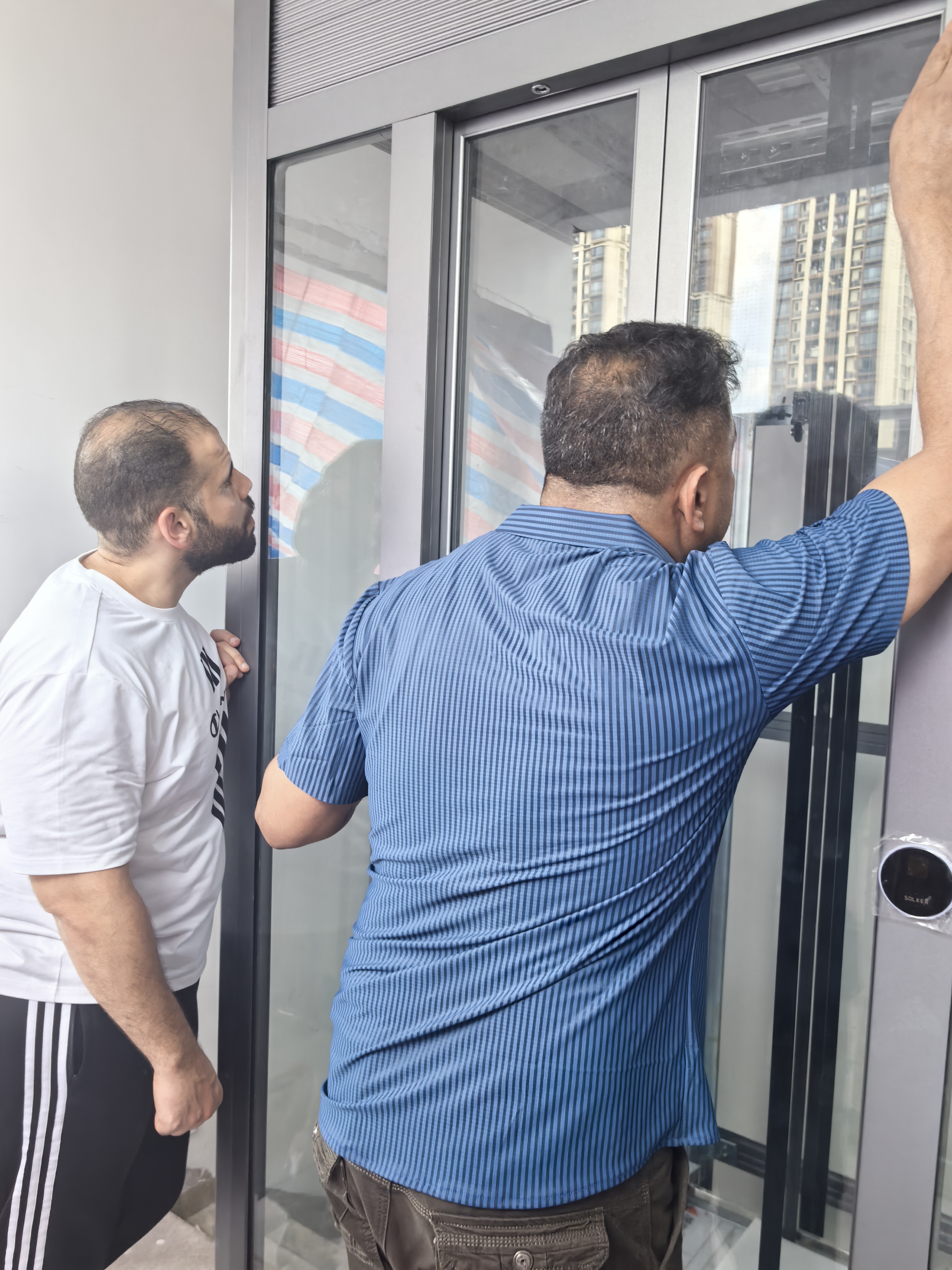
On August 14, the training covered two typical application scenarios – elevator retrofitting in old brick-concrete buildings and outdoor elevator installation in open environments. For brick-concrete structures, key topics included chemical anchor fixing, thermal expansion control of guide rail brackets, and wall reinforcement solutions. For outdoor elevators, emphasis was placed on waterproofing, anti-corrosion treatment, wind-resistant seismic design, and drainage system layout. Through hands-on operations such as scaffold erection, guide rail hoisting, and landing door adjustments, trainees truly mastered installation know-how for non-standard scenarios.
VI. Panoramic Elevator Shaft Measurement and Gantry Structure Installation
On August 15, panoramic (glass) elevator shaft measurement became the day’s theme. Given that panoramic elevators mostly use glass shafts, the alignment between curtain wall frames and guide rail reference lines demands extreme precision. Under instructor supervision, trainees completed coordinate point collection and centerline calibration for curved shafts. On August 18, the final hands-on session – gantry structure shaft installation measurement – took place. As the core support system for heavy-load, high-rise elevators, the gantry structure imposes stringent requirements on column verticality, beam levelness, and bolted joint pre-tightening torque. Trainees worked in groups to simulate the entire process from baseline marking to final acceptance, reinforcing their precision awareness for large-scale structural installations.
VII. Final Assessment and Successful Completion
On August 17, all participants took a comprehensive theoretical written exam and practical evaluation covering all training modules. Every technician from the distributor passed with excellent results and received SOLKER’s official technical certification. During the closing exchange meeting, the head of the UAE distributor remarked: “This training far exceeded our expectations – we not only learned ‘how to install,’ but also understood ‘why we install this way.’ SOLKER’s technical system is complete and rigorous, giving us great confidence in our future projects across the Middle East.”
Conclusion
The successful completion of this UAE distributor technical training marks another significant milestone in SOLKER Elevator’s strategy of “localized overseas services.” Looking ahead, SOLKER will continue to offer deeper technical support and more efficient training systems to global partners, ensuring that our “Intelligent Made in China” elevator products operate smoothly and safely in every corner of the world.
FAQ
You spent 10 days training your distributors. Does that mean they weren’t competent before? Will after-sales service for my elevators be unreliable?
Quite the opposite. Because SOLKER takes overseas after-sales service extremely seriously, we proactively recalled distributor engineers for full-time factory training. We employ a “factory-level authorized certification” model – not just a walk-through, but a rigorous theoretical and practical assessment equivalent to our Chinese plant technician standards. For you, this means that all on-site commissioning and troubleshooting on your project will be handled by local engineers who are “certified” and strictly vetted by our Chinese head trainers. Response times will be 3–5 times faster than waiting for fly-in engineers from China, and the service quality strictly mirrors factory standards – more stable, never compromised.
The UAE has extreme weather (50°C heat, sandstorms). Did your training specifically address our local environmental conditions, or are you just applying mainland Chinese standards?
You’ve hit the key point. Days 4–6 of the training were entirely focused on “non-standard scenarios.” For the UAE climate, we specifically reinforced: hot-dip galvanizing + dual-layer anti-corrosion coating for outdoor steel structures (salt-spray resistance), waterproofing, anti-backflow drains, and heating tape installation (to prevent condensate freezing from temperature swings), and wide-voltage adaptation with redundant cooling designs for control cabinets. We not only teach distributors how to install, but specifically how to adjust door-closing torque and guide rail expansion gaps for sandy, high-humidity, high-heat environments. This isn’t a wholesale copy of Chinese standards – it’s a customized “tropical desert climate installation protocol” tailored for the Middle East
You mentioned many elevator types (mini, panoramic, outdoor). But if I need heavy-duty freight elevators or high-speed commercial elevators, can your distributors handle large complex projects?
The final phase of training (August 18) specifically arranged gantry structure shaft installation measurement, which is the core support system for heavy-load (e.g., 3+ ton freight) and high-rise (over 100m) elevators. Controlling column verticality and beam levelness in gantry structures is the most difficult part of large commercial/industrial installations. We deliberately placed this “advanced course” at the end with rigorous testing, precisely to ensure our distributor teams have comprehensive capabilities across the entire product line – from home mini-elevators to commercial high-speed heavy-load models. If you have a major project, our distributors are fully equipped for on-site quality control and precision oversight.
Your trainees passed the exam, but how can I be sure the technicians in my region are actually competent? If a complex issue arises, will SOLKER headquarters still step in?
We have established a “three-tier technical support barrier”: Tier 1 (Local): Certified distributor engineers handle 90% of common faults (the “10-minute rapid location method” was a key training exercise); Tier 2 (Regional): Our Middle East Regional Technical Director can remotely retrieve elevator operation logs for waveform analysis (software training covered on Day 3); Tier 3 (Headquarters): For extreme cases, each certified distributor has a direct hotline to headquarters experts and shared remote debugging interfaces (authorization required). Our commitment: We don’t just sell products – we back you for the entire lifecycle. This training is not about offloading responsibility; it’s about installing “triple protection” for your project.
Won’t all this intensive training cost eventually be passed on to us customers in the elevator price?
Absolutely not. This investment is part of SOLKER’s strategic market development budget, fully absorbed by our R&D center and overseas business division. Our pricing logic is simple: by enhancing distributor technical capabilities, we significantly reduce overseas project complaint rates and rework costs – which actually saves us huge future expenses in travel, maintenance, and emergency spare-parts airfreight. For you, this means you get not just elevator equipment, but a locally-based elite technical force that has undergone “factory-level boot camp” – at the same or even more competitive pricing. In short, you are the direct beneficiary of “higher quality at no extra cost.”


Product
Can it be customized as required?
Yes.
How long is the production date required?
Under normal circumstances, the production time is 35 to 45 days.
Customize
Is customization available for both indoor and outdoor elevators?
Yes. All custom options apply to indoor and weatherproof outdoor models.
Can I customize the elevator to match my home style?
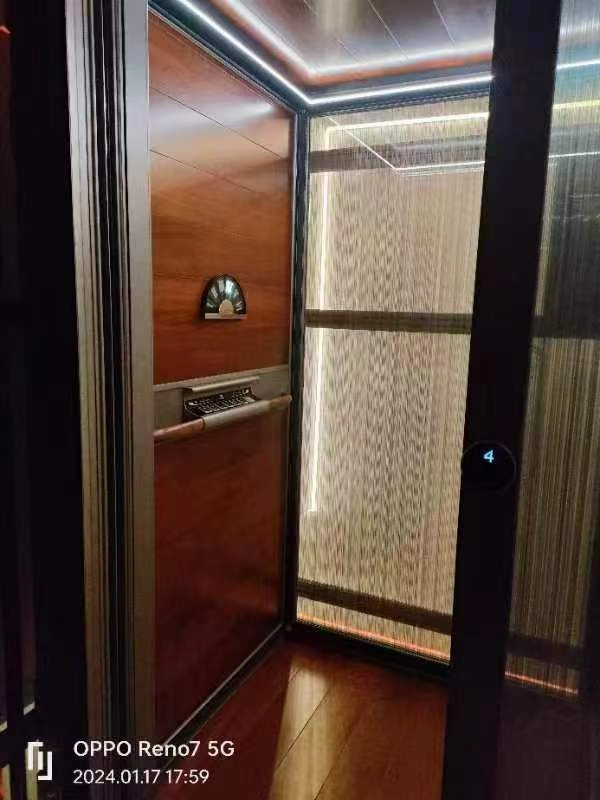
Absolutely. We offer multiple cabin styles, materials, and finishes to suit modern, classic, or minimalist interiors.
What parts of the elevator can be customized?
You can personalize wall panels, flooring, lighting, control panels, handrails, and door finishes.

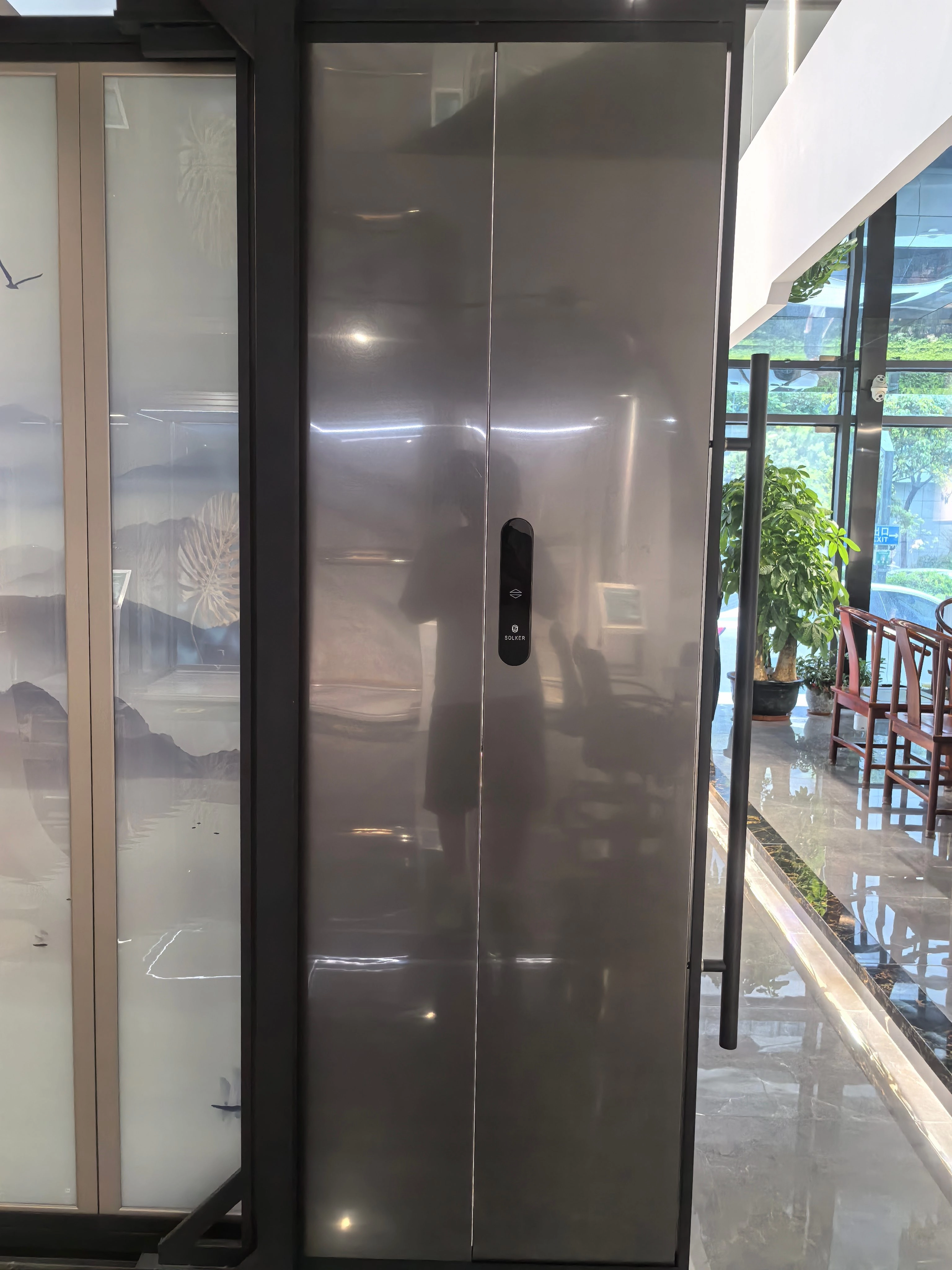
The Model A is a home villa elevator in the Italian minimalist style. It features the most advanced elevator technology and has comprehensive safety protection measures. It is the most reliable guarantee for your passage in villa homes.

The Model-Mini is a home villa elevator in the Italian minimalist style. It features the most advanced elevator technology and has comprehensive safety protection measures. It is the most reliable guarantee for your passage in villa homes
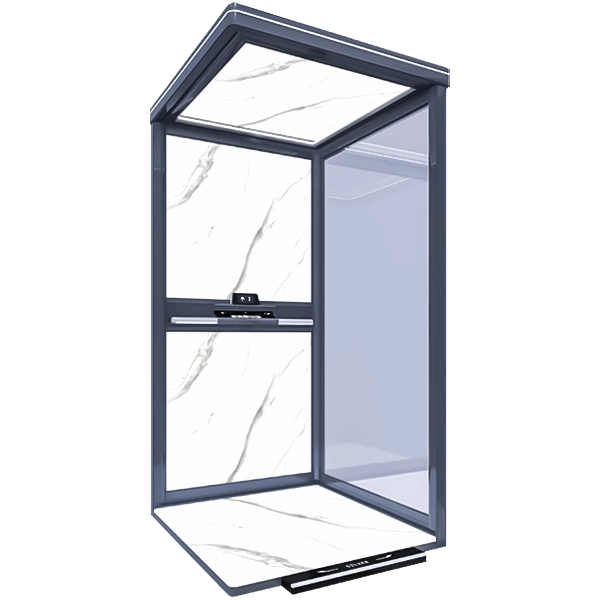
The Model-S is a home villa elevator in the Italian minimalist style. It features the most advanced elevator technology and has comprehensive safety protection measures. It is the most reliable guarantee for your passage in villa homes.
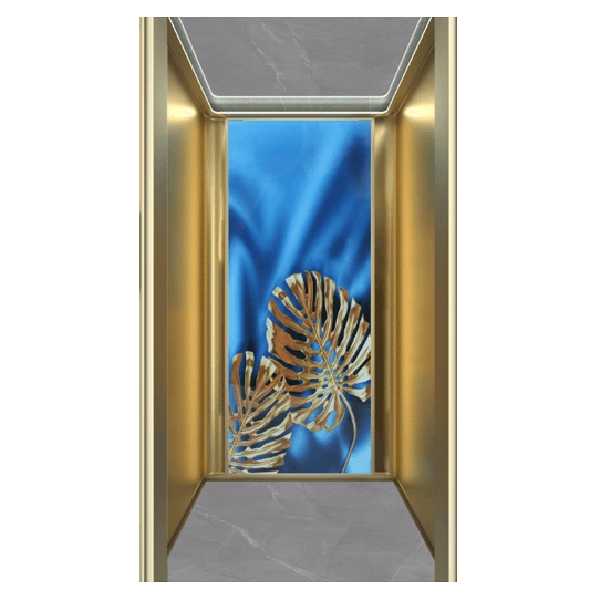
The Model-Q is a home villa elevator in the Italian minimalist style. It features the most advanced elevator technology and has comprehensive safety protection measures. It is the most reliable guarantee for your passage in villa homes.
Looking for custom villa lifts manufacturing solutions?
We provide full-service OEM & ODM solutions—from concept to delivery.
Design, prototyping, production, and shipping—all in one place.
Fill out the form below for a free quote or consultation.
👉 Contact us today to start an exclusive customized partnership.
📦 Get product catalogs and wholesale prices.
🔧 Submit your design requirements for 1-to-1 exclusive matchmaking.
🌍 Become our global distribution partner.
Rest assured that your privacy is important to us, and all information provided will be handled with the utmost confidentiality.
Let's get in touch
Email: lin@solkerelevator.com
Tel: +86 133 1668 7566
Address: Floor 1, Building D, Nanxin Industry International, Nancheng District, Dongguan, China.
 Taiwan, China
 No. 21, Lane 38, 206 Yingtai Road, Yingge District, New Taipei City
 +886 0975-299-830
 United Arab Emirates
Capital Mall, Abu Dhabi, United Arab Emirates, 3rd floor, Luxera elevator +971 52 541 4685 Ceo@maharacare.com
 Melbourne, Australia
 19/12 Natalia Av, Oakleigh South, VIC 3167
+61 1300 771 86 sales@goldenhomelifts.com.au
Sydney, Australia
U28/323 Chisholm Road, Auburn, NSW 2144
+61 1300 771 86 sales@goldenhomelifts.com.au
SOLKER
SOLKER