


Home Elevators vs. Commercial Elevators: Two Different Equipment Regimes, Not a Matter of Size
Treating a home elevator as a “shrunk-down commercial elevator” is a costly misjudgment. The two operate under different standards, different regulatory logics, and different safety philosophies. This article breaks the divide down across five dimensions: standards, regulatory boundaries, technical parameters, safety design priorities, and structural/operational requirements.
- 1. The Foundational Divide: Recommended vs. Mandatory Standards
- 2. Regulatory Boundary: Special Equipment vs. Consumer Product
- 3. Technical Parameters: Hard Boundaries Set by Scenario
- 4. Safety Design: Different Risk Priorities, Not Different Safety Tiers
- 5. Structural and Operational Realities: Installation Prerequisites Define the Options
- The Bottom Line
1. The Foundational Divide: Recommended vs. Mandatory Standards
Home elevators follow the GB/T 21739 series—a recommended national standard. The 2025 revision defines the scope as: rated load no greater than 400 kg, rated speed no greater than 0.63 m/s, travel no greater than 18 m, and use by a single household only. “Recommended” means the standard sets a quality framework; manufacturers retain room for technical adaptation within basic safety boundaries.-30
Commercial elevators follow the GB 7588 series—mandatory national standards embedded in the special-equipment safety framework. There is no uniform ceiling on load or speed; instead, minimum safety requirements are set according to public-use scenarios. “Mandatory” means non-compliance bars the equipment from service, with no negotiation.-30
This foundational difference drives every divergence that follows.
2. Regulatory Boundary: Special Equipment vs. Consumer Product
Under China‘s Special Equipment Safety Law, elevators “installed in non-public premises and used solely by a single household” fall outside special-equipment regulation. No manufacturing licence is required, installation needs no pre-construction notification or supervisory inspection, and there is no mandatory registration or annual testing. In regulatory terms, a home elevator sits closer to a large household appliance: the centre of gravity for safety accountability shifts from administrative oversight to the manufacturer’s factory standards and contractual commitments.-30
Commercial elevators sit under full-lifecycle supervision: manufacturing licence, qualified installation with notification, use registration, maintenance every 15 days, annual statutory inspection, and public maintenance records. The intensity gap is not about which is “safer”; it reflects who the users are—a traceable single household versus an unpredictable流动 public.-30
3. Technical Parameters: Hard Boundaries Set by Scenario
Home elevators typically run at 250–400 kg capacity, 0.15–0.4 m/s (the 2025 standard raises the ceiling to 0.63 m/s, though most products remain in the lower range), with car area capped at 1.6 m². These are not limitations of capability but deliberate design choices: the home scenario prioritizes smoothness, quietness, and ride comfort for elderly users and children over transport efficiency.-20-36
Commercial elevators operate at a different order of magnitude: capacity from 630 kg upward, commonly 800–1600 kg, speeds of 1.0–2.5 m/s or higher, and car areas far exceeding the 1.6 m² residential cap. Throughput and peak-hour handling govern; comfort yields to capacity.-36
A frequently overlooked point: demanding speeds above 1.0 m/s or oversize cars from a home elevator does not constitute an “upgrade”—it pushes the product beyond its design envelope and into a different equipment regime.
4. Safety Design: Different Risk Priorities, Not Different Safety Tiers
The common assumption that home elevators are “less safe” misses the point. The two designs guard against different categories of risk.
Commercial elevators prioritize unpredictable public use: dense light curtains, overload lockout (doors will not close or the car will not move), fire-service interfacing, and group control. The density of safety features serves an anonymous, high-traffic population.-30
Home elevators prioritize unattended operation and domestic fit: ARD (Automatic Rescue Device) is a functional necessity because no one is on duty to respond to a power failure; low-noise operation and child-resistant controls are part of the safety equation. On core mechanical safeguards—speed governor, safety gear, buffer, door interlock—home elevators do not inherently sit below commercial standards, and some premium products exceed them on suspension safety factors.-30
The difference is not a hierarchy of safety, but a reallocation of safety resources toward different risk environments.
5. Structural and Operational Realities: Installation Prerequisites Define the Options
Commercial elevators require standardized large shafts, deep pits (often exceeding 1 metre), and separate machine rooms, all planned before construction; retrofitting space is minimal. Home elevators evolved around retrofit feasibility: compact shafts, shallow or pitless designs, and machine-room-less configurations exist so a lift can enter a finished residence where underfloor heating or waterproofing membranes make excavation impractical.-3
Operational cost diverges accordingly. Statutory maintenance frequency and periodic inspection push commercial elevator annual upkeep above RMB 6,000; home elevator maintenance intervals are negotiated between user and provider, with annual costs typically in the RMB 2,000–3,000 range—roughly one-third to one-half of the commercial figure.
The Bottom Line
The home-versus-commercial elevator distinction is ultimately a distinction between a private dedicated device and a public safety product—two institutional logics. The former operates within a recommended-standard framework oriented toward comfort, domestic fit, and unattended safety; the latter within mandatory standards and special-equipment supervision oriented toward public order and transport efficiency.
This line is legal as well as technical: installing a home elevator for public use is explicitly prohibited, and market regulators have the authority to order cessation of use. Conversely, forcing commercial dimensions, speeds, and structural requirements into a private residence imposes costs and feasibility burdens the scenario does not require. The first question in selection is not which specification is superior, but which side of the boundary the project actually sits on.
Product
How long is the production date required?
Under normal circumstances, the production time is 35 to 45 days.
Customize
Is customization available for both indoor and outdoor elevators?
Yes. All custom options apply to indoor and weatherproof outdoor models.
What parts of the elevator can be customized?
You can personalize wall panels, flooring, lighting, control panels, handrails, and door finishes.
How long does a custom order take to deliver?
On average, production takes 30–45 days after confirmation, depending on your configuration.
Can the elevator design be matched to my home's architecture?
Absolutely. Our designers tailor each cabin to complement your interior layout and style.
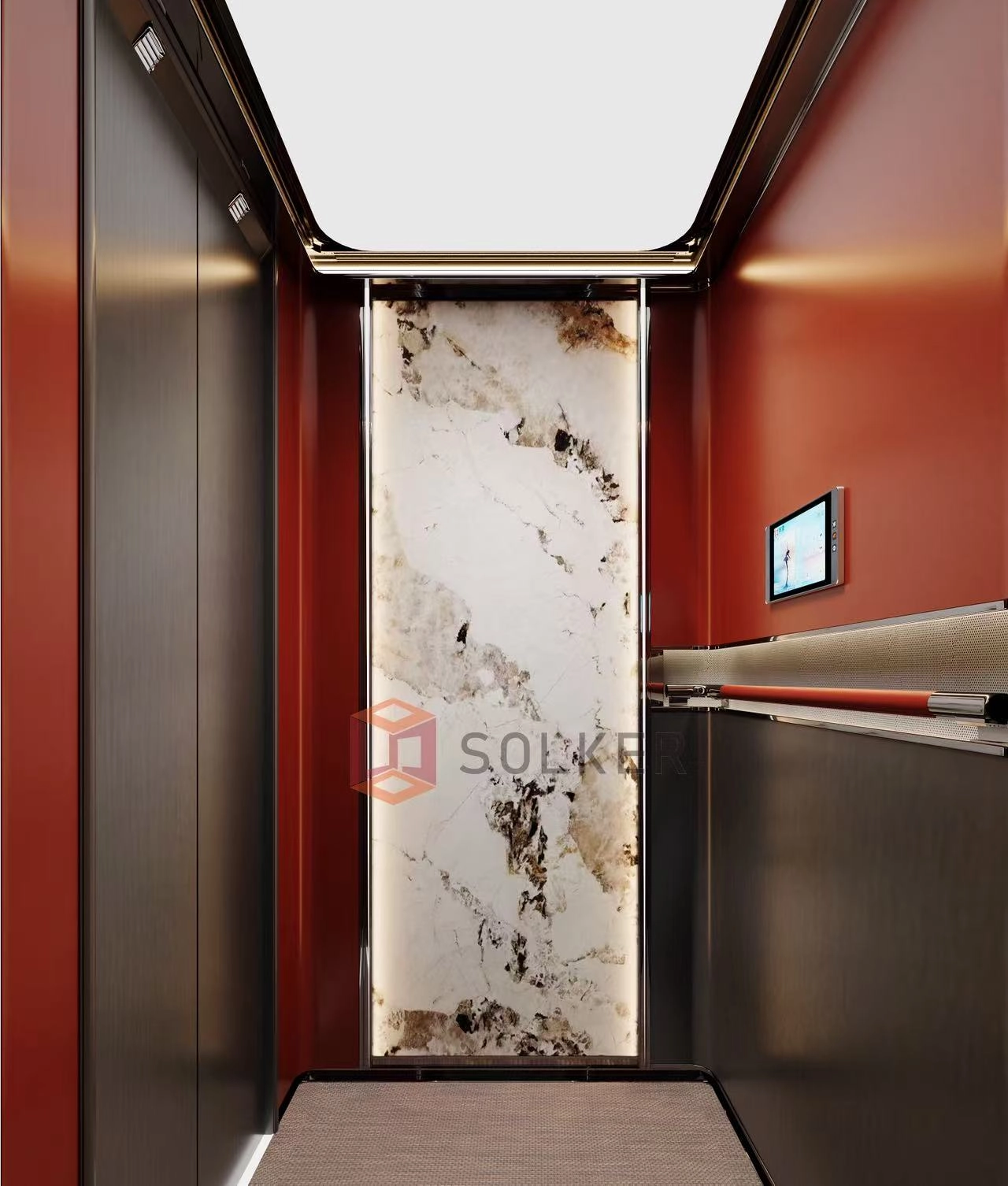
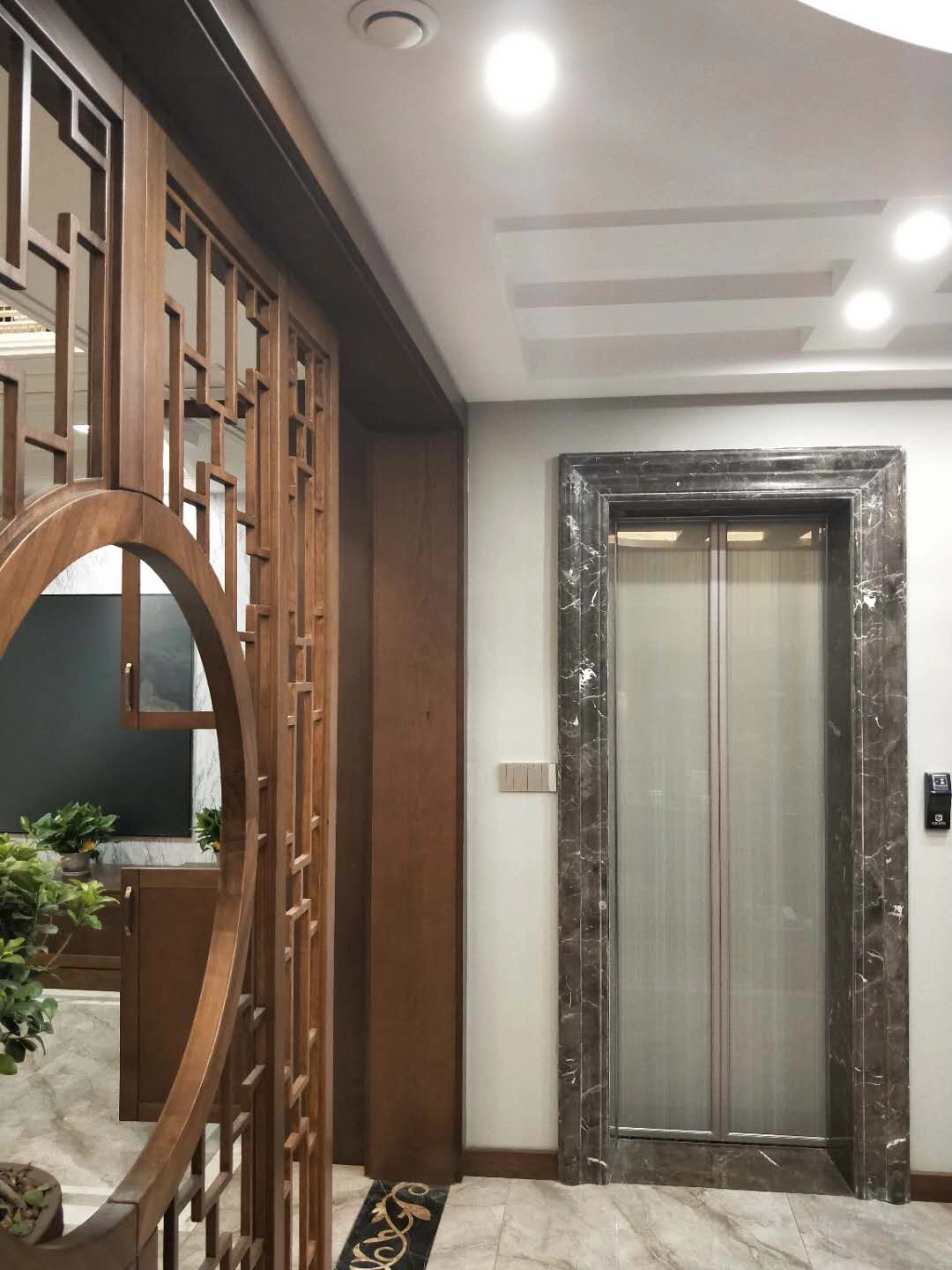
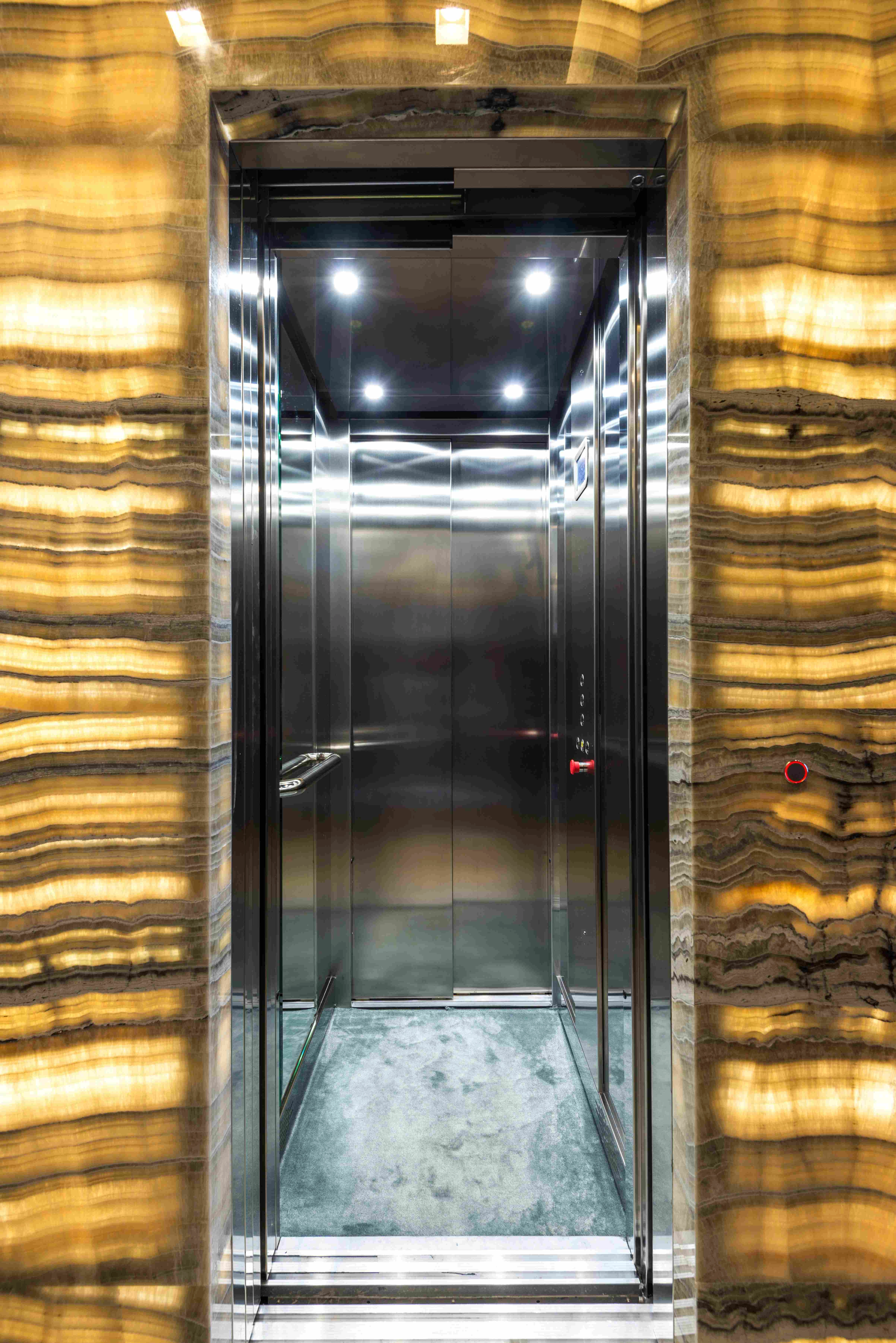
The SOLKER Model-Q3 villa elevator features a Bordeaux Red cabin interior, harmonizing the natural texture of Pandora stone with linen-textured elegant grey stainless steel, accented by refined metal trims. SOLKER's exclusive fully curved seamless integrated forming technology delivers a fluid, joint-free cabin that enhances both safety and aesthetics. Equipped with a built-in HD smart display, every ride becomes a premium experience where technology and artistry converge.
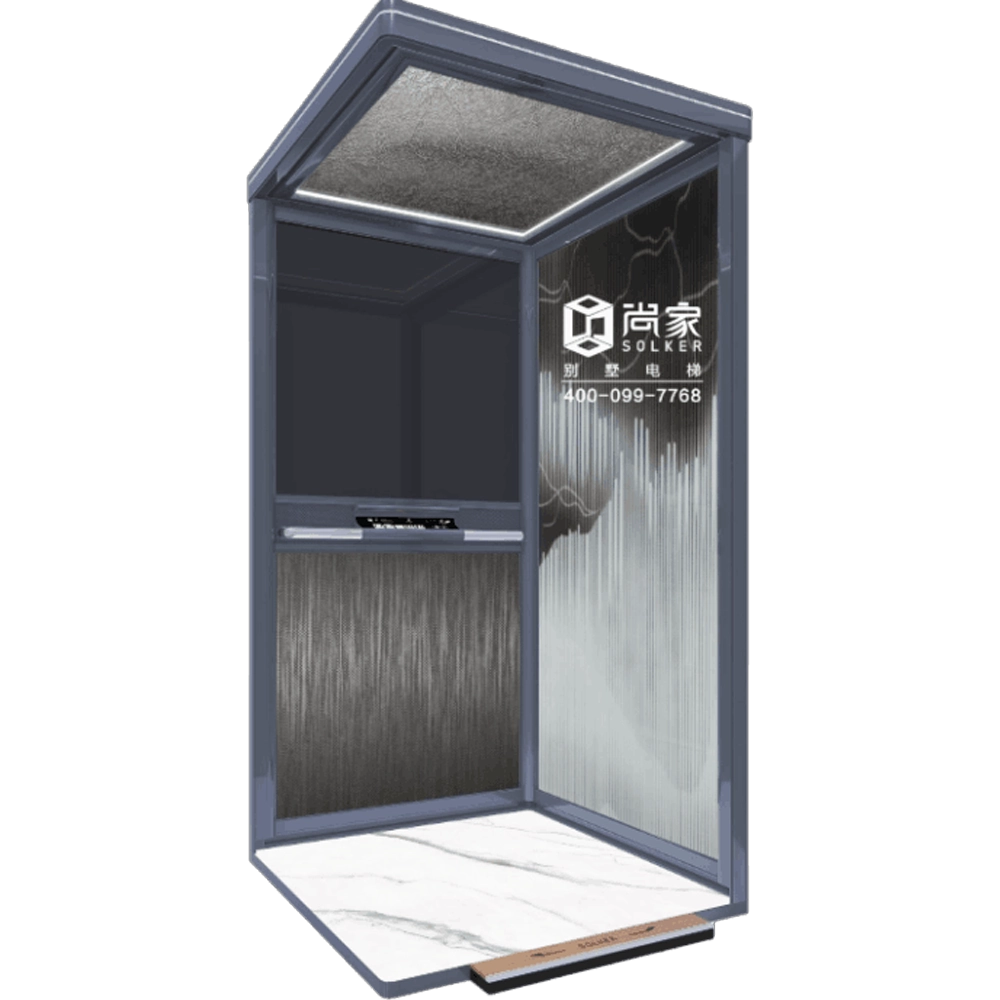
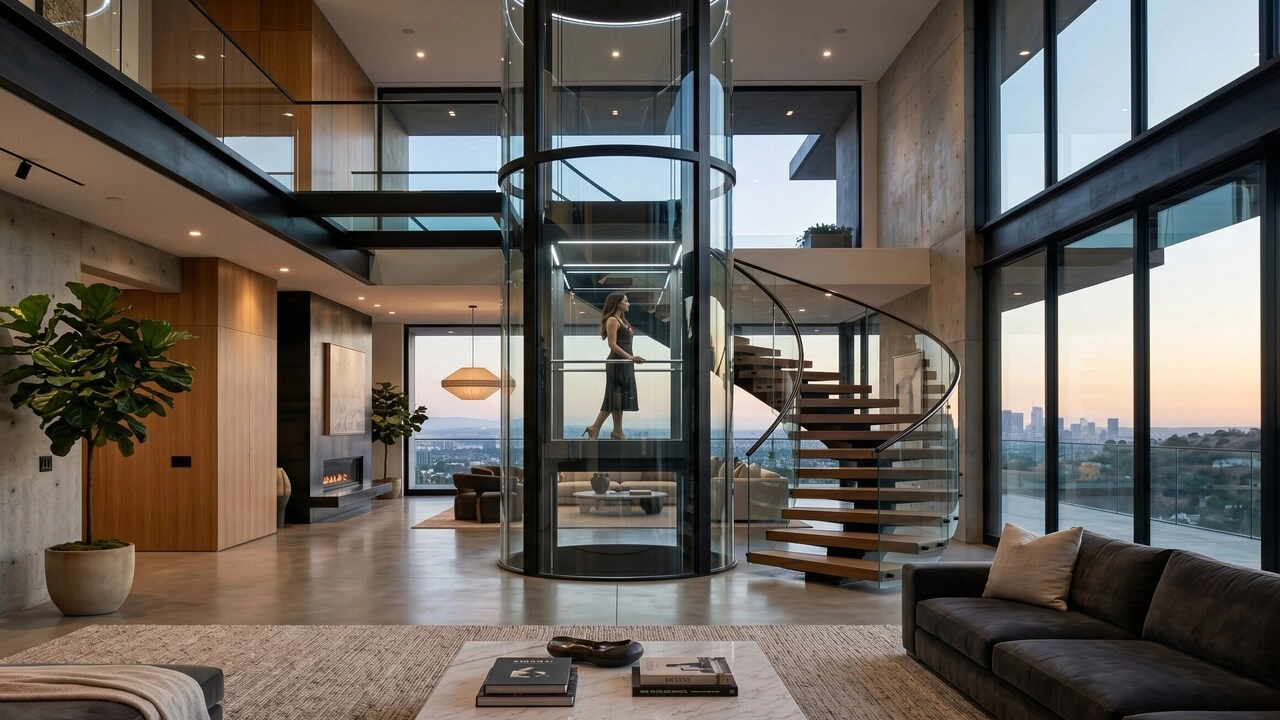
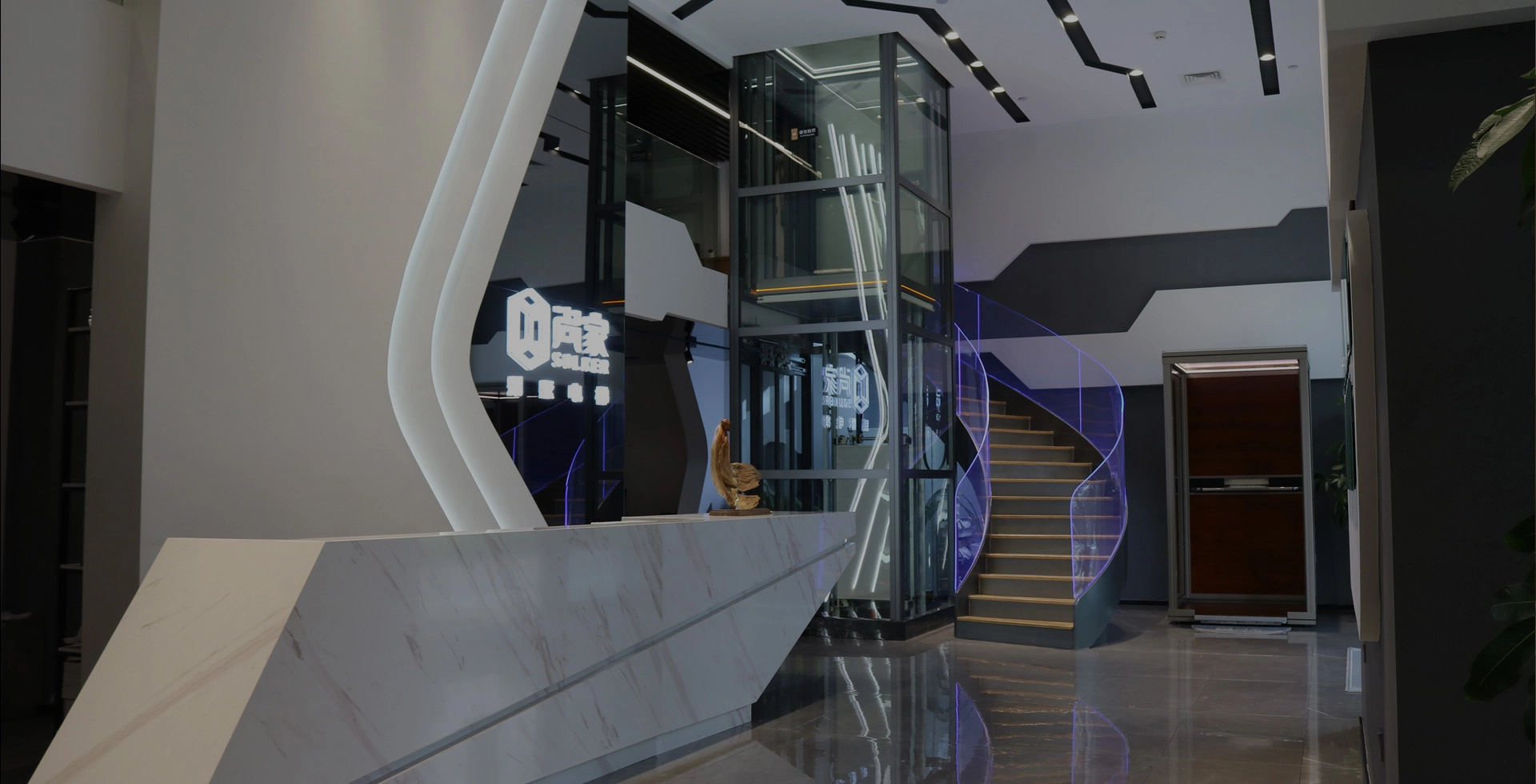
The Model A is a home villa elevator in the Italian minimalist style. It features the most advanced elevator technology and has comprehensive safety protection measures. It is the most reliable guarantee for your passage in villa homes.
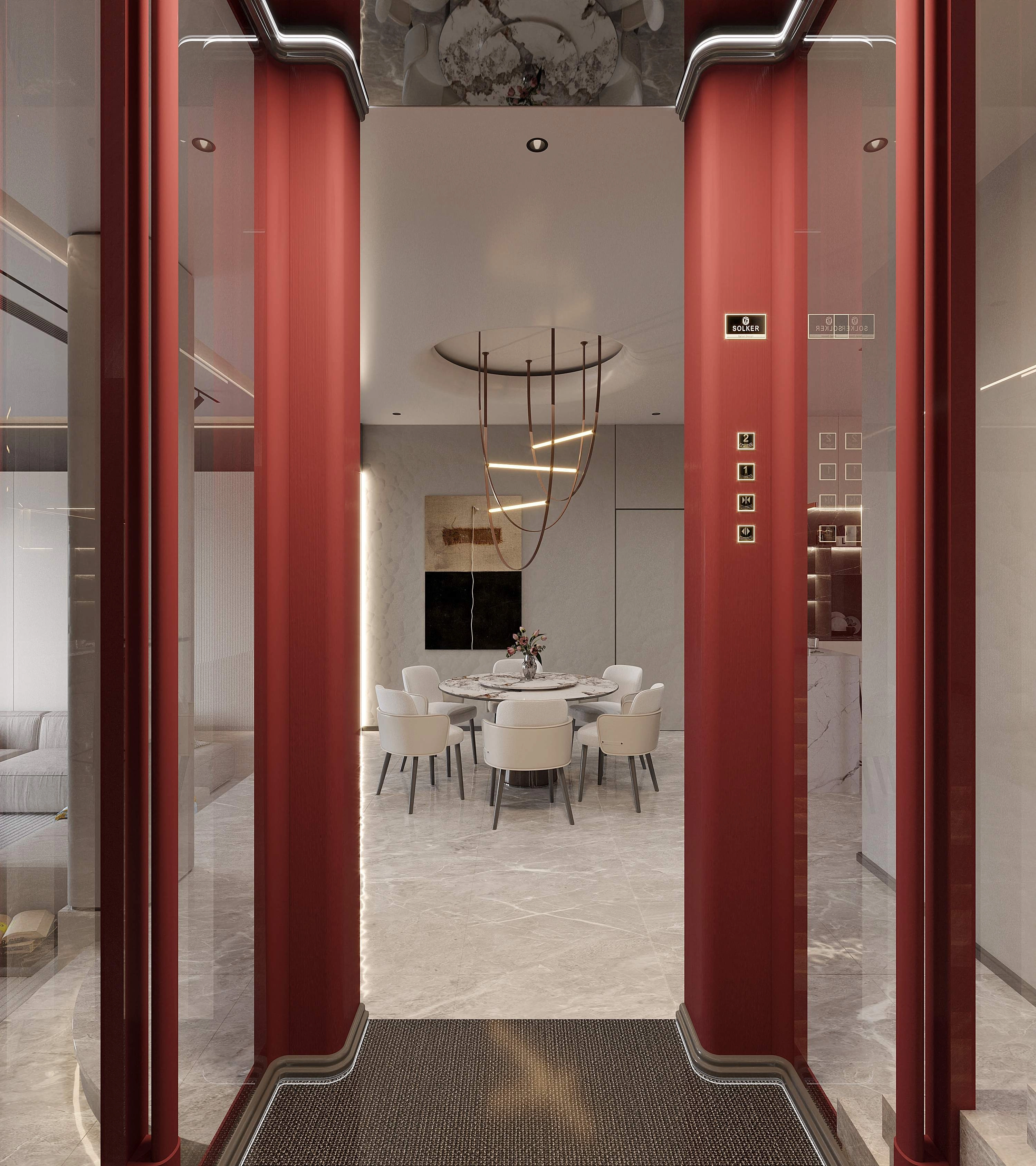
The Model-Mini is a home villa elevator in the Italian minimalist style. It features the most advanced elevator technology and has comprehensive safety protection measures. It is the most reliable guarantee for your passage in villa homes
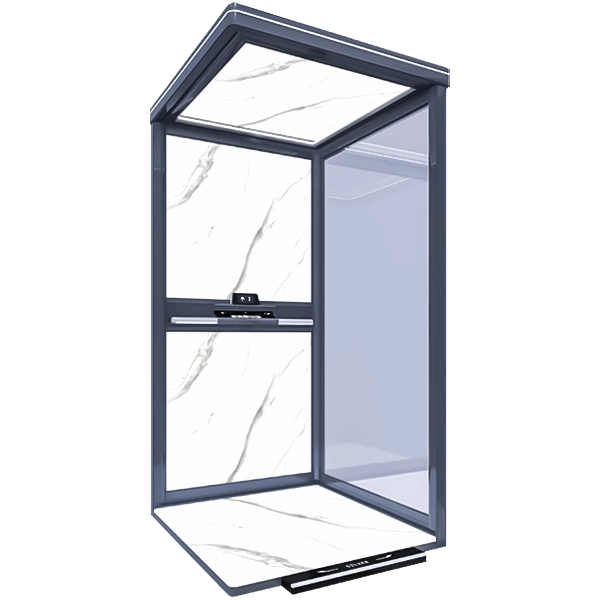
The Model-S is a home villa elevator in the Italian minimalist style. It features the most advanced elevator technology and has comprehensive safety protection measures. It is the most reliable guarantee for your passage in villa homes.
Looking for custom villa lifts manufacturing solutions?
We provide full-service OEM & ODM solutions—from concept to delivery.
Design, prototyping, production, and shipping—all in one place.
Fill out the form below for a free quote or consultation.
👉 Contact us today to start an exclusive customized partnership.
📦 Get product catalogs and wholesale prices.
🔧 Submit your design requirements for 1-to-1 exclusive matchmaking.
🌍 Become our global distribution partner.
Rest assured that your privacy is important to us, and all information provided will be handled with the utmost confidentiality.
Let's get in touch
Email: lin@solkerelevator.com
Tel: +86 133 1668 7566
Address: Floor 1, Building D, Nanxin Industry International, Nancheng District, Dongguan, China.
 Taiwan, China
 No. 21, Lane 38, 206 Yingtai Road, Yingge District, New Taipei City
 +886 0975-299-830
 United Arab Emirates
Capital Mall, Abu Dhabi, United Arab Emirates, 3rd floor, Luxera elevator +971 52 541 4685 Ceo@maharacare.com
 Melbourne, Australia
 19/12 Natalia Av, Oakleigh South, VIC 3167
+61 1300 771 86 sales@goldenhomelifts.com.au
Sydney, Australia
U28/323 Chisholm Road, Auburn, NSW 2144
+61 1300 771 86 sales@goldenhomelifts.com.au
SOLKER
SOLKER