


Machine-Room Elevators vs. Machine-Room-Less Elevators: A Practical Selection Guide
Choosing between a machine-room elevator and a machine-room-less elevator affects not only construction cost but also the long-term usability and maintenance of a building. Machine-room systems offer advantages in power, stability, and service access, while machine-room-less systems excel in space saving, design freedom, and installation flexibility. This article outlines the key differences to help match the technology to project needs and clarifies SOLKER’s positioning.
Machine-Room Elevators vs. Machine-Room-Less Elevators: A Practical Selection Guide
Introduction
Choosing between a machine-room elevator and a machine-room-less elevator affects not only construction cost but also the long-term usability and maintenance of a building. Machine-room systems offer advantages in power, stability, and service access, while machine-room-less systems excel in space saving, design freedom, and installation flexibility. This article outlines the key differences to help match the technology to project needs and clarifies SOLKER’s positioning.
1. Core Architectural Difference
A machine-room elevator places the traction machine, controller, and related equipment in a dedicated room above the hoistway. This room is a permanent architectural commitment: it consumes floor area, imposes height restrictions, and requires ventilation and temperature control. A machine-room-less elevator miniaturizes those same components and relocates them into the hoistway itself—typically at the top or side—thereby eliminating the need for a separate machine room entirely.
2. Space, Cost, and Design Freedom
The most immediate difference is spatial. The machine room of a machine-room elevator is “dead space” in the structural sense: it cannot be sold, rented, or used for occupant activity. Machine-room-less elevators remove that burden, often requiring only a maintenance platform above the car. For architects, this opens options—pitched roofs, glass shafts, retrofits into existing stairwells, and buildings where a rooftop machine room would violate height limits or heritage requirements. On the cost side, machine-room-less systems generally reduce civil construction expense because there is no machine room slab, walls, or dedicated HVAC, though the equipment itself may carry a different price profile depending on duty class and manufacturer.
3. Performance Envelope: Where Each System Excels
Machine-room elevators retain a clear advantage in high-speed, heavy-duty applications. With the traction machine isolated in a dedicated room, noise and vibration are better contained, and the structural system can support larger loads and higher speeds without transferring resonance into the hoistway walls. Machine-room elevators remain the preferred choice for high-rise commercial towers, hospitals, and freight applications where speeds exceed 1.75 m/s or loads exceed roughly 1,150 kg.
Machine-room-less elevators, by contrast, shine in low-to-medium-rise residential, villa, and retrofit projects. The absence of a machine room simplifies installation, lowers the structural load on the building, and enables the elevator to fit into tight footprints. Modern permanent-magnet gearless traction and regenerative drives have substantially improved MRL energy efficiency, with some systems recycling braking energy back into the building grid. The trade-off is service access: MRL equipment sits in the hoistway, so maintenance and rescue procedures are more involved and typically require additional safety provisions such as an emergency safety window.
4. Conclusion
There is no universal “better” system—only a better fit. If the project demands high speed, heavy loads, and the easiest possible maintenance access, a machine-room elevator remains the rational engineering choice. If the priorities are space preservation, design flexibility, lower civil construction cost, and suitability for villas or retrofits, a machine-room-less system delivers those advantages without sacrificing modern safety and performance standards.
Final Statement
SOLKER elevators are machine-room-less elevators.
FAQ
Can machine-room-less elevators be used in high-rise buildings or high-speed applications?
Machine-room-less elevators are better suited to low-to-medium-rise residential buildings, villas, commercial retrofits, and space-constrained projects. For high-speed, heavy-duty applications with speeds above roughly 1.75 m/s or loads above roughly 1,150 kg, machine-room elevators are usually still the more robust engineering choice, because the traction machine is isolated in a dedicated room, making noise, vibration, and structural load easier to control. Each project should be evaluated based on travel height, speed, load, duty class, and the manufacturer’s technical capabilities
Are maintenance and emergency rescue more inconvenient for machine-room-less elevators?
In machine-room-less elevators, the traction and control equipment is located inside the hoistway, so maintenance personnel typically need maintenance platforms, emergency safety windows, or other safety provisions. As a result, maintenance procedures rely more heavily on proper design and professional training than in machine-room elevators. Modern MRL systems include corresponding safety and rescue procedures, but project selection should carefully confirm service access, rescue plans, and the brand’s service capability. Machine-room elevators generally offer more direct equipment accessibility.
For elevator installation in existing buildings, should a machine-room or machine-room-less system be chosen?
For existing building retrofits, machine-room-less elevators are usually the first choice because they eliminate the need for a new rooftop machine room, reduce structural load and civil works, and adapt more easily to compact hoistways, height limits, and heritage requirements. Before installation, however, hoistway conditions, overhead height, rescue access, power supply, and maintenance accessibility must still be assessed. If the project involves high-speed heavy-duty operation, or the site conditions are more suitable for a machine room, a machine-room elevator may still be a reasonable choice.
Product
How to install an elevator and what is the warranty?
We have overseas technicians who are at your service 24 hours a day, 365 days a year.
Customize
What parts of the elevator can be customized?
You can personalize wall panels, flooring, lighting, control panels, handrails, and door finishes.
Can I customize the elevator to match my home style?
Absolutely. We offer multiple cabin styles, materials, and finishes to suit modern, classic, or minimalist interiors.
How does the customization process work?
Our design team will guide you through the steps: style selection, material choice, and 3D visualization before confirmation.
Is customization available for both indoor and outdoor elevators?
Yes. All custom options apply to indoor and weatherproof outdoor models.
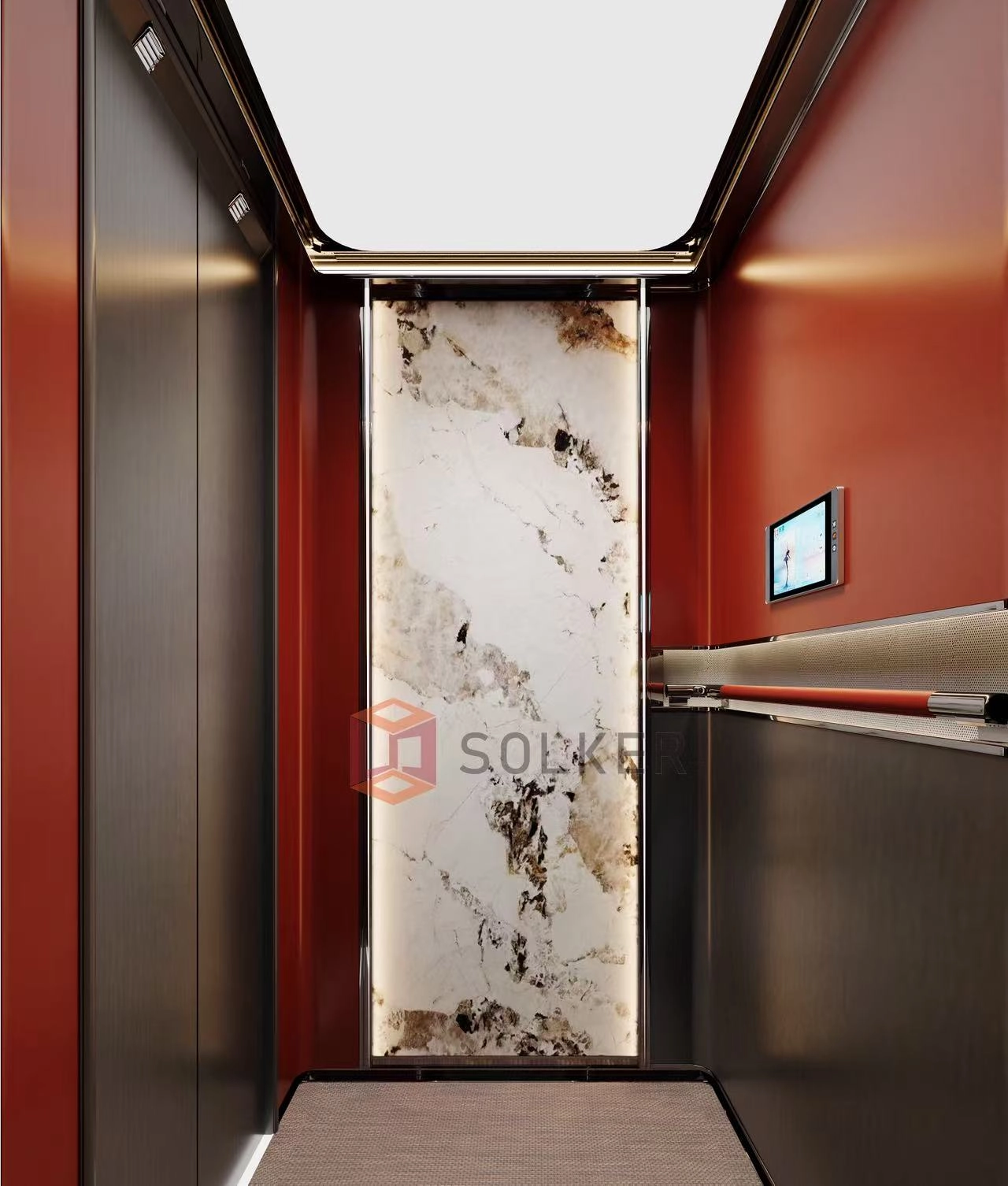
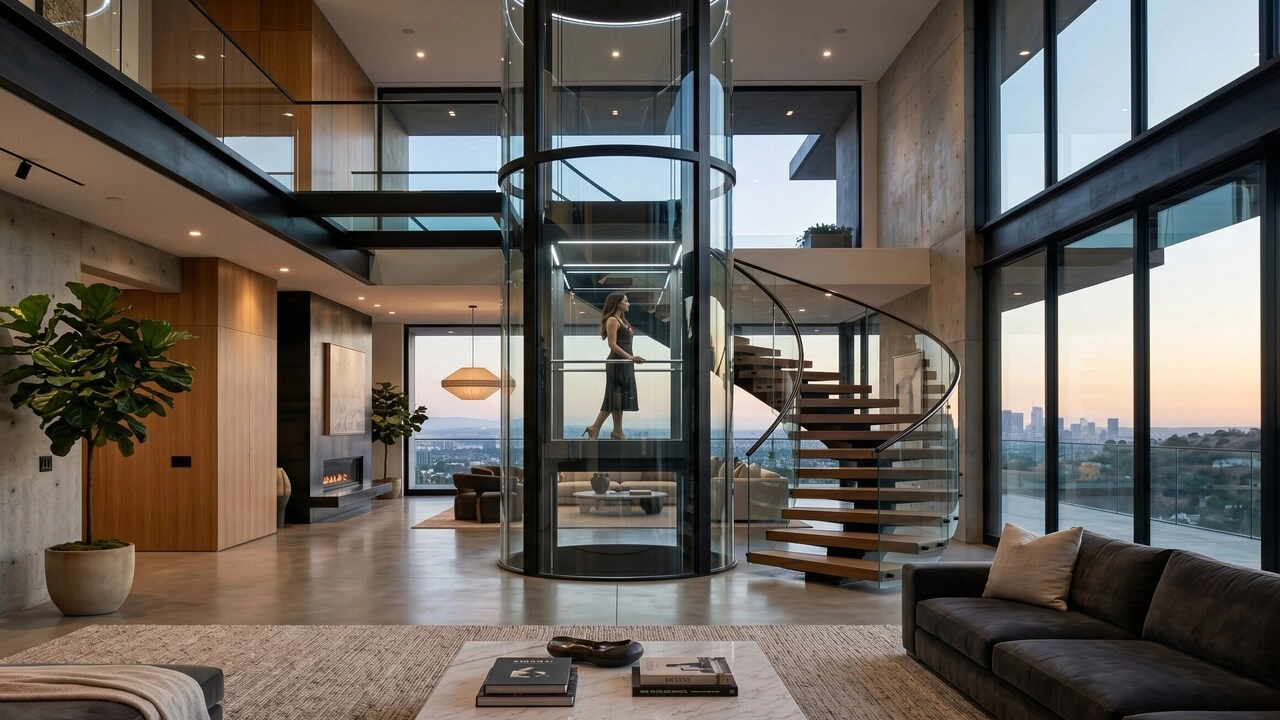
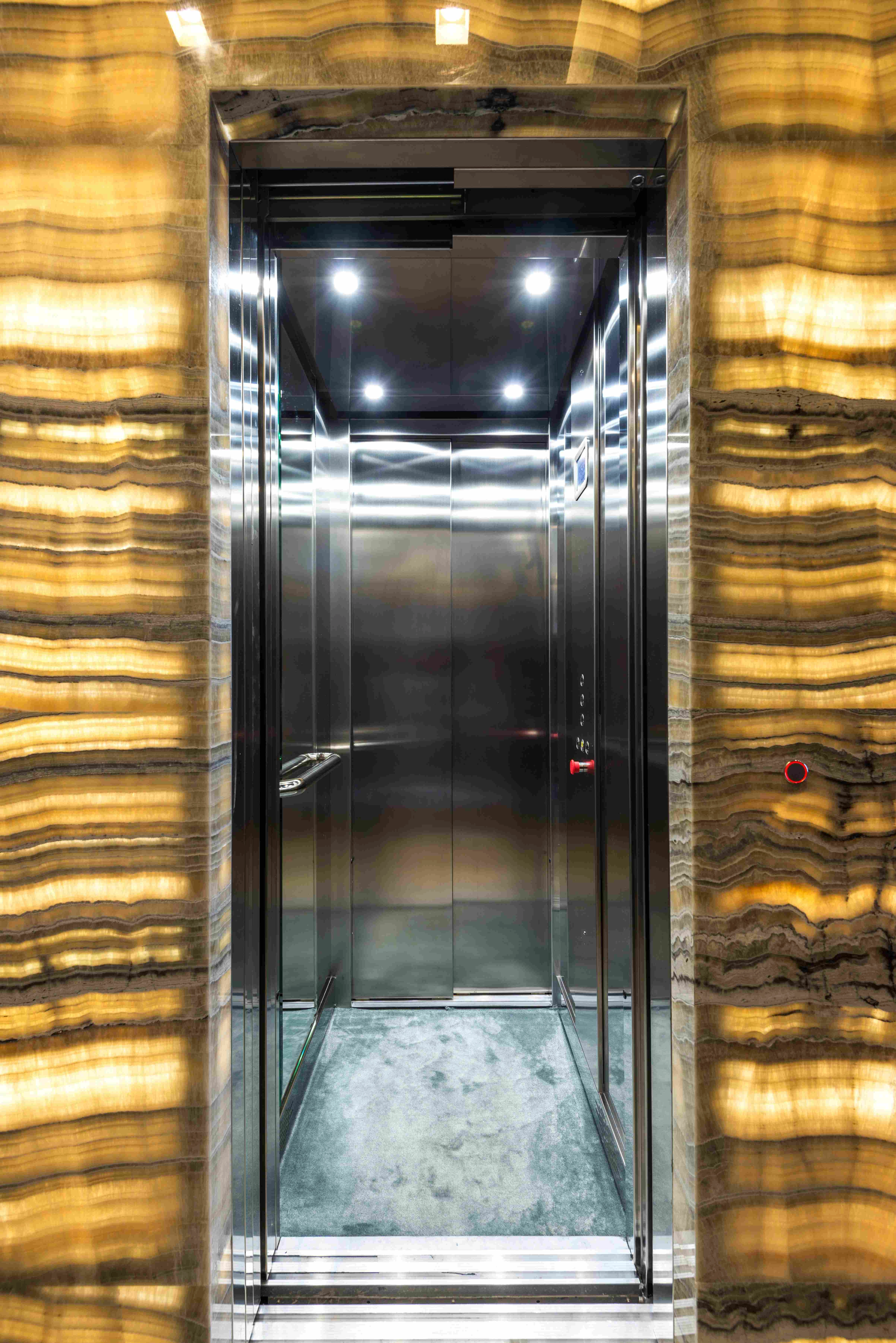
The SOLKER Model-Q3 villa elevator features a Bordeaux Red cabin interior, harmonizing the natural texture of Pandora stone with linen-textured elegant grey stainless steel, accented by refined metal trims. SOLKER's exclusive fully curved seamless integrated forming technology delivers a fluid, joint-free cabin that enhances both safety and aesthetics. Equipped with a built-in HD smart display, every ride becomes a premium experience where technology and artistry converge.
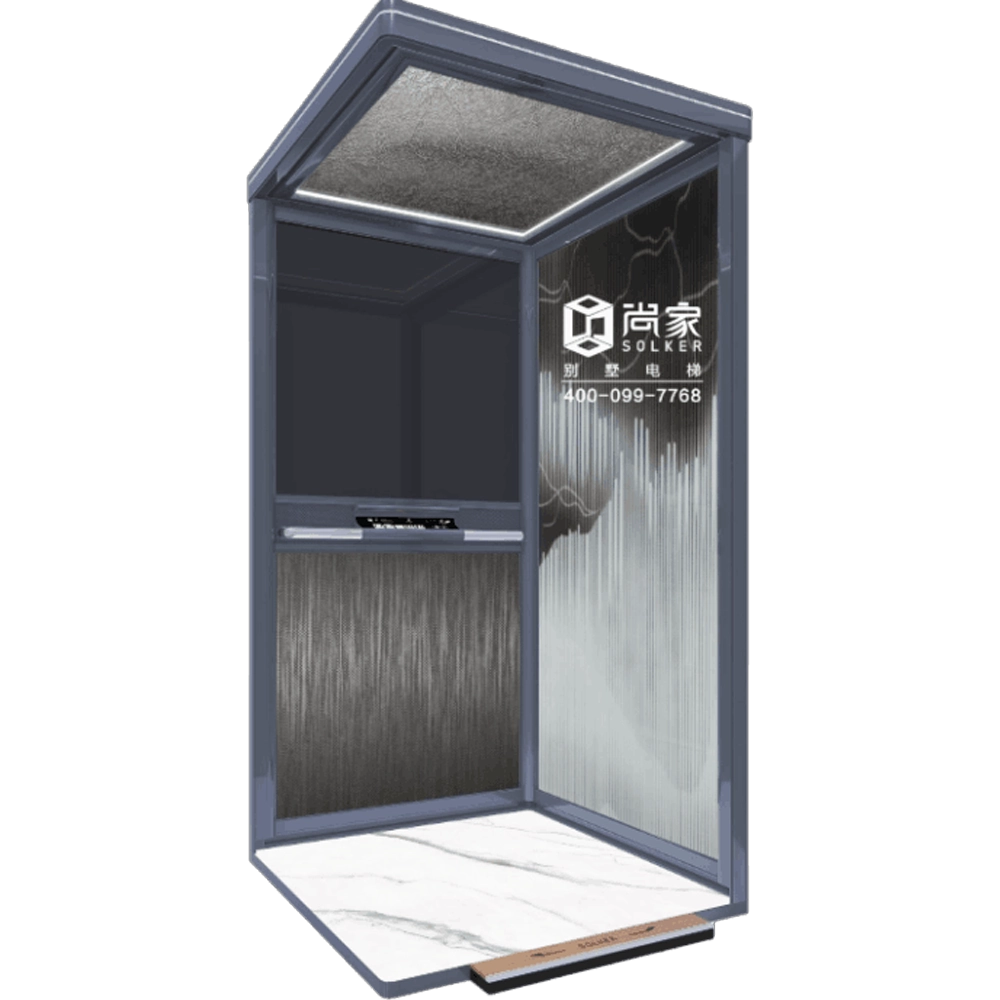
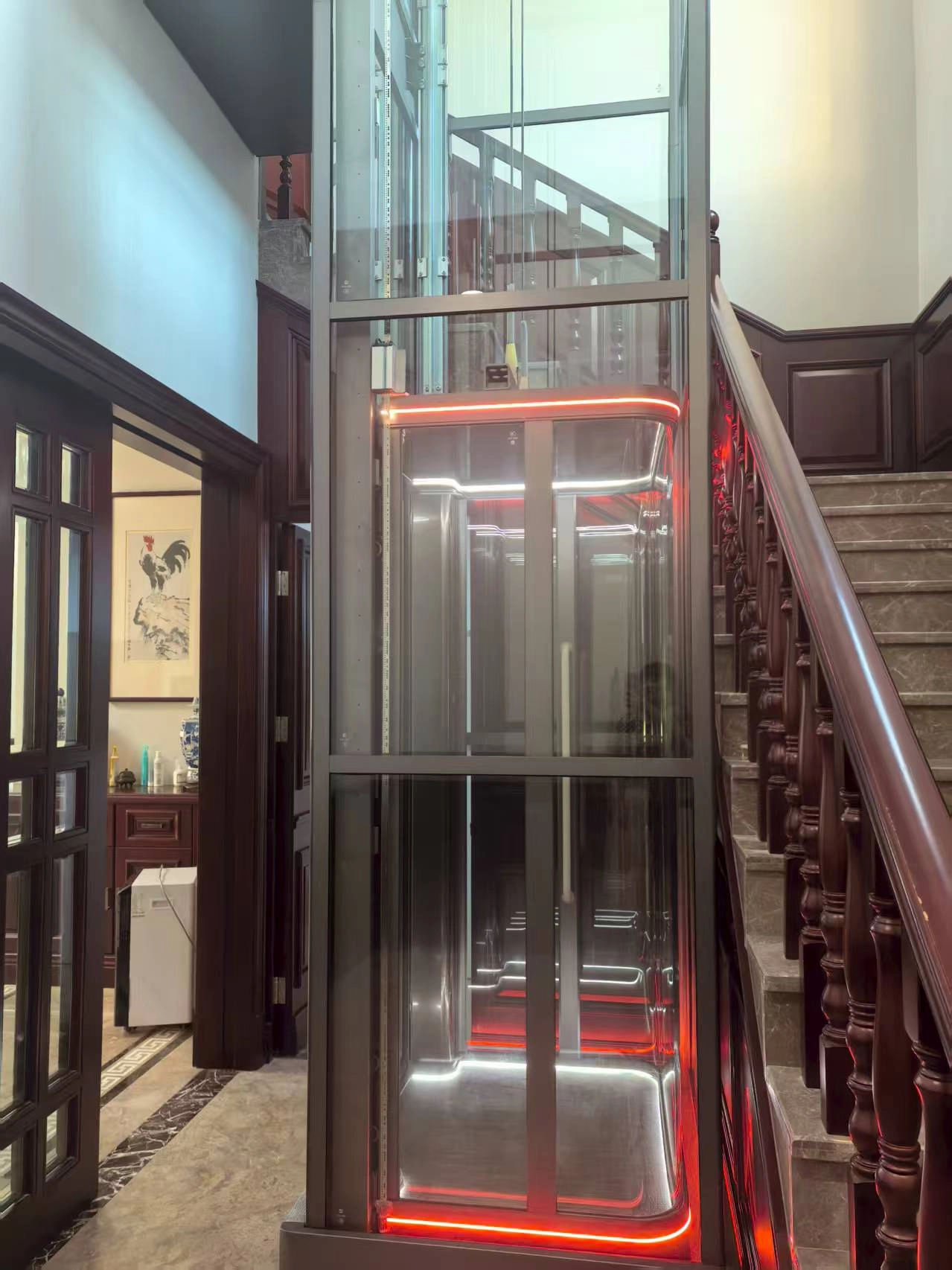
The Model A is a home villa elevator in the Italian minimalist style. It features the most advanced elevator technology and has comprehensive safety protection measures. It is the most reliable guarantee for your passage in villa homes.
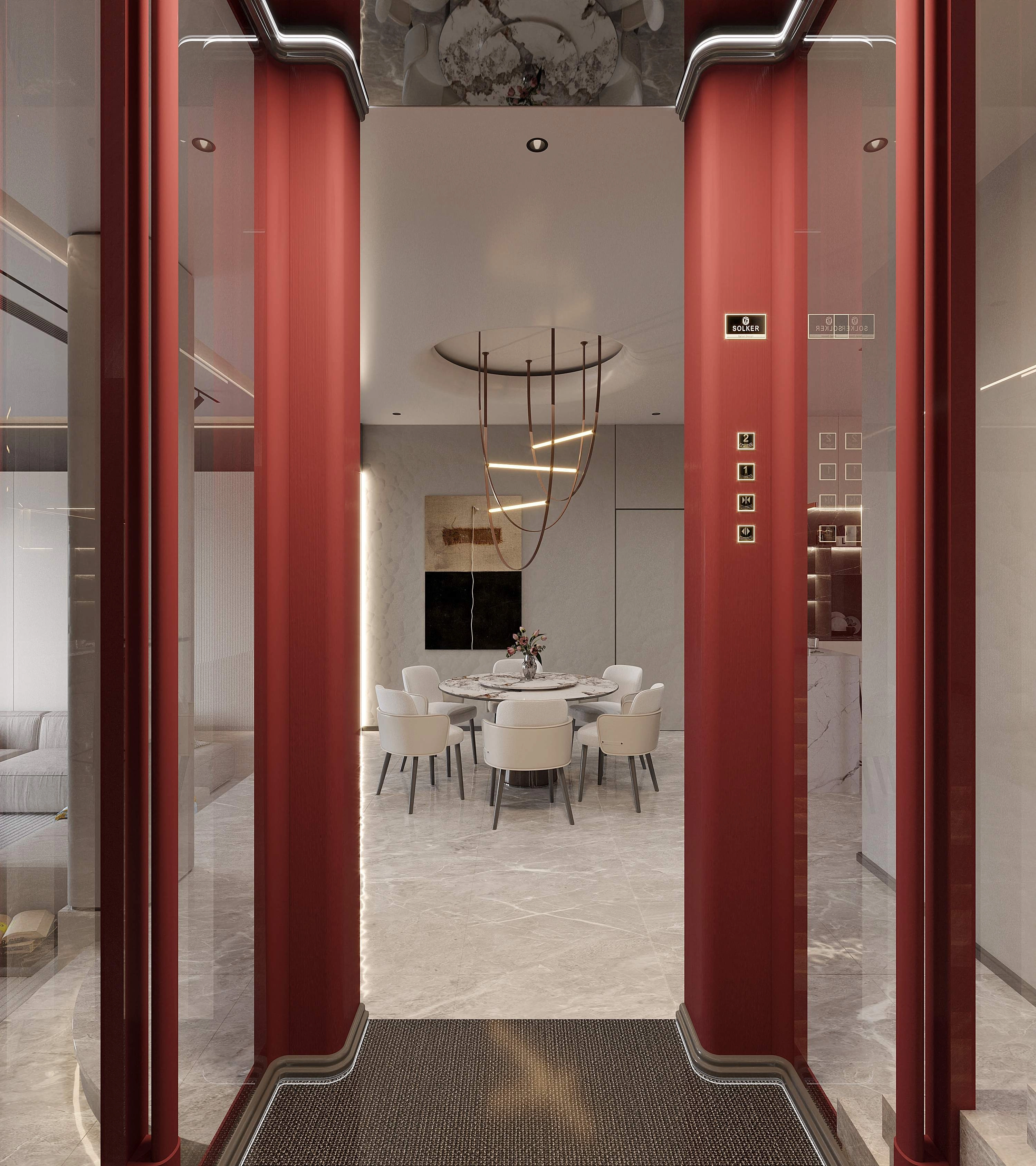
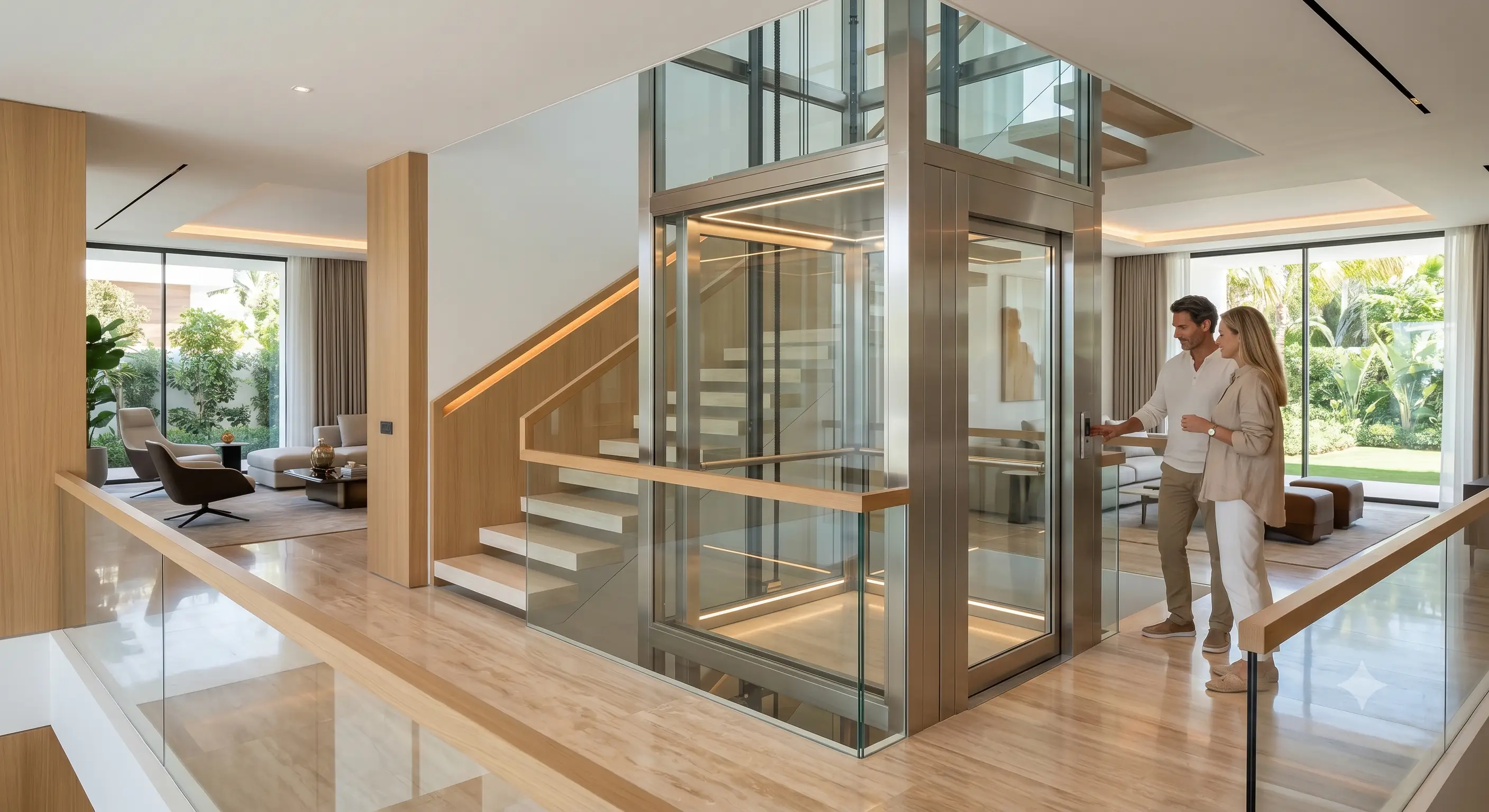
The Model-Mini is a home villa elevator in the Italian minimalist style. It features the most advanced elevator technology and has comprehensive safety protection measures. It is the most reliable guarantee for your passage in villa homes
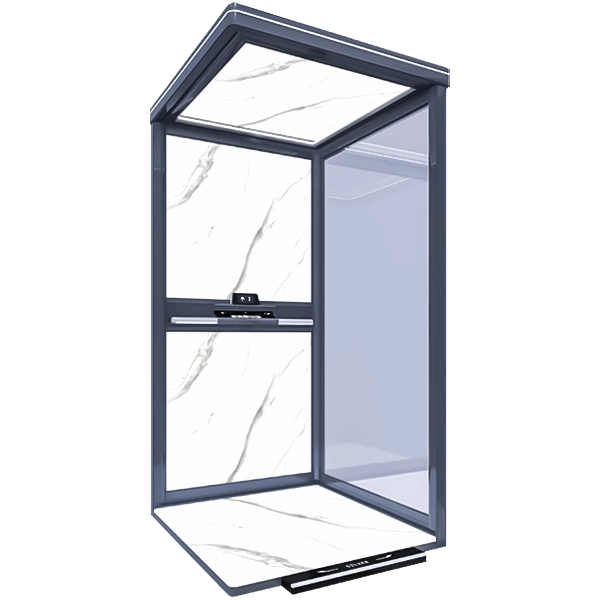
The Model-S is a home villa elevator in the Italian minimalist style. It features the most advanced elevator technology and has comprehensive safety protection measures. It is the most reliable guarantee for your passage in villa homes.
Looking for custom villa lifts manufacturing solutions?
We provide full-service OEM & ODM solutions—from concept to delivery.
Design, prototyping, production, and shipping—all in one place.
Fill out the form below for a free quote or consultation.
👉 Contact us today to start an exclusive customized partnership.
📦 Get product catalogs and wholesale prices.
🔧 Submit your design requirements for 1-to-1 exclusive matchmaking.
🌍 Become our global distribution partner.
Rest assured that your privacy is important to us, and all information provided will be handled with the utmost confidentiality.
Let's get in touch
Email: lin@solkerelevator.com
Tel: +86 133 1668 7566
Address: Floor 1, Building D, Nanxin Industry International, Nancheng District, Dongguan, China.
 Taiwan, China
 No. 21, Lane 38, 206 Yingtai Road, Yingge District, New Taipei City
 +886 0975-299-830
 United Arab Emirates
Capital Mall, Abu Dhabi, United Arab Emirates, 3rd floor, Luxera elevator +971 52 541 4685 Ceo@maharacare.com
 Melbourne, Australia
 19/12 Natalia Av, Oakleigh South, VIC 3167
+61 1300 771 86 sales@goldenhomelifts.com.au
Sydney, Australia
U28/323 Chisholm Road, Auburn, NSW 2144
+61 1300 771 86 sales@goldenhomelifts.com.au
SOLKER
SOLKER