


Thailand Villa Elevator Compliance Guide: How SOLKER's CE Certification (EN 81-41) Streamlines Local Inspection
Thailand's home elevator market is growing rapidly, yet compliance inspection remains the biggest hurdle for many owners and contractors. The good news: Thai regulations adopt a "multi-standard equivalence" principle, and EN 81-41—the European safety standard specifically for home lifts—is explicitly recognized as a valid compliance basis in Thai government project acceptance. SOLKER villa elevators hold CE certification based on EN 81-41, meaning owners who choose SOLKER can significantly reduce disputes over standard applicability during inspection and focus their energy on installation quality and documentation. This article explains Thailand's acceptance standard system, the core advantages of EN 81-41, and how SOLKER helps owners clear the inspection threshold with ease.
- 1. Thailand’s Acceptance Standard System: Why Is EN 81-41 Recognized?
- 2. Core Technical Requirements of EN 81-41 for Home Elevators
- 3. SOLKER’s CE Certification and EN 81-41 Compliance
- 4. Acceptance in Practice: What Should SOLKER Owners Prepare?
- 5. Why Is EN 81-41 the “Optimal Solution” for Home Elevators in Thailand?
- Conclusion
- FAQ
1. Thailand’s Acceptance Standard System: Why Is EN 81-41 Recognized?
Thailand’s elevator acceptance system has a key feature: it does not mandate a single standard. Instead, it accepts a combination of multiple equivalent standards. According to tender documents and acceptance specifications from Thai government projects, elevators and their components only need to meet at least one of the following standards: EN 81, ANSI A17.1, ANSI A17.2, TIS 837-2531, JIS A 4301:1983, or JIS A 4302:1992. This “multi-standard equivalence” principle appears repeatedly in technical specifications across Thai government departments and has clear regulatory effect.
For home villa elevators, EN 81-41 is the most directly applicable standard within the EN 81 series. Thai elevator engineering consultancy TL Engineering explicitly noted in its 2026 regulatory guide that EN 81-41 specifically targets home elevators, governing low-speed lifts with a speed not exceeding 0.15 m/s and no deep pit, making it highly suitable for residential use. The design philosophy of this standard is to reduce the need for building structural modifications while meeting safety requirements—highly compatible with the actual conditions of villa installation.
2. Core Technical Requirements of EN 81-41 for Home Elevators
EN 81-41 is the EU safety standard for platform lifts—including home elevators—covering the full process of design, manufacturing, installation, and testing. Its core technical requirements include:
Speed limit: The elevator running speed must not exceed 0.15 m/s. This low-speed design ensures safety in residential environments while avoiding the complex braking systems required for high-speed elevators.
Pit requirements: EN 81-41 does not require a deep pit. The elevator can be installed directly on a level floor and accessed via a ramp. This is especially important for villas that have already been decorated, avoiding large-scale destruction of the floor structure.
Safety devices: The standard mandates emergency operation, automatic braking, light curtain anti-pinch protection, and overload protection. The core concept of EN 81-41 is to ensure the elevator “stops safely, without sudden impact or dangerous movement.”
Structural simplification: EN 81-41 allows self-supporting structures without penetrating walls or significantly reinforcing floor slabs. This greatly reduces the engineering difficulty and cost of villa retrofits.
3. SOLKER’s CE Certification and EN 81-41 Compliance
SOLKER villa elevators have obtained CE certification based on EN 81-41. The CE mark is the legal product compliance mark of the European Union, indicating that the product has been assessed and meets applicable EU directives and standards. For Thai acceptance, this means there is no dispute over standard applicability for SOLKER elevators—EN 81-41 itself is explicitly listed as an acceptable standard in Thai government project acceptance checklists.
Specifically, SOLKER’s CE certification has the following practical value in Thai acceptance:
First, no dispute over standard applicability. When the acceptance committee reviews product documents, if it sees the manufacturer’s CE certificate and EN 81-41 Declaration of Conformity, it can directly confirm that the product meets Thai regulatory requirements without additional argument over “which standard applies to this product.” This directly eliminates the most common point of dispute in acceptance.
Second, safety configuration is inherently compliant. SOLKER products come standard with five layers of safety protection—automatic emergency leveling, anti-pinch light curtain, backup battery descent, overspeed mechanical locking, and remote diagnostics—fully covering EN 81-41 requirements for home elevator safety devices. In addition, the Automatic Rescue Device (ARD) equipped on SOLKER elevators meets Thailand’s mandatory requirement for power-failure entrapment protection.
Third, documentation preparation is greatly simplified. Thai acceptance usually requires contractors to submit product standard conformity certificates, installation drawings, test reports, and other documents. SOLKER can provide a complete CE certification file package and EN 81-41 Declaration of Conformity. Owners do not need to commission a third party to conduct additional standard adaptation arguments, and the acceptance cycle is significantly shortened.
Fourth, localized support reduces communication costs. SOLKER has officially signed a cooperation agreement with a Thai dealer and established localized sales and service channels. This means that technical communication, document submission, and rectification responses during acceptance can be handled by the local team, avoiding time-zone and language barriers in cross-border communication.
4. Acceptance in Practice: What Should SOLKER Owners Prepare?
Although SOLKER’s EN 81-41 certification greatly simplifies the standard applicability review, owners still need to complete the following acceptance preparation work:
Preliminary permits: If installation involves floor slab openings or structural reinforcement, a structural modification permit must be applied for from the local authority under Ministerial Regulation No. 72 issued in 2025. Construction cannot proceed with only a decoration permit.
Documentation: Submit SOLKER’s CE certificate, EN 81-41 Declaration of Conformity, installation drawings, elevator technical specifications, and other documents to the acceptance committee. SOLKER’s Thai dealer can assist in preparing the complete document package.
Safety tests: During acceptance, load tests, overload alarm tests, ARD function tests, and door safety device tests are required. SOLKER products’ performance in these tests directly corresponds to EN 81-41 test requirements, ensuring a high pass rate.
Annual inspection obligation: After installation, the elevator must be inspected and certified at least once a year by a licensed Professional Engineer. SOLKER’s Thai dealer can provide annual maintenance services to ensure long-term compliance.
5. Why Is EN 81-41 the “Optimal Solution” for Home Elevators in Thailand?
In Thailand’s multi-standard equivalence system, EN 81-41 has become the optimal choice for home elevators for three reasons:
Precise match. Unlike other standards—such as EN 81-20/50 for conventional passenger elevators or ANSI A17.1 with broader coverage—EN 81-41 is the only international standard specifically developed for home scenarios. Its technical parameters closely match the actual conditions of villa installation.
High acceptance recognition. Multiple international villa elevator brands—including Cibes, KALEA, and Aritco—use EN 81-41 as their core certification standard when entering the Thai market. This means Thai acceptance committees are already very familiar with EN 81-41 certification documents, and the review process is highly standardized.
Safety and cost balance. EN 81-41 does not compromise on safety requirements, but it is more flexible in structural requirements. It requires no deep pit and no large-scale reinforcement, directly reducing the engineering cost and time cost of villa installation.
Conclusion
The core logic of home elevator acceptance in Thailand is “multi-standard equivalence”—as long as the product meets any one of the recognized standards such as EN 81, ANSI, or TIS, it can pass the standard applicability review. SOLKER villa elevators have obtained CE certification based on EN 81-41, and EN 81-41 is precisely the home elevator standard explicitly recognized under Thai regulations. Choosing SOLKER means holding a “pass” for the acceptance process: standard disputes eliminated, safety configuration compliant, documentation preparation simplified, and local support in place. For owners seeking to install an elevator in a Thai villa, SOLKER offers not just an elevator, but a clear and efficient path to compliance. With SOLKER, the biggest barrier in local acceptance—standard applicability—is removed, making the entire inspection process significantly smoother and more predictable.
FAQ
What is EN 81-41, and why is it recognized in Thai acceptance?
EN 81-41 is the EU safety standard specifically developed for home elevators and vertical lifting platforms. It governs low-speed lifts with a running speed not exceeding 0.15 m/s and no deep pit. Its core design philosophy is to reduce the need for building structural modifications while meeting safety requirements, making it particularly suitable for villa installation. Thai elevator acceptance does not mandate a single standard. Instead, it adopts a “multi-standard equivalence” principle—a product only needs to meet any one of the recognized standards such as EN 81, ANSI, TIS 837-2531, or JIS to pass review. As the standard within the EN 81 series specifically developed for home elevators, EN 81-41 is explicitly listed as an acceptable standard in Thai government project acceptance specifications. Multiple international villa elevator brands have entered the Thai market using EN 81-41 as their core certification standard, so acceptance committees are already very familiar with certification documents based on this standard. SOLKER villa elevators have obtained CE certification based on EN 81-41. This means that during Thai acceptance, there is no dispute over standard applicability—when the acceptance committee sees the CE certificate and the EN 81-41 Declaration of Conformity, it can directly confirm that the product meets Thai regulatory requirements.
What specific advantages does SOLKER’s CE certification bring to Thai acceptance?
SOLKER’s EN 81-41 CE certification brings three practical advantages in Thai acceptance: First, it eliminates disputes over standard applicability. The most common question in acceptance is “which standard applies to this product?” The CE certificate and EN 81-41 Declaration of Conformity provided by SOLKER directly prove that the product has been assessed against an authoritative standard. The acceptance committee does not need additional argument, and the review process is significantly shortened. Second, the safety configuration is inherently compliant. SOLKER products come standard with automatic emergency leveling, anti-pinch light curtains, backup battery descent, overspeed mechanical locking, and remote diagnostics—fully covering EN 81-41 requirements for home elevator safety devices. In addition, the Automatic Rescue Device (ARD) equipped on SOLKER elevators meets Thailand’s mandatory requirement that all elevators be equipped with an ARD to ensure passengers are not trapped in the car during a power failure. Third, localized support reduces communication costs. SOLKER has established a cooperative relationship with a Thai dealer and has localized sales and service channels. Technical communication, document submission, and rectification responses during acceptance can all be handled by the local team, avoiding time-zone and language barriers in cross-border communication. The acceptance cycle is therefore greatly shortened.
After a SOLKER elevator is installed, what ongoing compliance obligations do owners still have?
Installation is not the end of compliance. Owners need to pay attention to the following ongoing obligations: Annual engineer inspection. Under Thai law, an elevator must be inspected and certified at least once a year by a licensed Professional Engineer (PE), with a certificate issued. SOLKER’s Thai dealer can assist in arranging annual inspection services. Structural modification permit. If the installation involves floor slab openings or structural reinforcement, a structural modification permit must be applied for from the local authority under Ministerial Regulation No. 72 issued in 2025. Notably, EN 81-41 itself allows self-supporting structures without penetrating walls or significantly reinforcing floor slabs. This feature can reduce the difficulty of obtaining structural permits from the design stage. Monthly maintenance. The installation contractor is usually responsible for monthly maintenance, including dispatching technicians to inspect and maintain the elevator. SOLKER’s Thai dealer can provide ongoing maintenance services to keep the elevator compliant over the long term. Load marking and overload protection. The maximum load marking must be clearly visible, and newly installed elevators after 2026 must be equipped with an overload sensor. SOLKER products come standard with overload sensing, meeting this requirement.


Customize
Can I choose specific materials or colors for the cabin?
Yes. We offer a wide range of premium materials and finishes — from stone to wood to glass.
What parts of the elevator can be customized?
You can personalize wall panels, flooring, lighting, control panels, handrails, and door finishes.
How does the customization process work?
Our design team will guide you through the steps: style selection, material choice, and 3D visualization before confirmation.
Product
How to install an elevator and what is the warranty?
We have overseas technicians who are at your service 24 hours a day, 365 days a year.
Can it be customized as required?
Yes.
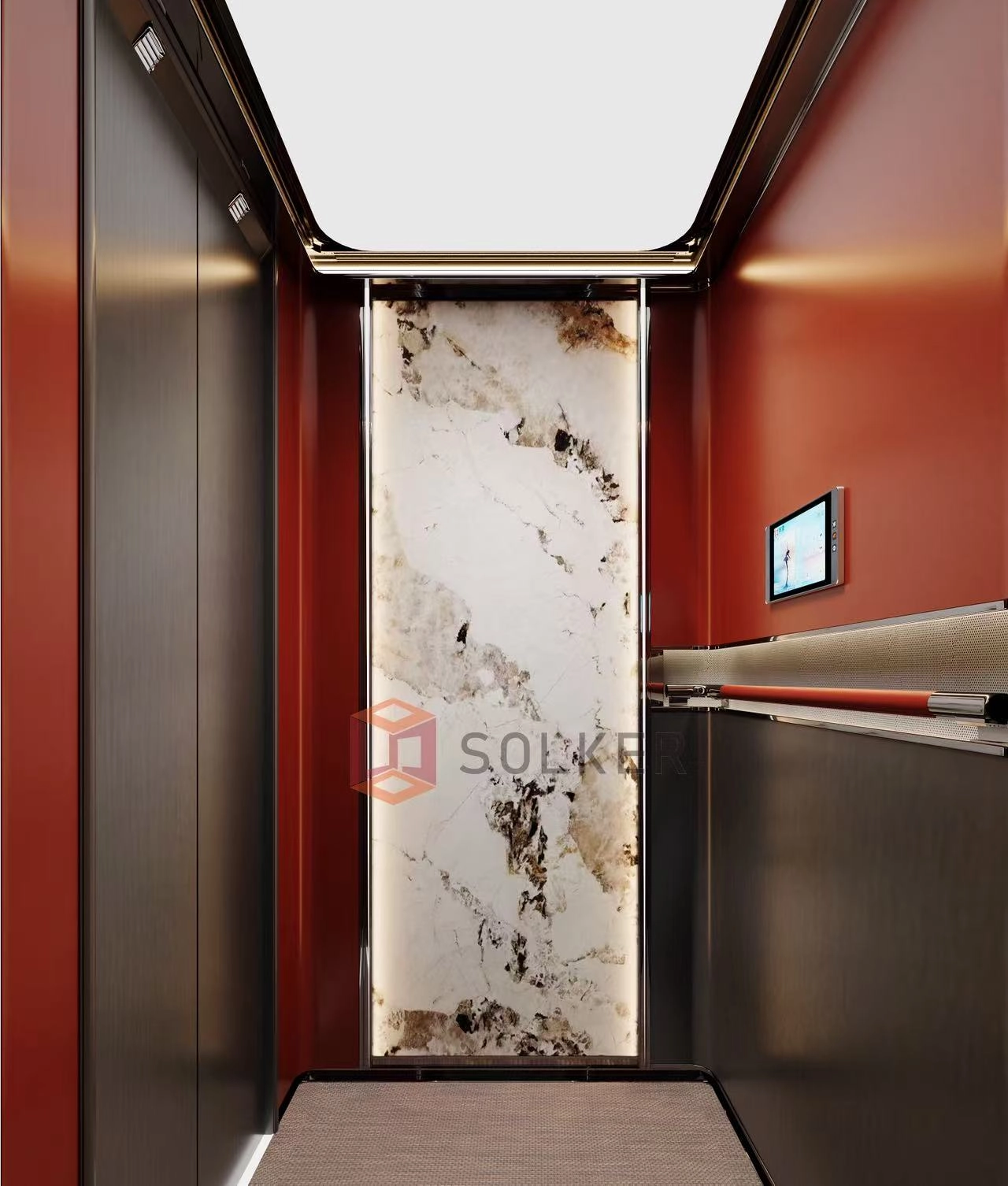
The SOLKER Model-Q3 villa elevator features a Bordeaux Red cabin interior, harmonizing the natural texture of Pandora stone with linen-textured elegant grey stainless steel, accented by refined metal trims. SOLKER's exclusive fully curved seamless integrated forming technology delivers a fluid, joint-free cabin that enhances both safety and aesthetics. Equipped with a built-in HD smart display, every ride becomes a premium experience where technology and artistry converge.

The Model A is a home villa elevator in the Italian minimalist style. It features the most advanced elevator technology and has comprehensive safety protection measures. It is the most reliable guarantee for your passage in villa homes.

The Model-Mini is a home villa elevator in the Italian minimalist style. It features the most advanced elevator technology and has comprehensive safety protection measures. It is the most reliable guarantee for your passage in villa homes
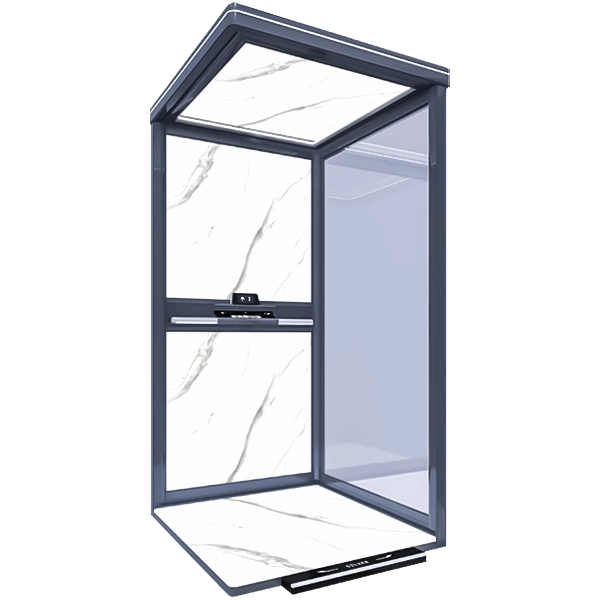
The Model-S is a home villa elevator in the Italian minimalist style. It features the most advanced elevator technology and has comprehensive safety protection measures. It is the most reliable guarantee for your passage in villa homes.
Looking for custom villa lifts manufacturing solutions?
We provide full-service OEM & ODM solutions—from concept to delivery.
Design, prototyping, production, and shipping—all in one place.
Fill out the form below for a free quote or consultation.
👉 Contact us today to start an exclusive customized partnership.
📦 Get product catalogs and wholesale prices.
🔧 Submit your design requirements for 1-to-1 exclusive matchmaking.
🌍 Become our global distribution partner.
Rest assured that your privacy is important to us, and all information provided will be handled with the utmost confidentiality.
Let's get in touch
Email: lin@solkerelevator.com
Tel: +86 133 1668 7566
Address: Floor 1, Building D, Nanxin Industry International, Nancheng District, Dongguan, China.
 Taiwan, China
 No. 21, Lane 38, 206 Yingtai Road, Yingge District, New Taipei City
 +886 0975-299-830
 United Arab Emirates
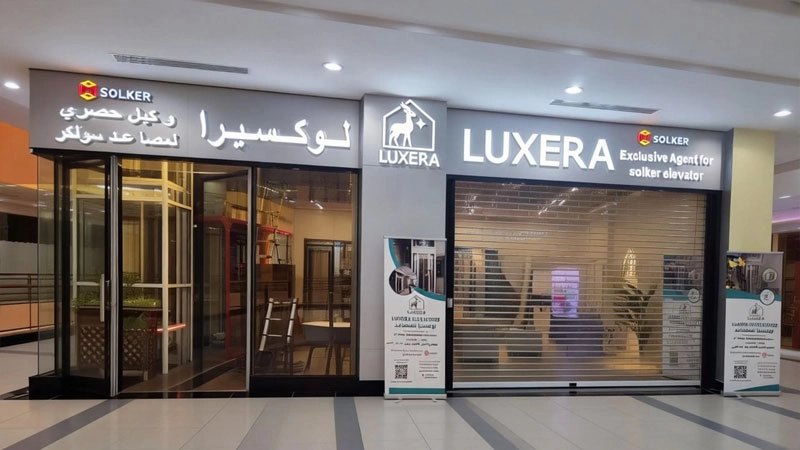
Capital Mall, Abu Dhabi, United Arab Emirates, 3rd floor, Luxera elevator +971 52 541 4685 Ceo@maharacare.com
 Melbourne, Australia
 19/12 Natalia Av, Oakleigh South, VIC 3167
+61 1300 771 86 sales@goldenhomelifts.com.au
Sydney, Australia
U28/323 Chisholm Road, Auburn, NSW 2144
+61 1300 771 86 sales@goldenhomelifts.com.au
SOLKER
SOLKER