


The Complete Guide to Elevator Knowledge: From Principles to Safety, Read This One
Elevators have long become an indispensable vertical transportation tool in modern architecture. From the simple lifts of a century ago to today's intelligent and efficient modern elevators, this technology has undergone tremendous changes. Whether you are a homeowner renovating a villa or an ordinary passenger curious about how elevators work, understanding the basic structure and safety mechanisms of elevators is highly beneficial. This article will take you through the core systems, safety devices, and how to choose the right home elevator. SOLKER Elevator tells you that a good elevator is not just a one-time investment, but a long-term investment in future quality of life.
I. The Basic Structure of an Elevator: Eight Systems Working in Harmony
A modern elevator is a complex mechatronic product composed of mechanical and electrical parts-1. Functionally, an elevator consists of the following eight major systems-25:
1. Traction System — The "heart" of the elevator. Its function is to output power, converting electrical energy into mechanical energy to drive the car. It mainly consists of the motor, brake, gearbox, traction sheave, wire ropes, and deflector sheaves-25. The working principle is "friction drive"—the motor drives the traction sheave to rotate, and the friction between the wire ropes and the traction sheave generates traction force, moving the car and counterweight (connected at opposite ends of the ropes) in opposite directions-23.
2. Guide System — The "track" of the elevator. Its function is to restrict the degrees of freedom of the car and counterweight, ensuring they move along the guide rails. It consists of guide rails, rail brackets, and guide shoes-25.
3. Car System — The passenger "cabin." Composed of the car frame and car body, this is the part that directly carries passengers-25.
4. Door System — The safety "gateway." Its function is to ensure safe passenger entry and exit, consisting of door frames, door panels, automatic door locks, car doors, and door operators-25.
5. Weight Balance System — The energy-saving "secret." Its function is to balance the weight difference between the car and the counterweight, with a balance coefficient typically of 40%–50%-25. It is precisely because of the counterweight that the motor requires only minimal power to drive the elevator.
6. Electric Drive System — The power "source." It provides power and controls the elevator's speed, consisting of the traction motor, power supply system, speed control devices, etc.-25.
7. Electrical Control System — The "brain" of the elevator. It controls and manages elevator operation, including control panels, floor indicators, control cabinets, etc.-25.
8. Safety Protection System — The "defense line" for life. It ensures safe elevator use, preventing and eliminating all safety hazards during operation-25.
II. Elevator Safety Protection: Three Lines of Defense for Every Ride
Many people have concerns about elevator safety, worrying about "elevator free-fall." SOLKER Elevator tells you that such concerns are unnecessary—modern elevators have at least three safety defense lines-38.
First Defense Line: Speed Limiter. A speed limiter is an overspeed detection device, typically installed in the machine room or at the top of the hoistway-. When the elevator overspeeds or loses control, it cuts off the safety circuit through an electrical switch, thereby cutting off the system power and forcing the elevator to stop immediately-38.
Second Defense Line: Safety Gear. If the car continues to fall at high speed after the speed limiter sends a stop signal, the safety gear is triggered—it firmly clamps the car onto the guide rails, bringing the elevator to an immediate stop-38. The speed limiter and safety gear work together as a linked protection device in case of overspeed or loss of control-.
Third Defense Line: Buffer. The buffer is installed on the floor of the pit at the bottom of the hoistway-. When the car lands on the buffer, it absorbs and dissipates all inertial and impact forces, keeping them within the range bearable by the human body-38.
In addition, elevators are equipped with a series of other safety measures: landing door locks and car door electrical interlock devices (ensuring the elevator cannot start when doors are not closed), photoelectric door safety protection devices, car overload alarms, power supply phase failure protection, and more-25. SOLKER Elevator tells you that a qualified home elevator must meet the most stringent safety standards—international certifications such as EN 81 and ASME A18.1 are basic requirements-12-19.
III. Home Elevator Drive Systems: Traction vs. Forced-Drive
For homeowners considering installing a home elevator, choosing the right drive system is a key decision. There are two mainstream drive systems for home elevators-23:
Traction Elevators are the classic choice with a century of proven technology-23. Key advantages include: quiet and smooth operation (permanent magnet synchronous gearless machines eliminate mechanical gear friction noise)-23, energy efficiency (using a counterweight to balance the car's weight, the motor requires only about 1kW of power, with monthly electricity costs typically not exceeding 20–30 RMB)-23, and long service life (the counterweight system ensures balanced forces, extending lifespan to more than double that of counterweight-less platforms)-23.
Forced-Drive Elevators (also known as positive-drive elevators) are suitable for space-constrained installations, requiring no counterweight and featuring a more compact structure-23.
SOLKER Elevator tells you that different homes and different building structures suit different drive systems. SOLKER offers a rich product lineup—the model-mini series (forced-drive elevator) and the model-S, model-Q, and model-A series (traction elevators)-23—to meet diverse needs ranging from compact spaces to spacious villas.
IV. Why Choose SOLKER Elevator?
Among the many elevator brands, SOLKER Elevator stands out with the following advantages:
Italian Design Heritage, Premium Quality Assurance. SOLKER villa elevators are based on exquisite Italian design concepts, featuring independently developed precision manufacturing and high-end design, producing a series of fashionable home elevators that enhance quality of life-10. The company holds the "SOLKER" Italian trademark registration certificate, High-Tech Enterprise certification, and dozens of patents for core components and elevator appearance designs-10.
Twenty Years of Professional Expertise, Focused on Villa Elevators. SOLKER is a high-end villa elevator brand with over two decades of experience in home elevator R&D, design, manufacturing, sales, and maintenance-12-. The company is dedicated to the villa home elevator sector—"born for villas"-10.
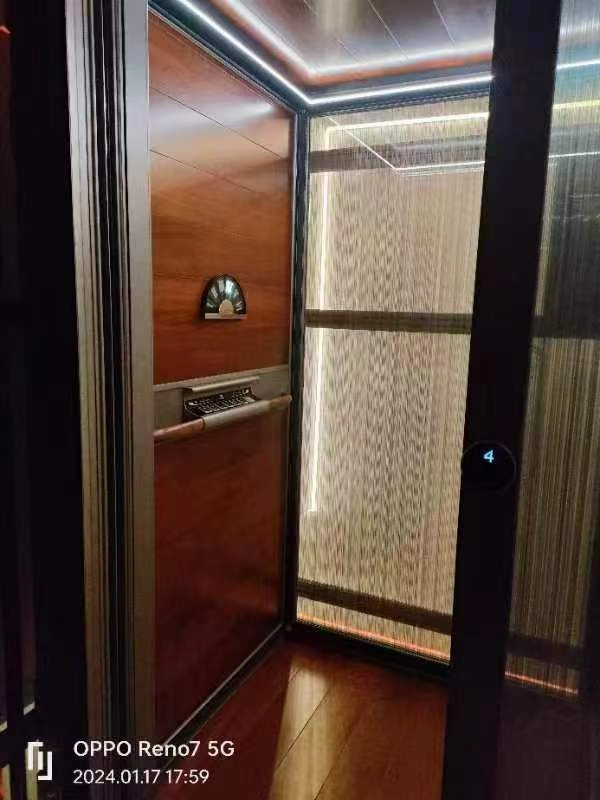
Highly Customizable, Matching Your Home Style. SOLKER offers private customization services, from glass cabins, wood veneers, stainless steel finishes, and custom lighting to control panel styles and floor materials—all tailored to complement your home décor-19-.
Comprehensive Service Network, Worry-Free Assurance. SOLKER experience centers are located across multiple provinces and cities, with a complete after-sales service system and a grid-based maintenance personnel mechanism, ensuring safe and reliable purchase and use-10.
Global Vision, International Presence. SOLKER is actively expanding into global markets, with products already entering high-end markets such as the Middle East-11. Products are designed from the outset considering different regional climate conditions and building codes, ensuring stable and efficient operation in various environments-11.
Conclusion
Though small in size, elevators encompass vast knowledge. From the precise transmission of the traction system to the multi-layered defense of the safety protection system, every elevator embodies the wisdom and craftsmanship of countless engineers. SOLKER Elevator tells you that choosing a good elevator means choosing peace of mind, choosing quality, and choosing a beautiful expectation for future life. Whether you are planning a new home or considering upgrading your existing vertical transportation solution, it is worth entrusting professional matters to professionals—let SOLKER create an exclusive, elegant ride experience for you.
FAQ
My home is already fully decorated. Can I still install an elevator? Will it ruin my existing structure and interior?
This is the first concern for most homeowners. In fact, modern home elevators are designed with retrofitting in mind. Minimal civil work: Mainstream models (especially MRL traction and forced‑drive types) require only a small hoistway footprint. The hoistway can be placed against an existing wall or in the vacant space of a stairwell—no extra load‑bearing wall is needed. Flexible pit and overhead height: Many models support shallow pits (as low as 150mm) or even pit‑less designs. Overhead height can be as low as about 2600mm, which suits the vast majority of villas and duplexes. Controlled construction impact: Our professional team will survey your site first, produce custom drawings, and use dust‑free and low‑noise methods. Installation usually takes only a few days, with minimal disruption to your daily life. Seamless aesthetic integration: Cabin interiors, flooring, lighting, and control panels can all be customised to match your existing décor, so the elevator looks like it was always part of the house. SOLKER Elevator tells you: Our installation process starts with an on‑site survey, offering a “one elevator, one solution” private customisation for every home. You never need to worry about size mismatches or style clashes—we can even adjust wood veneer colours and glass transparency to your preference, making it truly possible to install an elevator even after decoration.
Is the elevator really safe? What about power outages or broken cables?
Safety is the lifeline of any elevator and our top priority in design. Modern elevators are equipped with a complete set of redundant protection mechanisms, far more reliable than you might imagine: Power outage response: Every elevator comes with an emergency battery (UPS). In the event of a mains power failure, the battery automatically takes over, slowly moves the car to the nearest floor, levels it, and opens the doors—you won’t be trapped. Overspeed protection: When the elevator speed exceeds 115% of its rated speed, the speed limiter immediately activates, cutting off the safety circuit and mechanically triggering the safety gear, which clamps the car firmly onto the guide rails—this is a purely mechanical brake that does not rely on any electronic components. Final buffer: In the extremely unlikely event that the car still travels to the pit, the hydraulic or spring buffer at the bottom absorbs all impact energy, reducing the shock to within the human body’s safe tolerance. Multiple real‑time monitors: The control system constantly monitors door locks, speed, load, temperature, and other parameters. Any abnormality triggers an early warning and automatic protective actions. SOLKER Elevator tells you: Our products strictly comply with Chinese national standard GB 7588 and also hold dual international safety certifications—EN 81 (Europe) and ASME A18.1 (USA). Each elevator undergoes thousands of simulated fault tests before delivery, ensuring every safety component performs flawlessly. You and your family can use it with total peace of mind.
Are the running costs high? What are the typical electricity and maintenance expenses?
Many clients worry about affordability after purchase, but these concerns are largely unfounded. Let’s do the real math: Electricity is minimal: For a traction elevator (with counterweight), the motor power is usually around 1kW. For an average family of three using it 30‑50 times a day, monthly consumption is about 20‑30 kWh, costing less than 20 RMB—cheaper than a large double‑door refrigerator. Transparent maintenance: Home elevators are used far less frequently than commercial ones, so 2‑4 service visits per year are typically sufficient. Reputable brands offer fixed‑price annual contracts with clear fees covering routine checks, lubrication, adjustments, and replacement of wear‑and‑tear parts. Maintenance‑free core components: The permanent‑magnet synchronous gearless machine never needs oil changes and lasts 15‑20 years; guide rails and wire ropes have long service lives when regularly inspected. Long‑term value: An elevator not only makes life easier for seniors, children, and heavy‑load moving but also significantly increases property value. All things considered, the daily cost is less than a cup of bubble tea, yet you gain decades of convenience and comfort. SOLKER Elevator tells you: We operate a grid‑based maintenance network with multiple direct service branches across the country. Our technicians visit regularly and maintain a dedicated electronic file for each elevator, with automatic reminders for scheduled servicing. Minor faults can be resolved via remote diagnostics, and we guarantee on‑site service within 24 hours for major issues. We make sure your experience is hassle‑free and worry‑free.


Customize
Is customization available for both indoor and outdoor elevators?
Yes. All custom options apply to indoor and weatherproof outdoor models.
How does the customization process work?
Our design team will guide you through the steps: style selection, material choice, and 3D visualization before confirmation.
Do I need architectural drawings to start customization?
Not required initially. We can start with basic dimensions or photos and assist with full planning.
Product
Can it be customized as required?
Yes.
How long is the production date required?
Under normal circumstances, the production time is 35 to 45 days.
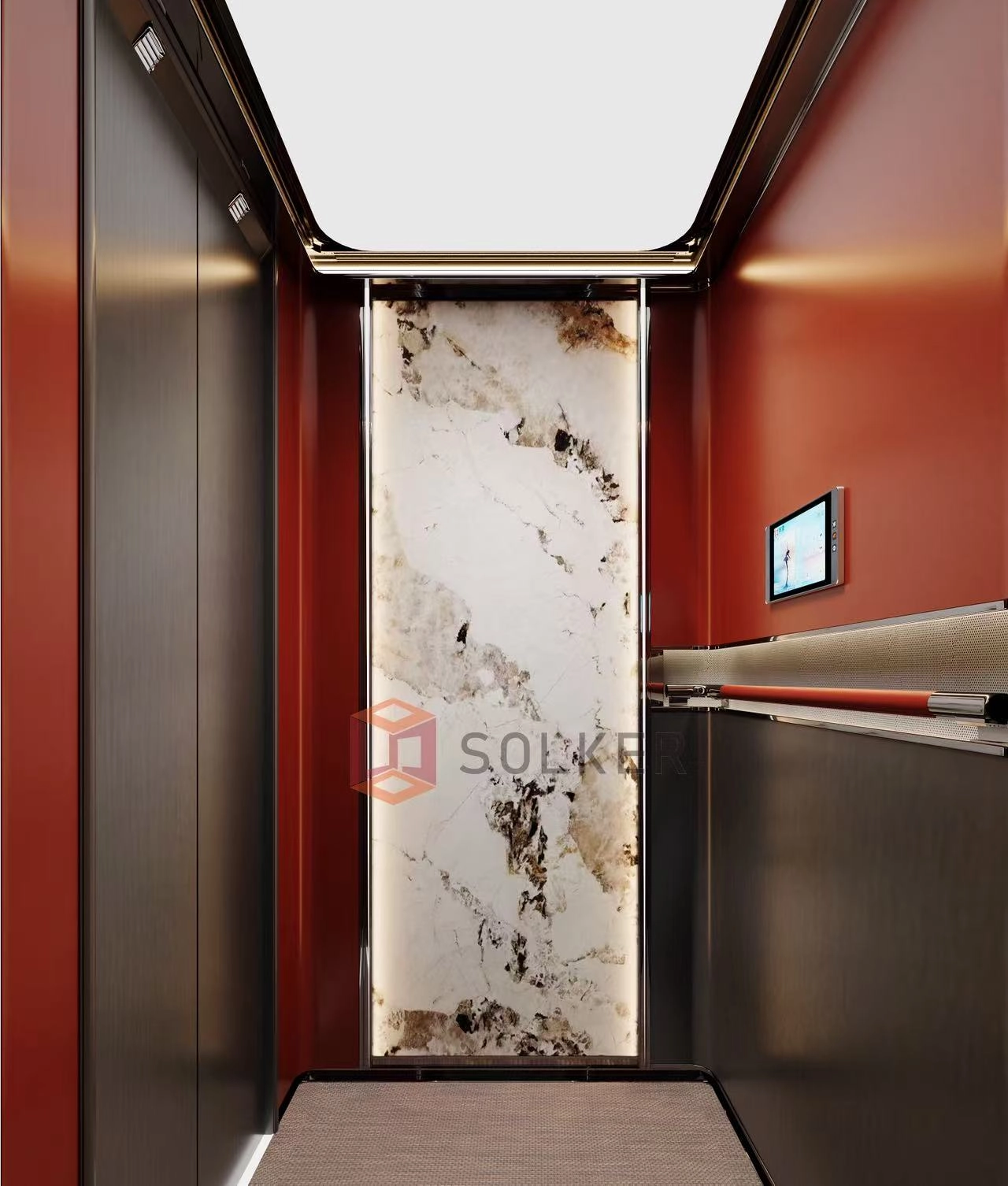
The SOLKER Model-Q3 villa elevator features a Bordeaux Red cabin interior, harmonizing the natural texture of Pandora stone with linen-textured elegant grey stainless steel, accented by refined metal trims. SOLKER's exclusive fully curved seamless integrated forming technology delivers a fluid, joint-free cabin that enhances both safety and aesthetics. Equipped with a built-in HD smart display, every ride becomes a premium experience where technology and artistry converge.

The Model A is a home villa elevator in the Italian minimalist style. It features the most advanced elevator technology and has comprehensive safety protection measures. It is the most reliable guarantee for your passage in villa homes.

The Model-Mini is a home villa elevator in the Italian minimalist style. It features the most advanced elevator technology and has comprehensive safety protection measures. It is the most reliable guarantee for your passage in villa homes
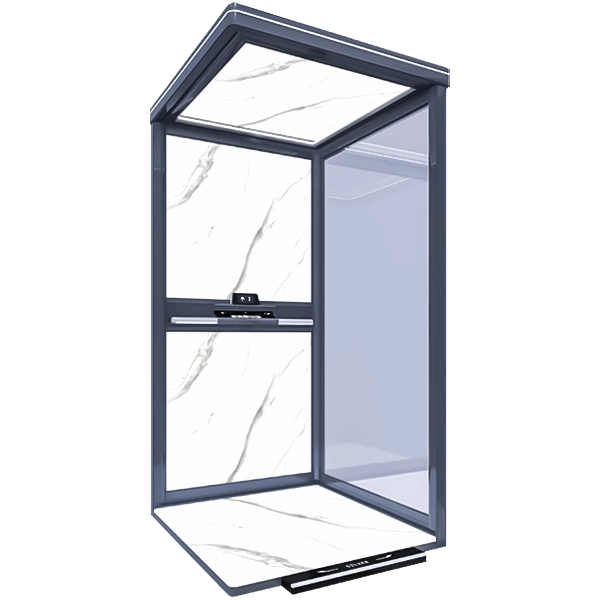
The Model-S is a home villa elevator in the Italian minimalist style. It features the most advanced elevator technology and has comprehensive safety protection measures. It is the most reliable guarantee for your passage in villa homes.
Looking for custom villa lifts manufacturing solutions?
We provide full-service OEM & ODM solutions—from concept to delivery.
Design, prototyping, production, and shipping—all in one place.
Fill out the form below for a free quote or consultation.
👉 Contact us today to start an exclusive customized partnership.
📦 Get product catalogs and wholesale prices.
🔧 Submit your design requirements for 1-to-1 exclusive matchmaking.
🌍 Become our global distribution partner.
Rest assured that your privacy is important to us, and all information provided will be handled with the utmost confidentiality.
Let's get in touch
Email: lin@solkerelevator.com
Tel: +86 133 1668 7566
Address: Floor 1, Building D, Nanxin Industry International, Nancheng District, Dongguan, China.
 Taiwan, China
 No. 21, Lane 38, 206 Yingtai Road, Yingge District, New Taipei City
 +886 0975-299-830
 United Arab Emirates
Capital Mall, Abu Dhabi, United Arab Emirates, 3rd floor, Luxera elevator +971 52 541 4685 Ceo@maharacare.com
 Melbourne, Australia
 19/12 Natalia Av, Oakleigh South, VIC 3167
+61 1300 771 86 sales@goldenhomelifts.com.au
Sydney, Australia
U28/323 Chisholm Road, Auburn, NSW 2144
+61 1300 771 86 sales@goldenhomelifts.com.au
SOLKER
SOLKER