


When Dubai Craftsmen Meet Shenzhen’s Dadaocheng: SOLKER Distributors Install in a Chinese Residential Community
In August 2026, SOLKER Elevator’s core distributor team from the UAE completed a rigorous ten‑day technical training at the Dongguan headquarters, then headed straight to the upscale “Dadaocheng” residential complex in Shenzhen for a live installation for a Chinese homeowner. The owner shared his experience with the elevator’s ride comfort and interior coordination, and praised the overseas distributors’ professionalism and efficiency. This article captures the cross‑cultural, cross‑border “technical drill” in action.
Shenzhen in August – heat and humidity wrapped in sea breezes. Inside a high‑rise unit in the Dadaocheng complex, several technicians with sun‑tanned skin, speaking English with Arabic accents, were busy aligning elevator guide rails. This wasn’t a routine construction day – they were SOLKER’s authorized distributor team from the UAE, fresh from a ten‑day intensive boot camp in Dongguan, now turning classroom theory into on‑site reality.
From Dongguan to Shenzhen: Ten Days of Hard‑Core Refinement
Early August, SOLKER Elevator welcomed technical leads from its UAE core distributor. At the Dongguan headquarters, a full‑spectrum training program kicked off – from dynamic car tuning and door‑controller parameter optimization, to precise shaft measurement and rail verticality calibration; from mini‑elevator software logic to panoramic glass cabin assembly. Every module required hands‑on operation and repeated verification.
The toughest segment was shaft measurement. On a mock construction site, trainees used laser distance meters, plumb lines, and spirit levels to achieve millimeter‑level accuracy on both masonry and steel structures. “Measurement is the first lifeline of installation,” the instructor stressed. “One millimeter off, and ride comfort drops a level.” Given the team’s Middle Eastern background, the training also covered climate‑adaptive installation techniques – from ventilation and heat dissipation to moisture and corrosion protection – ensuring they could deliver “SOLKER standards” anywhere in the world.
The ten‑day program concluded with a strict written exam and practical assessment. Every technician passed with flying colors and received SOLKER’s factory‑level technical certification. The UAE distributor head remarked, “This training didn’t just teach us ‘how’ – it taught us ‘why’. That’s true technology transfer.”
Shenzhen Dadaocheng: The Overseas Technicians’ “Final Exam”
The day after training, the team moved from Dongguan to Shenzhen. Their “exam paper” was laid out in a duplex apartment in Longgang’s Dadaocheng complex. The owner, Mr. Deng, is a connoisseur of fine living – he chose the SOLKER elevator not just for convenience but as a “moving piece of furniture.”
Initially, Mr. Deng was curious – and a bit wary – about “foreign technicians” installing in his home. Would communication be smooth? Would standards align? But the team’s performance quickly dispelled his concerns.
“They were well‑organized and highly skilled,” Mr. Deng said, even sharing short videos on his social media. “Shaft survey, rail mounting, door operator setup, cabin assembly – every step was methodical, with laser levels and torque wrenches throughout.” What surprised him more was that the overseas team was thoroughly familiar with Chinese building codes and electrical standards, and could even read construction drawings annotated in Chinese.
Efficiency also exceeded expectations. The projected two‑week schedule was completed in just eight working days, including all mechanical and electrical work, and passed commissioning on the first try. “That kind of speed is rare even among local installers,” Mr. Deng smiled. “Clearly, SOLKER’s training is no mere formality.”
“An Elevator Is the Vertical Verse of Home”
After handover, Mr. Deng enthusiastically invited the team to tour his home and share his interior design philosophy.
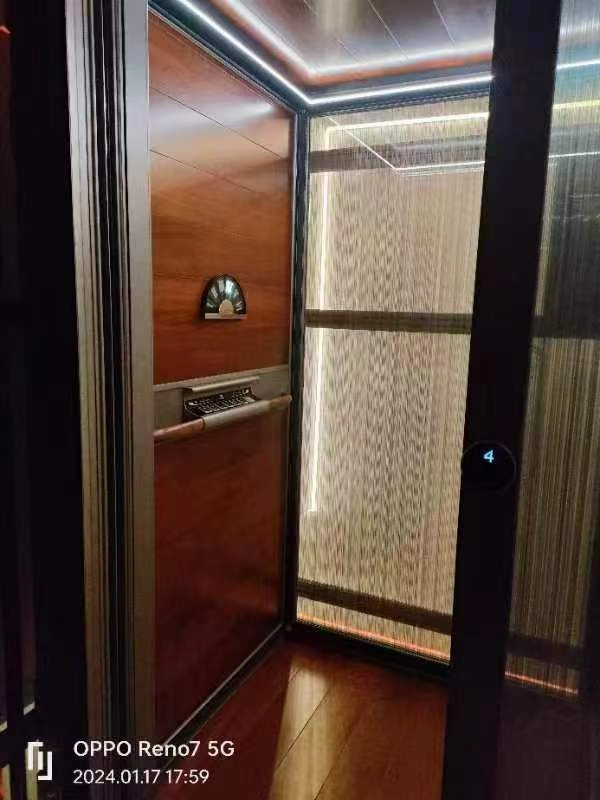
“Many treat an elevator as a utility, but I see it as art.” His home features a modern light‑luxury style, with marble, wooden grilles, and warm lighting. SOLKER’s custom glass cabin fits right in – transparent walls with bronze‑toned metal trim, flooring matching the living room’s sintered stone, and a lighting system that shifts from cool to warm tones. “In the morning, sunlight from the east window makes the elevator glow like amber; at night, with warm light, it becomes a moving fireplace,” Mr. Deng described vividly.
He particularly praised the overseas distributor team: “Honestly, I worried that foreign technicians might not grasp Chinese installation habits. But SOLKER’s training for distributors is exceptional – they’re not just technically skilled, but also detail‑oriented, like reserving maintenance space, optimizing cable trays, and even coordinating construction schedules with the property management on their own. This level of training commitment is rare in our industry.”
He pointed to the elevator’s touchscreen: “The interface is clean and intuitive – even the elderly and kids can use it without trouble. Safety features – pinch protection, emergency call, power‑failure rescue – are all there. And it runs whisper‑quiet, smoother than mall elevators.”
From “Product Export” to “Capability Export”
Mr. Deng’s appreciation encapsulates SOLKER’s global strategy. In today’s competitive elevator market, SOLKER adheres to the philosophy of “teaching fishing rather than giving fish” – exporting not just high‑quality products, but also a replicable technical certification system and service standards.
SOLKER’s “factory‑level authorized certification” model requires all overseas technicians to pass theoretical and practical exams at the Chinese headquarters – equivalent to those for local technicians – before gaining independent installation credentials. This means that whether in a Dubai villa or a Shenzhen apartment, end‑users receive the same “SOLKER standard” service. And having overseas technicians on the ground cuts response time by 3‑5 times compared to flying in engineers from headquarters, while maintaining identical quality.
“We train not just installation moves, but also problem‑solving mindsets,” summarized SOLKER’s training director. “Today they install in Shenzhen; tomorrow in Singapore or London – they’ll still deliver top‑notch performance.”
As sunset streamed through the floor‑to‑ceiling windows of Dadaocheng, casting golden light on the new elevator cabin, Mr. Deng pressed the call button. The car descended smoothly, doors opened, lights glowed – like an elegant butler. The UAE technicians packed their tools, shook hands with Mr. Deng, and departed for their next project. Shenzhen’s Dadaocheng will forever be the first “perfect‑score Chinese assignment” on their resumes.
From Dongguan’s training classrooms to Shenzhen’s residential towers, SOLKER is using solid technology transfer and deep cultural integration to ensure that “Intelligent Made in China” – delivered by overseas artisans – takes root in every corner of the world. And every satisfied homeowner’s smile is the warmest affirmation of this “capability export” model.
FAQ
Concern: What makes SOLKER stand out compared to other well‑known brands?
When choosing a home elevator, customers weigh brand reputation, aesthetics, safety, and customization. SOLKER’s edge lies in “tailor‑made + certified service.” Product‑wise, it offers full customization of cabin size, materials, lighting, and panels to match any interior style. Service‑wise, all overseas distributors must complete a rigorous ten‑day theoretical and practical training at the Chinese headquarters and obtain factory‑level certification before independent installation. This means customers receive not a generic product but a bespoke solution delivered to headquarters standards. For discerning homeowners, this combination of personalization and quality assurance often outweighs a mere brand name.
Concern: Will foreign technicians struggle with local codes, language, and installation habits in China?
This is a common initial worry. However, SOLKER’s training explicitly addresses cross‑border challenges – covering national building codes, electrical standards, construction practices, and bilingual terminology. Before arrival, the distributor team is already proficient in Chinese national standards (GB) and can read construction drawings annotated in Chinese. They carry bilingual blueprints and on‑site translation tools. In practice, they use laser levels, torque wrenches, and other precision instruments, with workmanship identical to that of Chinese factory technicians. Communication is facilitated by lead engineers who can speak basic Chinese, and SOLKER headquarters provides remote backup. Hence, clients need not fear “foreigners cannot adapt” – they are thoroughly trained “executors of Chinese standards.”
Concern: How long will installation take, and will it make a mess at home?
Typical residential elevator installation takes 10‑15 working days, but well‑trained overseas teams often complete it in 8‑10 days. During construction, they strictly follow property management rules, schedule noisy work outside rest hours, clean up daily, and remove debris promptly. Dust and clutter are mostly confined to the shaft area and do not spread widely. Brief power cuts during testing are communicated at least 24 hours in advance. Overall, professional site management minimizes disruption far better than ordinary contractors. With simple coordination on daily routines, residents can go about their lives with little interference.
Concern: Will the elevator clash with my interior design and look too industrial?
This is a key pain point for home elevators. SOLKER’s customization allows customers to choose from various cabin wall materials (glass, stainless steel, wood veneer), floorings (sintered stone, marble, timber), handrail styles, lighting color temperatures, and control panel finishes. Before production, a designer visits to measure and provides 3D renderings for approval. In actual projects, customized elevators often become design highlights rather than eyesores – for instance, a glass cabin with warm lighting perfectly complements modern minimalist or light‑luxury interiors. With thorough upfront consultation on style preferences, the elevator can truly become a “vertical extension of home,” not an industrial intrusion.
Concern: Can the overseas distributor provide long‑term maintenance after installation?
Service continuity is a top priority for premium clients. SOLKER adopts a “factory‑certified + local spare‑parts inventory” model. Certified distributors are not only installers but also the official after‑sales service centers for their regions, stocking standard spare parts and receiving year‑round remote technical support. At contract signing, clients receive a detailed service manual listing maintenance intervals (typically semi‑annual), inspection checklists, and emergency contacts. Distributors proactively follow up after handover. In case of faults, local response time is generally within 48 hours – far faster than dispatching engineers from abroad. Thus, customers need not worry about being abandoned post‑installation; overseas distributors deliver full life‑cycle care just like local service providers.


Customize
How does the customization process work?
Our design team will guide you through the steps: style selection, material choice, and 3D visualization before confirmation.
Can I choose specific materials or colors for the cabin?
Yes. We offer a wide range of premium materials and finishes — from stone to wood to glass.
How long does a custom order take to deliver?
On average, production takes 30–45 days after confirmation, depending on your configuration.
Is customization available for both indoor and outdoor elevators?
Yes. All custom options apply to indoor and weatherproof outdoor models.
Do I need architectural drawings to start customization?
Not required initially. We can start with basic dimensions or photos and assist with full planning.
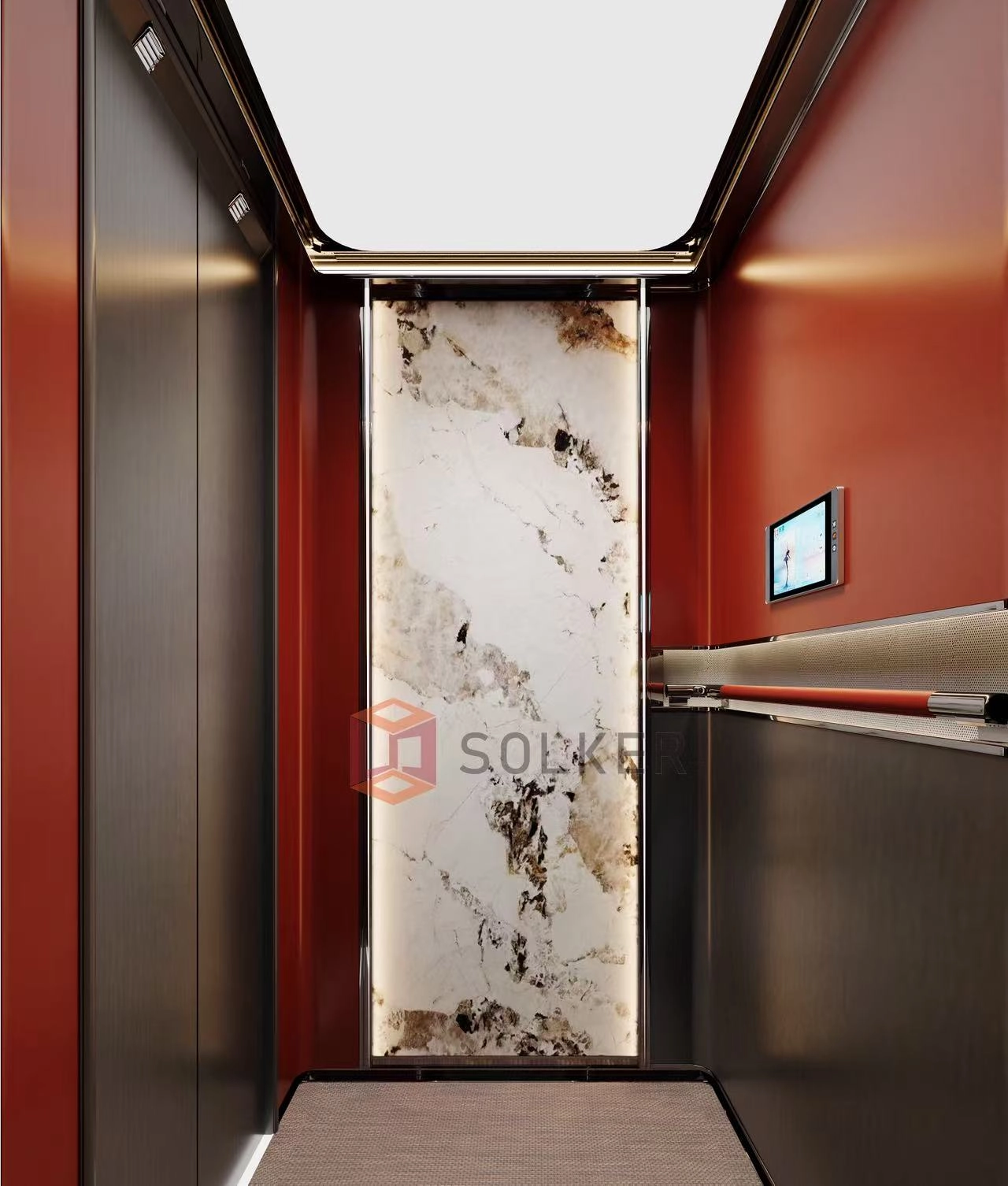
The SOLKER Model-Q3 villa elevator features a Bordeaux Red cabin interior, harmonizing the natural texture of Pandora stone with linen-textured elegant grey stainless steel, accented by refined metal trims. SOLKER's exclusive fully curved seamless integrated forming technology delivers a fluid, joint-free cabin that enhances both safety and aesthetics. Equipped with a built-in HD smart display, every ride becomes a premium experience where technology and artistry converge.

The Model A is a home villa elevator in the Italian minimalist style. It features the most advanced elevator technology and has comprehensive safety protection measures. It is the most reliable guarantee for your passage in villa homes.

The Model-Mini is a home villa elevator in the Italian minimalist style. It features the most advanced elevator technology and has comprehensive safety protection measures. It is the most reliable guarantee for your passage in villa homes
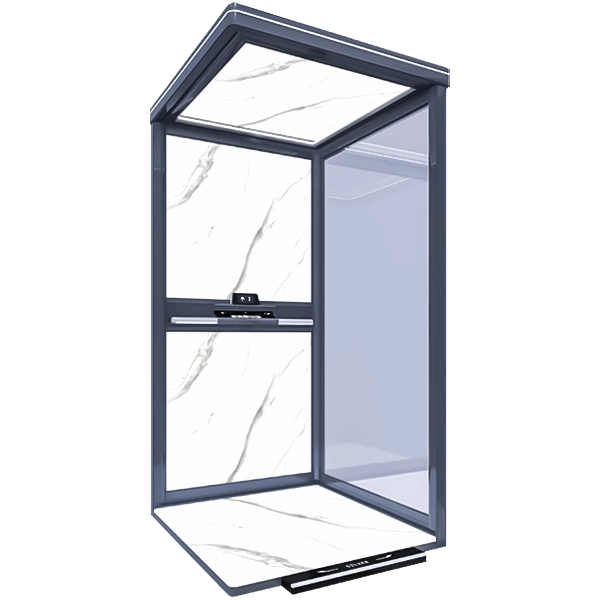
The Model-S is a home villa elevator in the Italian minimalist style. It features the most advanced elevator technology and has comprehensive safety protection measures. It is the most reliable guarantee for your passage in villa homes.
Looking for custom villa lifts manufacturing solutions?
We provide full-service OEM & ODM solutions—from concept to delivery.
Design, prototyping, production, and shipping—all in one place.
Fill out the form below for a free quote or consultation.
👉 Contact us today to start an exclusive customized partnership.
📦 Get product catalogs and wholesale prices.
🔧 Submit your design requirements for 1-to-1 exclusive matchmaking.
🌍 Become our global distribution partner.
Rest assured that your privacy is important to us, and all information provided will be handled with the utmost confidentiality.
Let's get in touch
Email: lin@solkerelevator.com
Tel: +86 133 1668 7566
Address: Floor 1, Building D, Nanxin Industry International, Nancheng District, Dongguan, China.
 Taiwan, China
 No. 21, Lane 38, 206 Yingtai Road, Yingge District, New Taipei City
 +886 0975-299-830
 United Arab Emirates
Capital Mall, Abu Dhabi, United Arab Emirates, 3rd floor, Luxera elevator +971 52 541 4685 Ceo@maharacare.com
 Melbourne, Australia
 19/12 Natalia Av, Oakleigh South, VIC 3167
+61 1300 771 86 sales@goldenhomelifts.com.au
Sydney, Australia
U28/323 Chisholm Road, Auburn, NSW 2144
+61 1300 771 86 sales@goldenhomelifts.com.au
SOLKER
SOLKER