


1. Different users and application scenarios
Commercial elevators mainly serve public places such as office buildings, shopping malls, hotels, hospitals, and transportation buildings. They face high-frequency, continuous, multi-passenger traffic and emphasize transportation efficiency, durability, and public safety. Home elevators are mainly designed for villas, duplex homes, and private residences used by a single family. Their users are relatively fixed, and greater emphasis is placed on comfort, quietness, aesthetics, and space adaptability. SOLKER reminds buyers that the application scenario determines the selection logic—price or appearance alone should not be the deciding factor.
2. Different load, speed, and travel height
Commercial elevators generally require higher load capacity, higher speed, and greater travel height to handle peak passenger flow and taller buildings. Home elevators usually have lower load capacity, lower speed, and limited travel height, with more focus on smoothness, quietness, and privacy. Directly reducing a commercial elevator for residential use may lead to wasted civil works, higher energy consumption, and insufficient comfort. Conversely, using a home elevator for public passenger traffic may fail to meet high-frequency use and safety redundancy requirements.
3. Different shaft, civil works, and installation conditions
Commercial elevators usually require dedicated shafts, machine rooms, or reserved installation space, with higher requirements for building structure, pit depth, overhead height, ventilation, and fire protection. Home elevators place more emphasis on adaptability to existing residences. Common solutions include compact shafts, machine-room-less designs, platform lifts, and space-saving configurations, some of which can be installed in limited spaces. SOLKER recommends confirming shaft dimensions, pit conditions, overhead height, and power supply at an early stage to avoid repeated modifications later.
4. Different safety standards and compliance requirements
Commercial elevators are public building equipment and usually need to comply with local special equipment regulations, public building safety codes, and inspection requirements. The responsible parties, maintenance records, and periodic inspection requirements are often stricter. Home elevators are generally designed according to standards for home elevators or private residential elevators. Although safety is equally important, their rated parameters, protective structures, and regulatory pathways differ from those of commercial elevators. SOLKER emphasizes that compliance is not optional; local regulations and acceptance procedures should be clarified before selection.
5. Different drive systems and comfort priorities
Commercial elevators focus more on peak transportation efficiency, stable start/stop performance, and long-term durability. Home elevators focus more on low noise, low vibration, smooth leveling, and integration with home interiors. Home elevators may use screw, hydraulic, traction, or platform-based drive solutions, depending on the residential structure, travel height, and usage frequency. A commercial elevator’s ability to “run fast and carry more” does not necessarily mean it offers the “comfortable ride and beautiful appearance” expected in a home.
6. Different maintenance and service life requirements
Commercial elevators are used frequently and usually require more frequent inspection, maintenance, and spare parts management, with higher requirements for service response speed. Home elevators are used less frequently but still require regular maintenance, especially for safety components, door systems, drive systems, and emergency devices. SOLKER recommends that home elevator users pay attention to service network coverage, spare parts supply, and long-term service capability rather than comparing only the initial purchase price.
7. Different design and customization logic
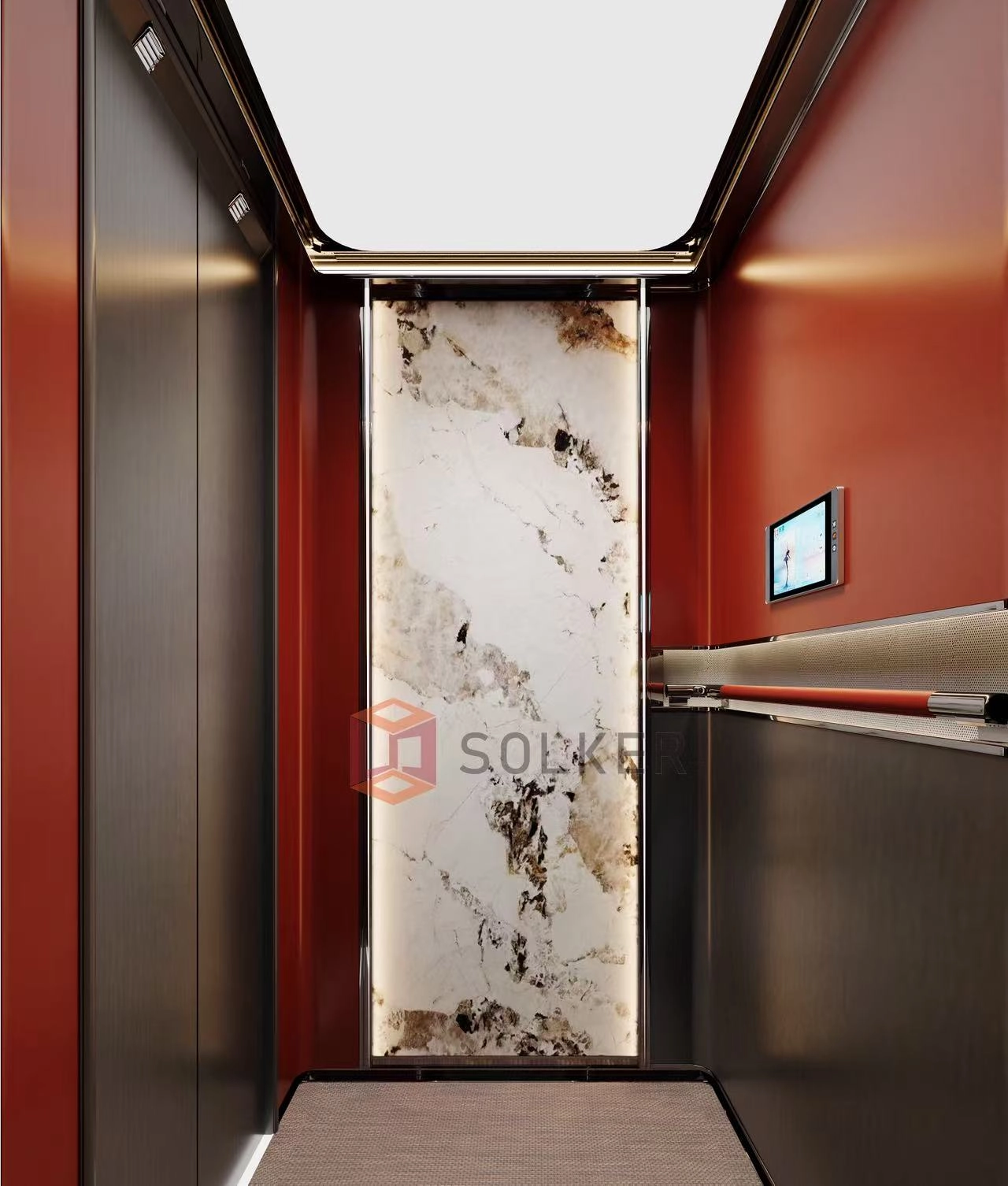
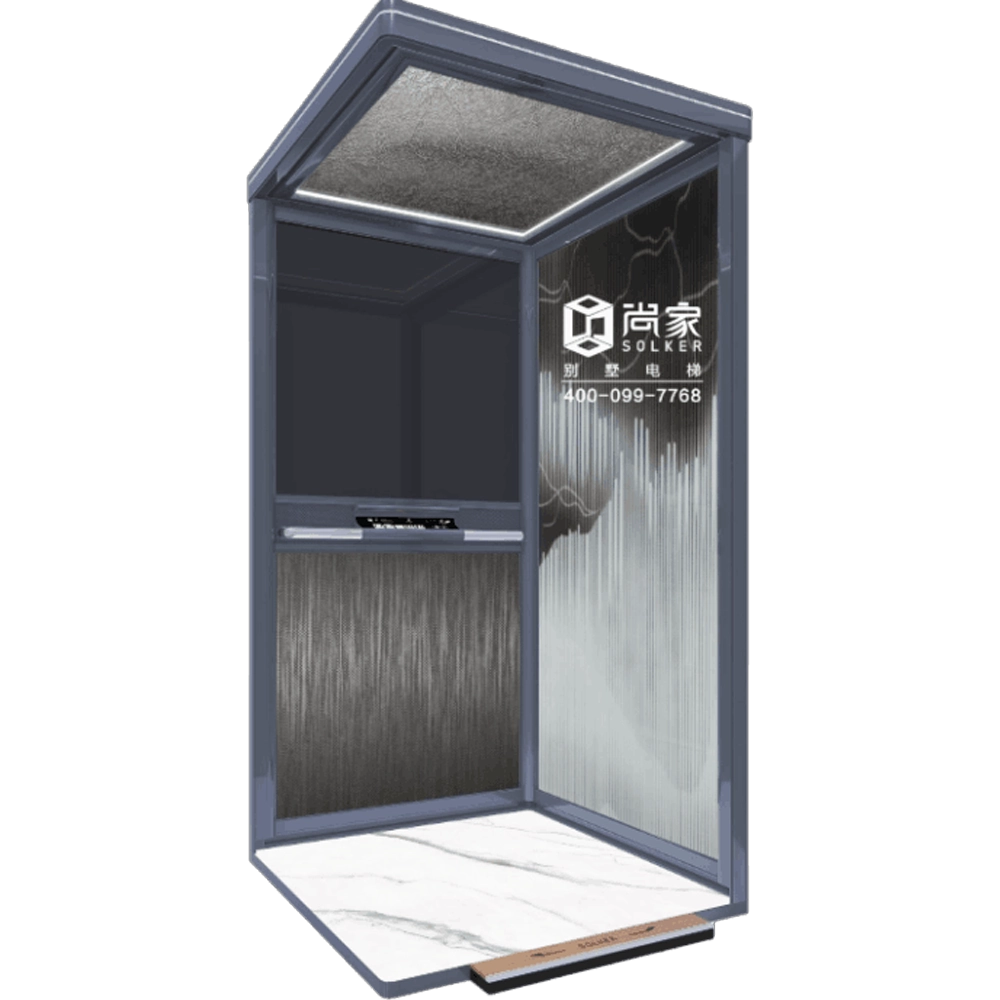
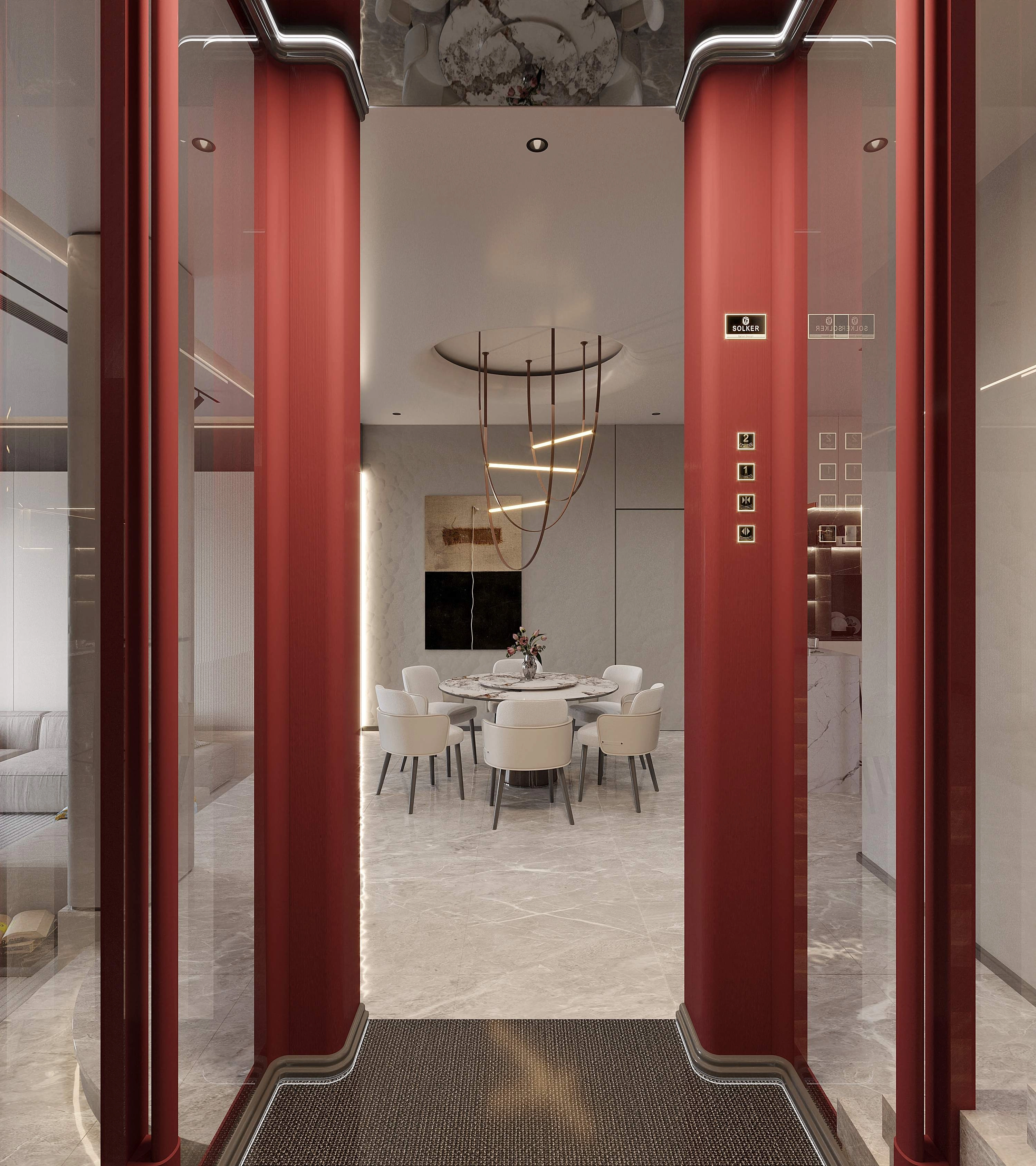
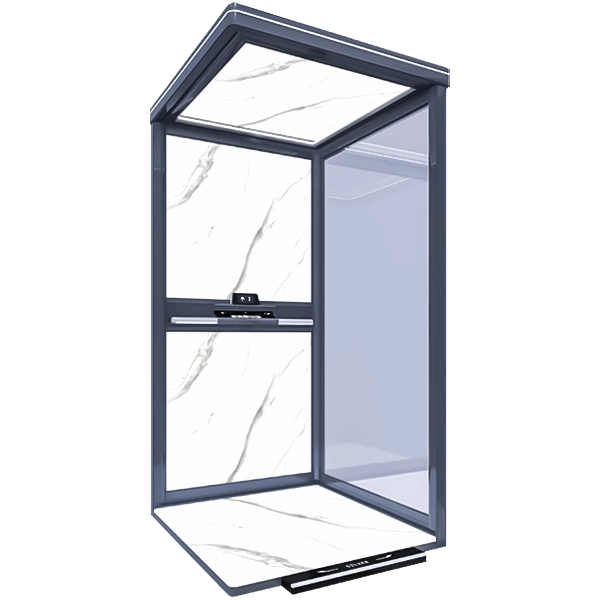
Commercial elevator design emphasizes standardization, durability, public signage, and passenger flow organization. Appearance usually serves the overall building and public space. Home elevators emphasize personalized customization, such as cabin materials, colors, lighting, door opening methods, panoramic design, and integration with interior decoration. SOLKER believes that a home elevator is part of the “home equipment” system, so design, quietness, and space utilization are equally important.
8. Different cost structure and approval pathways
The cost of a commercial elevator includes not only equipment price but also shaft civil works, machine room, installation, fire protection, inspection, maintenance, and long-term operating costs. Home elevator users focus more on the comprehensive cost of equipment, installation, civil modifications, and subsequent maintenance. Approval, inspection, and responsibility management pathways may also differ. SOLKER reminds buyers to compare the “whole-life cost” rather than only the equipment quotation.
Conclusion
Commercial elevators and home elevators are not simply “different in size.” They are two product categories designed for different application scenarios. SOLKER recommends that commercial projects prioritize passenger flow efficiency, compliance, and durability, while private residences should prioritize space adaptability, comfort and quietness, safety maintenance, and home aesthetics. Choosing the right type is more important than simply comparing prices.

 Taiwan, China
 No. 21, Lane 38, 206 Yingtai Road, Yingge District, New Taipei City
 +886 0975-299-830
 United Arab Emirates
 Ceo@maharacare.com
 Melbourne, Australia
 19/12 Natalia Av, Oakleigh South, VIC 3167
SOLKER
SOLKER