


Best smart integrations for outdoor home elevator Model-S
- Smart access and security integrations for outdoor home elevator
- Biometric and keyless entry systems
- Multi-factor authentication and event logging
- Integration with CCTV and perimeter sensors
- Home automation and smart hub integrations
- Smart home platforms and voice control
- Centralized automation via home automation hubs
- APIs and secure middleware
- Environmental and reliability integrations for outdoor operation
- Weather and corrosion protection systems
- Weather-aware scheduling and predictive maintenance
- Redundancy and emergency communication
- User experience and accessibility integrations
- Personalized profiles and journey optimization
- Visual and audio guidance for inclusive design
- Seamless parking and outdoor-to-interior transitions
- Technical comparison: smart integration options
- Standards, safety, and compliance considerations
- Relevant standards and best practices
- Cybersecurity for connected elevators
- Testing, commissioning, and maintenance
- Implementation roadmap for integrating Model-S
- Phase 1: Requirements and site survey
- Phase 2: Design and prototyping
- Phase 3: Deployment and validation
- FAQs
- Q: Can Model-S be installed entirely outdoors?
- Q: Will smart integrations affect the elevator warranty?
- Q: How secure are remote controls and mobile keys?
- Q: What maintenance is required for smart integrations?
- Q: Where can I learn more about safety standards for elevators?
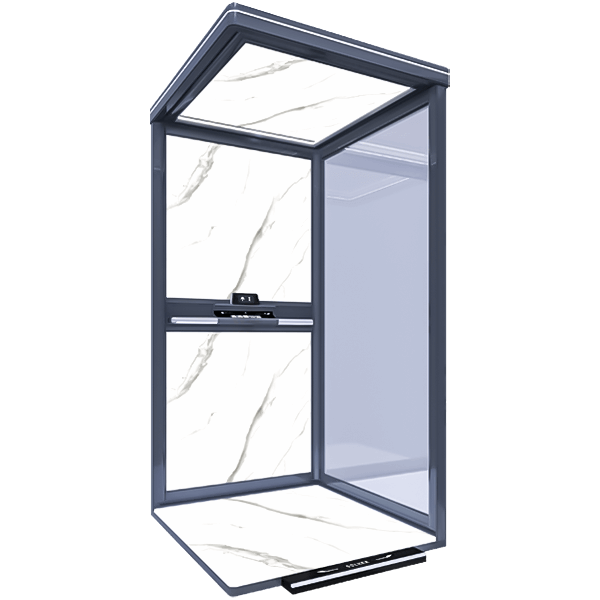
The Minimalist design high-end and elegant villa home elevator Model-S combines Italian minimalist aesthetics with advanced elevator technology and comprehensive safety protections to serve as a reliable passage solution for villa homes. In outdoor settings, smart integrations extend Model-S's usability—improving accessibility, weather resilience, energy efficiency, and connectivity—while preserving safety and elegant design.
Smart access and security integrations for outdoor home elevator
Biometric and keyless entry systems
For an outdoor home elevator, secure access is paramount. Integrating biometric readers (fingerprint or facial recognition) or mobile keyless systems provides convenient, contactless access while keeping unauthorized users out. These systems can be installed at both the elevator call panel and villa entry points to create a consistent security chain. Choose components rated for outdoor use (IP65 or higher) to withstand weather exposure.
Multi-factor authentication and event logging
Combine biometrics with a PIN or mobile approval for multi-factor authentication (MFA) in higher-security villas. Event logging keeps a tamper-proof record of elevator use, useful for concierge management or incident review. Logs can be forwarded to a secure cloud service with end-to-end encryption, helping meet privacy and auditing needs.
Integration with CCTV and perimeter sensors
Linking the Model-S to the villa's video surveillance allows automatic camera recording when the elevator is called or the doors open. Perimeter sensors (motion, fence, gate) can precondition the elevator—wake-from-sleep, auto-illuminate call buttons, or lock service modes—improving both safety and energy efficiency. Use standards-based video APIs (ONVIF) to ensure compatibility across brands.
Home automation and smart hub integrations
Smart home platforms and voice control
Integrating Model-S with smart home platforms (Apple HomeKit, Google Home, Amazon Alexa) gives residents voice and app control for calling the elevator, checking status, or queuing trips. Expose simple, secure commands (e.g., Elevator: call to lobby) rather than full administrative controls to reduce risk. Ensure the elevator's control gateway enforces role-based permissions.
Centralized automation via home automation hubs
Home automation hubs (Zigbee, Z-Wave, or IP-based controllers) allow the elevator to participate in scenes and schedules—e.g., automatically bringing the elevator to the pool level when the outdoor lighting activates or locking elevator access at night. A central hub can orchestrate interactions between lighting, HVAC, and the elevator for occupant comfort and energy savings.
APIs and secure middleware
Use a secure middleware/API layer to mediate between the elevator control systems and third-party home automation services. This layer handles authentication, rate-limiting, and logging, reducing the need to expose the elevator controller directly to your home network. Referencing industry best practices (secure TLS, mutual authentication) from organizations like IEEE helps architect robust integrations.
Environmental and reliability integrations for outdoor operation
Weather and corrosion protection systems
Outdoor home elevators are exposed to rain, humidity, salt air (in coastal villas), and temperature swings. Integrations such as enclosure heaters, dehumidifiers, and corrosion-resistant finishes (stainless steel, anodized aluminum) increase longevity. Sensors that monitor humidity and temperature can trigger protective measures automatically and notify maintenance when thresholds are exceeded.
Weather-aware scheduling and predictive maintenance
Integrating weather feeds into the Model-S control system allows smart scheduling—limiting non-essential use during storms or enabling pre-heating before frost. Predictive maintenance uses vibration sensors, motor current analysis, and door-cycle counters to predict component wear and schedule service proactively, reducing downtime and repair costs. For reliability and energy metrics, consult standards on lift performance from organizations like Wikipedia's elevator overview and the ISO.
Redundancy and emergency communication
Outdoor elevators must maintain emergency communication even in network outages. Implement redundant links—cellular fallback (4G/5G) in addition to Wi-Fi/Ethernet—and hardwired emergency telephones connected to a monitored alarm center. Ensure battery-backed controls and emergency lowering systems comply with safety regulations (local and international lift standards) to protect passengers in power loss scenarios.
User experience and accessibility integrations
Personalized profiles and journey optimization
Personalized profiles stored locally or in the cloud can remember preferred car positions, door dwell times, and travel speed preferences for specific users (e.g., elderly residents). When the system recognizes a resident's smartphone or wearable, it adjusts cabin lighting and temperature and queues the elevator to the most convenient floor—enhancing comfort in outdoor-to-indoor transitions.
Visual and audio guidance for inclusive design
Outdoor home elevators should incorporate clear visual signage, backlit call buttons, Braille, and audio guidance for people with vision or hearing impairments. Integrating with smartphone accessibility apps (TTS, large-font control) improves independence for residents with reduced mobility. Complying with universal design principles and local accessibility codes is essential.
Seamless parking and outdoor-to-interior transitions
Coordinate Model-S operation with garage doors, gate openers, and pathway lighting. For example, when a resident approaches from the driveway, geofencing can prepare an elevator trip and open a gate—creating a frictionless entry sequence. Ensure each integration respects privacy and security boundaries and that geofence triggers are configurable by the homeowner.
Technical comparison: smart integration options
The following table compares common smart integrations for an outdoor home elevator in terms of benefit, implementation complexity, and recommended robustness level.
| Integration | Main benefit | Implementation complexity | Recommended robustness level |
|---|---|---|---|
| Biometric access | High security and convenience | Medium (hardware + secure backend) | IP65 hardware, encrypted data storage |
| Smart home hub (Zigbee/Z-Wave/IP) | Centralized automation, scenes | Low–Medium (depends on existing ecosystem) | Secure API gateway, role-based access |
| Weather sensors & control | Protects equipment and improves uptime | Low (sensors + logic) | Ingress protection for sensors, alerting |
| Predictive maintenance | Reduced downtime, lower long-term cost | High (analytics + sensors) | Cloud analytics with secure telemetry |
| Cellular fallback & emergency comms | Reliable emergency contact and monitoring | Medium | Battery backup & tested fallbacks |
Standards, safety, and compliance considerations
Relevant standards and best practices
Outdoor home elevator integrations must align with lift safety and performance standards. While regional standards vary, EN 81 (European standards for the safety rules for the construction and installation of lifts) and national building codes provide baseline safety requirements. For energy and performance metrics, consult resources from standards bodies; see ISO and industry references like Elevator World for white papers and updates.
Cybersecurity for connected elevators
As Model-S integrates with home networks, follow cybersecurity best practices: network segmentation, device authentication, encrypted communications (TLS 1.2+), and periodic firmware updates. Documented logging and access controls satisfy both safety auditors and privacy expectations. Reference IEEE guidelines on secure systems for IoT and building automation when designing communications and control paths: IEEE.
Testing, commissioning, and maintenance
Comprehensive commissioning is essential—validate outdoor-rated electrical connections, ingress protection, emergency lowering routines, and all smart integrations under real-world conditions (rain, wind, extreme temperature). Maintain a lifecycle plan for software and hardware updates. Engage certified elevator technicians and follow manufacturer guidance for Model-S maintenance schedules.
Implementation roadmap for integrating Model-S
Phase 1: Requirements and site survey
Begin with an on-site assessment: review exposure (sun, rain, salt), existing home automation infrastructure, network availability, and local codes. Define user scenarios (guest access, daily resident routines, emergency procedures) and prioritize integrations accordingly.
Phase 2: Design and prototyping
Design the integration architecture—choose hardware rated for outdoor use, secure APIs for middleware, and fallback communication paths. Prototype critical flows (emergency comms, access control) and perform lab tests before on-site implementation.
Phase 3: Deployment and validation
Deploy prioritized integrations with staged testing. Validate all safety interlocks and perform end-user acceptance testing with residents. Provide clear documentation and simple controls for homeowners to adjust preferences and privacy settings.
FAQs
Q: Can Model-S be installed entirely outdoors?
A: Model-S is designed primarily as a villa home elevator with options for outdoor installation when specified. Outdoor installations require appropriate weatherproofing, corrosion-resistant materials, and site-specific detailing. Always consult local codes and use certified installers to ensure compliance.
Q: Will smart integrations affect the elevator warranty?
A: Installing third-party electronics or modifications can affect the warranty. Use manufacturer-approved integrations or have integrations installed and certified by authorized technicians to preserve warranty terms. Discuss any planned integrations with your supplier beforehand.
Q: How secure are remote controls and mobile keys?
A: Secure implementations use encrypted communications (TLS), mutual authentication, and short-lived tokens. For added safety, require multi-factor authentication for administrative functions and reserve simple mobile controls to non-critical tasks like calling the elevator or checking status.
Q: What maintenance is required for smart integrations?
A: Regular checks include firmware updates, sensor calibration, verifying weather sealing, and testing emergency fallback communications. Predictive maintenance systems reduce unscheduled downtime by alerting technicians before failures occur.
Q: Where can I learn more about safety standards for elevators?
A: Refer to regional and international standards bodies. Useful starting points include the general information at the Elevator article and standards organizations such as ISO and industry publications at Elevator World. For cybersecurity guidance relevant to connected systems consult resources from IEEE.
Ready to bring smart, secure, and weather-resistant automation to your outdoor home elevator? Learn more about the Minimalist design high-end and elegant villa home elevator Model-S and discuss tailored smart integrations with our experts. Contact us or view Model-S details to schedule a site survey and consultation.
Common Residential Elevator Problems and Fixes
Top Design Trends for Luxury Residential Elevators
Custom household lifts Manufacturers and Suppliers
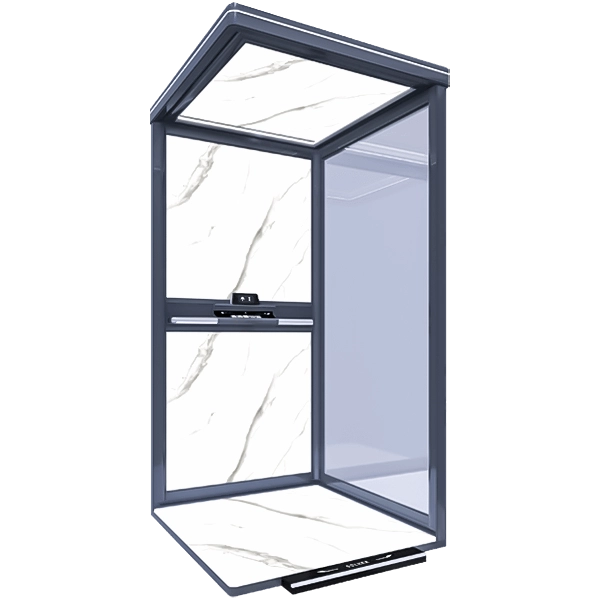
Designing Stair-free Flow: Elevator Placement Ideas for Villas
Customize
How does the customization process work?
Our design team will guide you through the steps: style selection, material choice, and 3D visualization before confirmation.
Can I customize the elevator to match my home style?
Absolutely. We offer multiple cabin styles, materials, and finishes to suit modern, classic, or minimalist interiors.
Can I choose specific materials or colors for the cabin?
Yes. We offer a wide range of premium materials and finishes — from stone to wood to glass.
What parts of the elevator can be customized?
You can personalize wall panels, flooring, lighting, control panels, handrails, and door finishes.
Product
Can it be customized as required?
Yes.
Minimalist design high-end and elegant villa home elevator Model-S
The Model-S is a home villa elevator in the Italian minimalist style. It features the most advanced elevator technology and has comprehensive safety protection measures. It is the most reliable guarantee for your passage in villa homes.
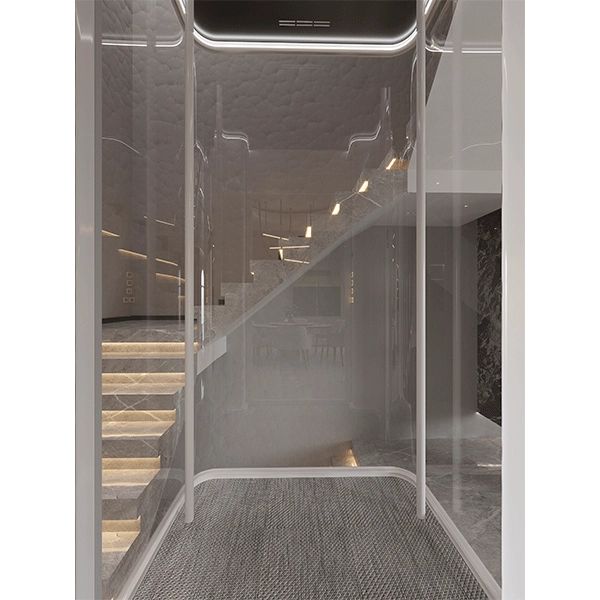
Simple and elegant villa home elevator Model-mini
The Model-Mini is a home villa elevator in the Italian minimalist style. It features the most advanced elevator technology and has comprehensive safety protection measures. It is the most reliable guarantee for your passage in villa homes
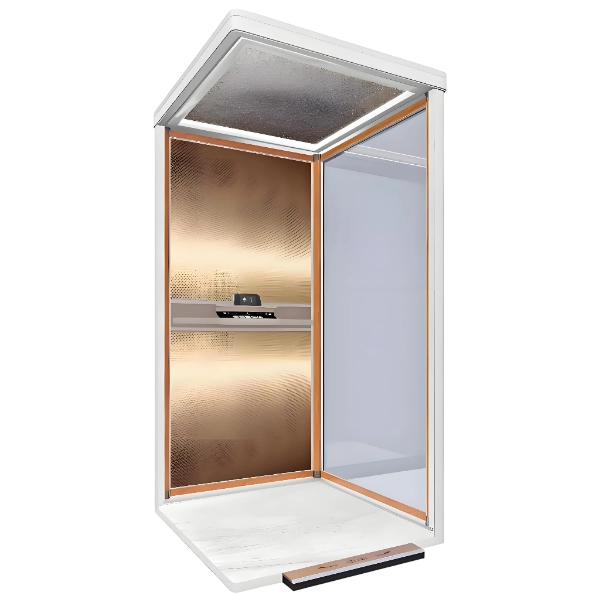
High-end and elegant villa home elevator Model-A
The Model A is a home villa elevator in the Italian minimalist style. It features the most advanced elevator technology and has comprehensive safety protection measures. It is the most reliable guarantee for your passage in villa homes.
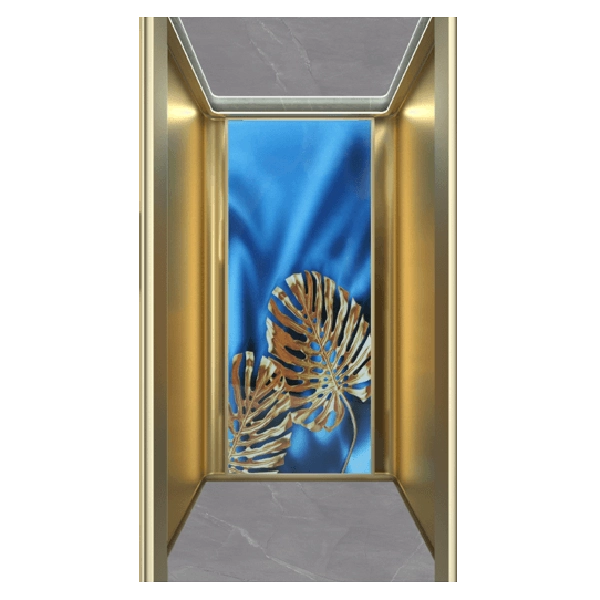
Minimalist design high-end and elegant villa home elevator Model-Q
The Model-Q is a home villa elevator in the Italian minimalist style. It features the most advanced elevator technology and has comprehensive safety protection measures. It is the most reliable guarantee for your passage in villa homes.
Let's get in touch
Email: lin@solkerelevator.com
Tel: +86 133 1668 7566
Address: Floor 1, Building D, Nanxin Industry International, Nancheng District, Dongguan, China.
 Taiwan, China
 No. 21, Lane 38, 206 Yingtai Road, Yingge District, New Taipei City
 +886 0975-299-830
 United Arab Emirates
Capital Mall, Abu Dhabi, United Arab Emirates, 3rd floor, Luxera elevator +971 52 541 4685 Ceo@maharacare.com
 Melbourne, Australia
 19/12 Natalia Av, Oakleigh South, VIC 3167
+61 1300 771 86 sales@goldenhomelifts.com.au
Sydney, Australia
U28/323 Chisholm Road, Auburn, NSW 2144
+61 1300 771 86 sales@goldenhomelifts.com.au
SOLKER
SOLKER