


Energy Efficiency and Quiet Performance in Luxury Elevators
- Designing for Low Energy Consumption in Residential Elevators
- Drive systems and regenerative technologies
- Machine-room-less (MRL) vs. machine-room installations
- Standby, sleep modes, and smart controls
- Reducing Noise for a Quiet, Luxury Ride
- Acoustic sources and mitigation strategies
- Cabin design and interior finishes
- Maintenance and predictive diagnostics
- Performance, Comfort, and Safety in Luxury Residential Elevators
- Smooth acceleration and jerk control
- Comprehensive safety systems
- Accessibility and personalization
- Comparing Technologies: Energy and Noise Considerations
- Summary comparison table
- Data-driven selection
- Standards and testing protocols
- Case Study: High-end and elegant villa home elevator Model-A
- Product overview
- Energy and noise performance highlights
- Why Model-A fits luxury villa needs
- Implementation: What homeowners and designers should ask
- Key questions for manufacturers and installers
- Site and architectural considerations
- Operation and lifecycle costs
- Frequently Asked Questions (FAQ)
- How much energy does a luxury home elevator consume per year?
- Are quiet elevators more expensive?
- Can regenerative drives cause electrical issues in my home?
- Is Model-A suitable for retrofit installations?
- How often should a luxury elevator be serviced?

The demand for a high-performance, energy-efficient, and whisper-quiet luxury elevator in villa homes has grown as homeowners seek comfort, safety, and sustainability. This article explains practical technologies, design choices, and standards that reduce energy consumption and acoustic impact while maximizing ride quality — highlighting the High-end and elegant villa home elevator Model-A as an example of Italian minimalist design paired with advanced, eco-friendly elevator technology.
Designing for Low Energy Consumption in Residential Elevators
Drive systems and regenerative technologies
Choosing the right drive system is the first step to achieving an energy-efficient luxury elevator. Modern traction drives with gearless permanent-magnet motors offer significantly better efficiency than older geared traction or hydraulic systems for low- to mid-rise residential applications. Regenerative drives capture braking energy and feed it back to the building electrical network or the elevator controller, lowering net energy use. Industry standards such as the ISO 25745 series address energy performance for lifts — a useful reference when comparing systems (ISO 25745).
Machine-room-less (MRL) vs. machine-room installations
Machine-room-less (MRL) designs are common in villa elevators because they save space and often use compact, efficient motors with direct-drive layouts. MRL gearless machines are typically more energy-efficient than traditional hydraulic units in residential settings, and they can be paired with advanced control logic to minimize idle energy consumption. For homeowners with special architectural demands, MRL systems offer flexibility without sacrificing energy performance.
Standby, sleep modes, and smart controls
Smart controllers reduce wasted energy by placing elevator subsystems into low-power standby when idle, minimizing lighting, ventilation, and control electronics consumption. Integrating building automation (or a simple timer and presence detection) can further reduce overall energy draw without compromising the readiness of a luxury elevator in a villa setting.
Reducing Noise for a Quiet, Luxury Ride
Acoustic sources and mitigation strategies
Noise in elevators can come from motors, gearboxes, guide rail vibration, cabin fittings, and airflow. Effective mitigation includes selecting low-noise gearless motors, elastomeric rail dampers, precision guide rails, and resilient cabin mountings. Solid cabin materials in luxury elevators are often optimized to balance elegance with acoustic damping. For evidence-based guidance on acceptable noise exposure in buildings, refer to the World Health Organization guidelines on community noise (WHO Environmental Noise Guidelines).
Cabin design and interior finishes
Cabin finishes affect perceived noise levels: soft or composite materials absorb sound better than bare metal surfaces. Luxury elevator design can maintain an upscale aesthetic while incorporating acoustic liners, anti-vibration mounts, and precision trim to minimize rattles and harmonics during travel.
Maintenance and predictive diagnostics
Noise often signals mechanical wear. Regular vibration analysis and predictive maintenance reduce emergent noise issues and improve longevity. Remote diagnostics and IoT-enabled sensors enable early detection of misalignment or bearing wear before noticeable noise develops, maintaining the serene experience expected from a villa's residential elevator.
Performance, Comfort, and Safety in Luxury Residential Elevators
Smooth acceleration and jerk control
Ride comfort hinges on acceleration profiles and jerk control (the rate of change of acceleration). Advanced inverters and microprocessor controllers enable finely tuned motion curves that produce a smooth start/stop and minimal cabin sway — vital for an elegant home elevator where comfort is paramount.
Comprehensive safety systems
Luxury should never compromise safety. High-end residential elevators integrate multiple safety features: emergency brakes, overspeed governors, door sensors, battery backups for descent/rescue, and compliance with national codes such as ASME A17.1 (the safety code for elevators in the U.S.) (ASME A17.1). When evaluating a villa elevator, confirm that the system meets the relevant regional codes and is installed by certified technicians.
Accessibility and personalization
Luxury elevators must be accessible and customizable. Controls can include voice activation, smartphone integration, soft-close doors, and customizable lighting scenes. These features enhance the user experience while smart control strategies help conserve energy and reduce unnecessary motor cycles.
Comparing Technologies: Energy and Noise Considerations
Summary comparison table
| Technology | Typical Energy Use | Typical Noise Level | Best Use in Villas |
|---|---|---|---|
| Gearless traction (permanent magnet) | Low – high efficiency, supports regenerative | Very Low – smooth, quiet | Ideal for high-end villa elevators |
| Geared traction | Moderate – efficient but gearbox losses | Moderate – gearbox noise possible | Good for retrofit where MRL not possible |
| Hydraulic | Higher for low-rise unless efficient pump/regeneration | Low to Moderate – pump noise | Simple installs but less energy-efficient |
Data-driven selection
When choosing a villa elevator, ask for measured energy use (kWh/1000 runs) and sound levels (dBA at cabin). Suppliers should provide test reports or certifications. Comparing real-world performance data helps you pick a solution that balances luxury, comfort, and sustainability.
Standards and testing protocols
Independent testing and adherence to international standards ensure performance claims are reliable. Beyond ISO 25745 for energy performance and ASME A17.1 for safety, consult national codes and test results supplied by accredited laboratories. The general elevator overview on Wikipedia can help non-technical readers understand core components and terminology.
Case Study: High-end and elegant villa home elevator Model-A
Product overview
High-end and elegant villa home elevator Model-A
The Model A is a home villa elevator in the Italian minimalist style. It features the most advanced elevator technology and has comprehensive safety protection measures. It is the most reliable guarantee for your passage in villa homes.
Energy and noise performance highlights
Model-A uses a gearless permanent-magnet motor with regenerative drive capability, supporting low standby consumption and efficient travel across typical villa rise heights. The cabin utilizes multi-layer acoustic insulation and vibration-damping mounts for a whisper-quiet ride — ideal for bedrooms and living areas where silence is essential.
Why Model-A fits luxury villa needs
Model-A combines an elegant Italian minimalist cabin with engineered acoustic comfort and energy-saving electronics. It meets or exceeds regional safety codes and can be configured as an MRL installation to preserve architectural integrity while delivering top-tier efficiency and minimal acoustic footprint.
Implementation: What homeowners and designers should ask
Key questions for manufacturers and installers
- What is the measured energy consumption per 1000 trips and do you provide ISO-standard test reports?
- Do you offer regenerative drives and how is recovered energy used?
- What are the measured dBA levels inside the cabin and at typical receptor points?
- Does the system support smart standby modes and integration with home automation?
- Which safety certifications and code compliances come standard?
Site and architectural considerations
Evaluate shaft space, structural loads, and headroom early in the design process. MRL configurations reduce the need for a separate machine room but require careful thermal planning to avoid overheating the drive. Coordinate early with architects to ensure shaft finishes and anchoring details also contribute to acoustic isolation.
Operation and lifecycle costs
Factor long-term energy costs, maintenance intervals, and the availability of replacement parts. An initially higher upfront cost for a gearless, regenerative system is often offset by much lower lifecycle energy costs and quieter operation — an important consideration for high-end residential projects.
Frequently Asked Questions (FAQ)
How much energy does a luxury home elevator consume per year?
Energy use varies with travel frequency, rise height, and technology. A well-specified gearless MRL elevator with regenerative drive can consume far less energy than older hydraulic systems; manufacturers should provide kWh-per-1000-trips data. Use ISO 25745 as a benchmark when comparing systems (ISO 25745).
Are quiet elevators more expensive?
Quiet elevators often use higher-spec components (gearless motors, precision rails, acoustic cabin materials) which can raise upfront cost. However, these choices improve perceived quality and guest comfort and often reduce maintenance costs and energy bills over time.
Can regenerative drives cause electrical issues in my home?
Properly engineered regenerative drives are designed to safely return energy to the building grid or buffer it within the elevator system. Installation by certified professionals and compliance with local electrical codes mitigate risks. Confirm with your installer how regenerated energy is handled.
Is Model-A suitable for retrofit installations?
Model-A offers flexible configurations, including MRL and compact shaft options, making it suitable for many retrofit scenarios. Site surveys are required to confirm compatibility with existing shafts and structural conditions.
How often should a luxury elevator be serviced?
Routine maintenance is typically recommended every 6–12 months depending on usage. Predictive maintenance via remote diagnostics can optimize intervals and prevent noise or performance issues.
If you want a personalized energy and acoustic performance estimate for the High-end and elegant villa home elevator Model-A, contact our specialists. For product details or to schedule a site survey, please reach out to our sales team or view the Model-A product page.
Contact us: For consultations, quotes, or to schedule a showroom visit, call our sales team or email sales@example.com. Discover how Model-A brings quiet luxury and energy-efficient performance to your villa.
References: ISO 25745 (ISO), ASME A17.1 (ASME), WHO Environmental Noise Guidelines (WHO), Elevator overview (Wikipedia).
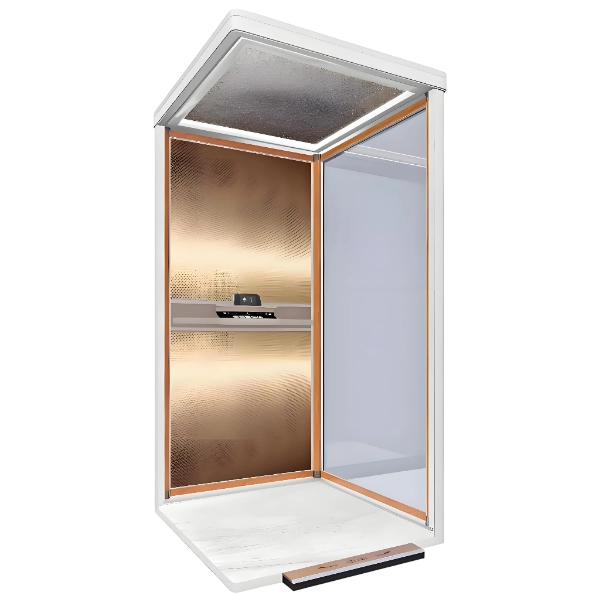
How a Luxury Elevator Enhances Villa Property Value and Appeal
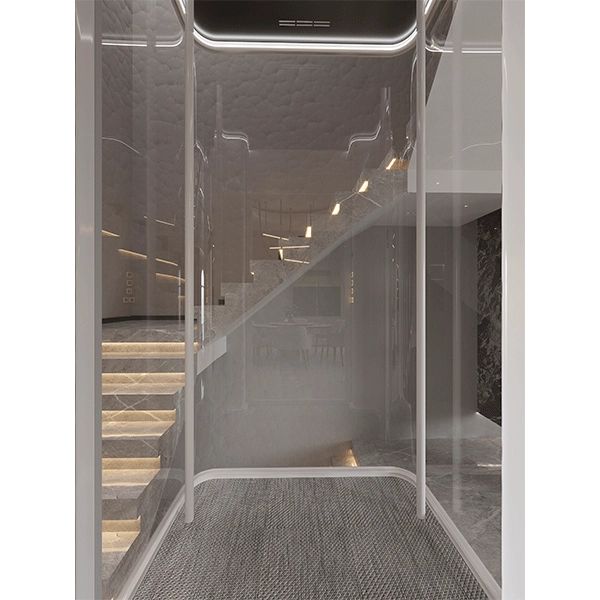
Safety Features to Look for in Villa Outdoor Home Elevators
Custom home lift Manufacturers and Suppliers
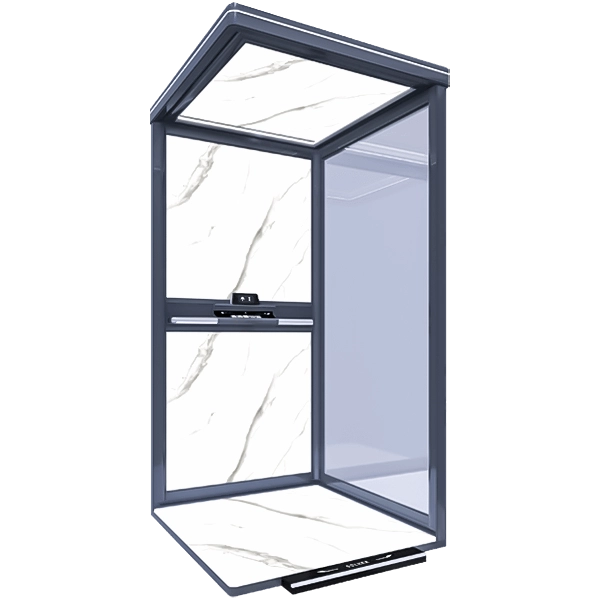
Best outdoor home elevator models for minimalist villas
Customize
Can I choose specific materials or colors for the cabin?
Yes. We offer a wide range of premium materials and finishes — from stone to wood to glass.
How long does a custom order take to deliver?
On average, production takes 30–45 days after confirmation, depending on your configuration.
Is customization available for both indoor and outdoor elevators?
Yes. All custom options apply to indoor and weatherproof outdoor models.
What parts of the elevator can be customized?
You can personalize wall panels, flooring, lighting, control panels, handrails, and door finishes.
Product
How long is the production date required?
Under normal circumstances, the production time is 35 to 45 days.
Simple and elegant villa home elevator Model-mini
The Model-Mini is a home villa elevator in the Italian minimalist style. It features the most advanced elevator technology and has comprehensive safety protection measures. It is the most reliable guarantee for your passage in villa homes
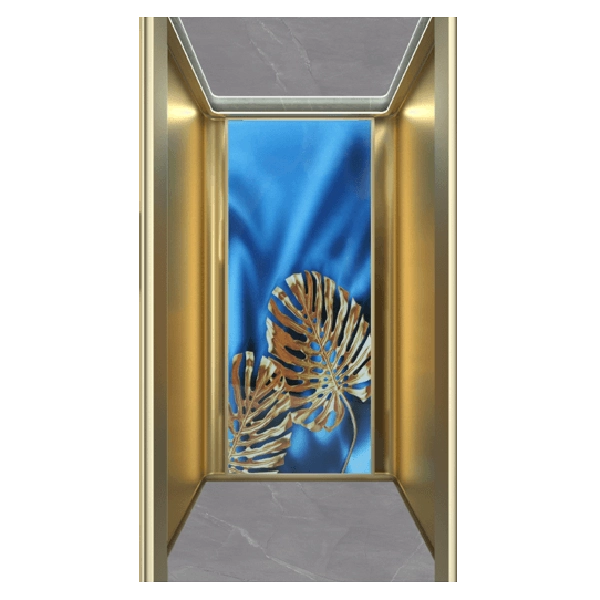
Minimalist design high-end and elegant villa home elevator Model-Q
The Model-Q is a home villa elevator in the Italian minimalist style. It features the most advanced elevator technology and has comprehensive safety protection measures. It is the most reliable guarantee for your passage in villa homes.
Minimalist design high-end and elegant villa home elevator Model-S
The Model-S is a home villa elevator in the Italian minimalist style. It features the most advanced elevator technology and has comprehensive safety protection measures. It is the most reliable guarantee for your passage in villa homes.
High-end and elegant villa home elevator Model-A
The Model A is a home villa elevator in the Italian minimalist style. It features the most advanced elevator technology and has comprehensive safety protection measures. It is the most reliable guarantee for your passage in villa homes.
Let's get in touch
Email: lin@solkerelevator.com
Tel: +86 133 1668 7566
Address: Floor 1, Building D, Nanxin Industry International, Nancheng District, Dongguan, China.
 Taiwan, China
 No. 21, Lane 38, 206 Yingtai Road, Yingge District, New Taipei City
 +886 0975-299-830
 United Arab Emirates
Capital Mall, Abu Dhabi, United Arab Emirates, 3rd floor, Luxera elevator +971 52 541 4685 Ceo@maharacare.com
 Melbourne, Australia
 19/12 Natalia Av, Oakleigh South, VIC 3167
+61 1300 771 86 sales@goldenhomelifts.com.au
Sydney, Australia
U28/323 Chisholm Road, Auburn, NSW 2144
+61 1300 771 86 sales@goldenhomelifts.com.au
SOLKER
SOLKER