


How outdoor home elevators improve accessibility and value
- Why outdoor home elevators matter for accessibility
- Barrier-free access for multi-level homes
- Support for aging in place and caregiving needs
- Compliance, regulations, and safety standards
- How outdoor home elevators increase property value
- Broader buyer appeal and market differentiation
- Return on investment and resale considerations
- Practical examples: usability adds value
- Design, safety and installation considerations for outdoor home elevators
- Model-S: minimalist high-end design and technical highlights
- Safety systems and regulatory alignment
- Site planning, permitting and maintenance
- Practical guidance: choosing the right outdoor home elevator for your villa
- Matching capacity and footprint to your needs
- Energy efficiency, noise, and sustainability
- Cost planning and financing options
- FAQ — common questions about outdoor home elevators and the Model-S
- Q: Is an outdoor home elevator safe in bad weather?
- Q: How much space do I need for an outdoor home elevator?
- Q: Will an outdoor home elevator require major excavation or structural work?
- Q: How does an outdoor home elevator affect my home insurance and resale?
- Q: Where can I find authoritative guidance on standards and accessibility?
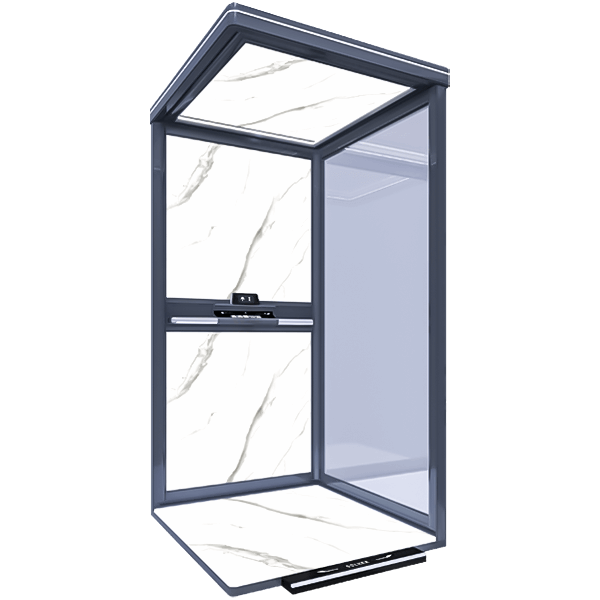
Summary for indexing: The outdoor home elevator is a high-impact accessibility upgrade for villa properties. The Minimalist design high-end and elegant villa home elevator Model-S is an Italian minimalist style outdoor home elevator that combines advanced drive technology, comprehensive safety protection, and refined exterior design. Installing an outdoor home elevator improves universal access, supports aging-in-place strategies, expands usable space across multiple levels, and can meaningfully increase property marketability and resale value.
Why outdoor home elevators matter for accessibility
Barrier-free access for multi-level homes
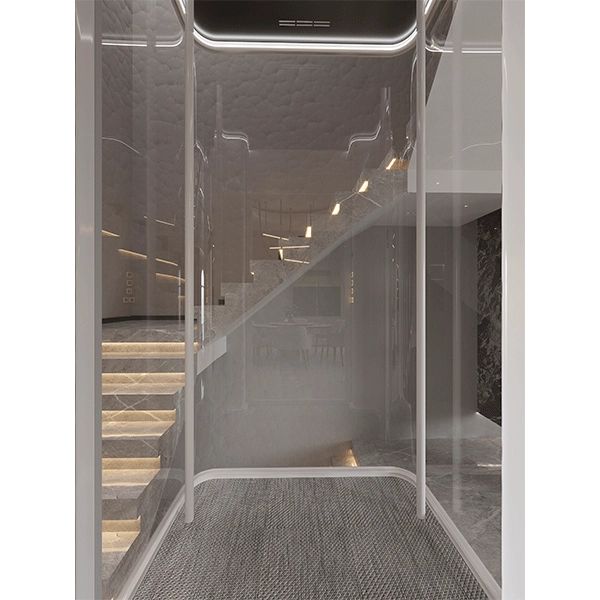
Outdoor home elevators are designed to connect outdoor-grade and upper-level entries, terraces, or garden-level suites without requiring major interior remodeling. For homeowners with mobility impairments, stairs are often a primary barrier to independent access. An outdoor home elevator provides level-based transport that is weatherproof, secure, and designed to integrate with exterior architecture. The Model-S, for example, follows an Italian minimalist aesthetic and offers a glass-fronted cab option that preserves sightlines and light while providing a safe, enclosed platform for passengers.
Support for aging in place and caregiving needs
Most people prefer to remain in their own homes as they age. Outdoor home elevators reduce the physical strain of repeated stair use and make carrying groceries, medical equipment, or a wheelchair between levels practical. This helps families delay or avoid costly relocations or full-time institutional care. Healthcare and public-health organizations emphasize environmental adaptations that maintain independence; the World Health Organization (WHO) provides guidance on disability-friendly environments that align with installing vertical transport solutions like residential elevators (WHO: Disability and health).
Compliance, regulations, and safety standards
When choosing an outdoor home elevator, compliance with safety and accessibility standards is essential. Relevant codes and standards—such as national elevator regulations and recognized industry standards—ensure safe design, emergency operation, and accessibility features (e.g., suitable dimensions, door operation, emergency communication). General technical and safety context for lift standards is discussed in industry resources such as the elevator overview on Wikipedia and the European EN 81 standards set (EN 81), which inform best practices worldwide. Local code compliance (permitting and inspection) is required before installation.
How outdoor home elevators increase property value
Broader buyer appeal and market differentiation
Homes that provide universal access features appeal to a wider pool of buyers, including older adults, multigenerational families, and buyers who anticipate future mobility needs. An outdoor home elevator like the Model-S—marketed for luxury villas—signals both functionality and high-end design, which can positively influence buyer perception. Real estate studies and market reports consistently show that homes with thoughtful accessibility modifications often sell faster and for a High Quality compared with otherwise comparable properties lacking those features.
Return on investment and resale considerations
Quantifying ROI depends on local market dynamics, property type, and installation cost. While precise figures vary, adding permanent accessibility improvements typically improves resale prospects. Below is a concise comparison table showing common value drivers and how an outdoor home elevator performs relative to alternatives.
| Feature | Outdoor home elevator (Model-S) | Traditional ramp | Interior elevator (retrofit) |
|---|---|---|---|
| Space usage | Compact vertical footprint, preserves landscape | Requires long run length and large footprint | May require interior demolition |
| Design/aesthetic impact | High-end, customizable (Model-S minimalist Italian style) | Functional but often utilitarian | Depends on finish; can be disruptive |
| Cost (typical range) | Medium–high (depending on features and site) | Low–medium | High (structural work increases cost) |
| Perceived resale benefit | High for luxury/villa markets | Moderate | High if integrated tastefully |
Sources such as real estate analyses and accessibility policy briefs indicate that accessibility improvements are a strong differentiator in many markets. For general background about accessible design and regulatory frameworks, see the ADA resource center (ADA: Americans with Disabilities Act).
Practical examples: usability adds value
Consider these simple scenarios: a villa with a separate garden apartment becomes a viable rental unit when occupants can access it independently via an outdoor home elevator; aging homeowners maintain full access to gardens and terraces; families with frequent visitors with mobility challenges find the property more usable. These use cases directly translate into higher demand and often better sale prices in targeted buyer segments.
Design, safety and installation considerations for outdoor home elevators
Model-S: minimalist high-end design and technical highlights
The Minimalist design high-end and elegant villa home elevator Model-S is a home villa elevator in the Italian minimalist style. It features the most advanced elevator technology and has comprehensive safety protection measures. It is the most reliable guarantee for your passage in villa homes.
Key design traits of the Model-S relevant to outdoor installation include:
- Elegant glass-and-metal cab options that maintain visual continuity with villa architecture.
- Corrosion-resistant materials and finishes for outdoor exposure.
- Weatherproof seals and drainage strategies for platform and pit areas.
- Intuitive controls, low-noise drive systems, and energy-efficient operation.
Safety systems and regulatory alignment
Safety measures for outdoor home elevators typically include redundant braking systems, overload detection, emergency lowering and battery backup, interlocked doors, and clear signage. Model-S integrates comprehensive safety protection measures suitable for villa applications, including emergency communication and fail-safe controls. To ensure best practice, installers follow applicable standards and local regulations which cover mechanical safety, electrical compliance, and accessibility metrics. For an overview of international safety norms and the role of standards bodies, refer to authoritative resources such as the elevator article on Wikipedia and industry standards documents (EN 81).
Site planning, permitting and maintenance
Before selecting and ordering an outdoor home elevator, carry out a site assessment: evaluate ground conditions, drainage, power availability, and sightlines. Permitting is often required; early engagement with local building authorities speeds approvals. After installation, scheduled maintenance by certified technicians preserves safety and warranty coverage. A routine maintenance plan typically includes door checks, lubrication of moving parts, inspection of safety devices, and annual safety tests by a qualified professional.
Practical guidance: choosing the right outdoor home elevator for your villa
Matching capacity and footprint to your needs
When selecting an outdoor home elevator, consider passenger capacity (seated wheelchair plus caregiver), cab dimensions, rated load, travel height, and stopping points. The Model-S can be configured for different capacities and finishes to match villa layouts. For families that frequently transport mobility devices, prioritize a cab size compliant with wheelchair-accessible dimensions and doors that allow smooth ingress and egress.
Energy efficiency, noise, and sustainability
Modern residential elevators use energy-efficient traction or hydraulic systems with variable-frequency drives to reduce consumption and noise. Model-S emphasizes the most advanced elevator technology and can be specified with low-energy LED lighting and sleep-mode controllers that minimize standby power. These features reduce lifecycle costs and contribute to a more sustainable property profile.
Cost planning and financing options
Costs depend on customization, travel height, site work, and local labor rates. Financing options may include home improvement loans, specialized accessibility grants in some regions, or inclusion as capital improvements when preparing a property for market. Check local programs for homeowner assistance related to disability adaptations; some municipalities and nonprofit organizations provide subsidies or tax incentives for accessibility upgrades.
FAQ — common questions about outdoor home elevators and the Model-S
Q: Is an outdoor home elevator safe in bad weather?
A: Yes. Properly specified and installed outdoor home elevators like the Model-S use weatherproof construction, corrosion-resistant materials, and drainage strategies. Controls and electrical components are sealed, and emergency systems are designed to operate even if the unit is exposed to rain or snow. Always confirm the installer’s procedures for weatherproofing and local climate suitability.
Q: How much space do I need for an outdoor home elevator?
A: Space requirements vary by model and capacity. Typical small residential units can fit in a compact shaft footprint from approximately 1.0 m x 1.2 m (3.3 ft x 4 ft) for tight installations; accessible-size cabs for wheelchairs require larger footprints. The Model-S offers configurable cab sizes—consult specifications with your authorized dealer for precise dimensions and site planning guidance.
Q: Will an outdoor home elevator require major excavation or structural work?
A: Many outdoor home elevators are designed for minimal disruption and use modular foundations or surface-mounted pit systems. Some sites may require a shallow pit or footings for stability. An on-site survey will clarify whether extensive excavation or structural reinforcement is necessary.
Q: How does an outdoor home elevator affect my home insurance and resale?
A: Inform your home insurer about the installation—most companies require notification and may adjust coverage or High Qualitys modestly. From a resale perspective, an outdoor home elevator can be a value-add, particularly in markets that value accessibility, luxury finishes, or multigenerational living. Work with a local real estate professional to understand the specific market impact.
Q: Where can I find authoritative guidance on standards and accessibility?
A: For general elevator safety and standards, consult recognized references such as the elevator overview on Wikipedia and the EN 81 standards (EN 81). For accessibility policy and design guidance, refer to the ADA resources (ADA) and broader disability guidance from the WHO (WHO: Disability and health).
Ready to enhance accessibility and elevate your villa’s value? Discover the Minimalist design high-end and elegant villa home elevator Model-S and discuss customization, site assessment, or financing options with our experts. Contact us today to request a quote or schedule an on-site evaluation: Contact our sales team | View Model-S product page.
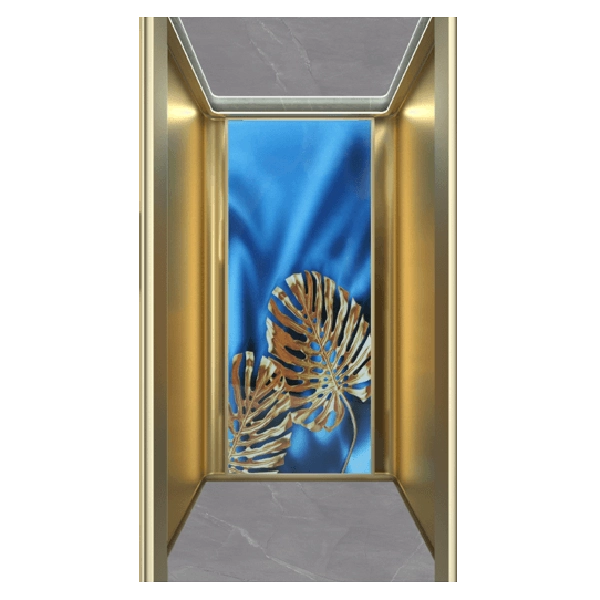
How Model-Q Enhances Home Aesthetics: Minimalist & High-End Design
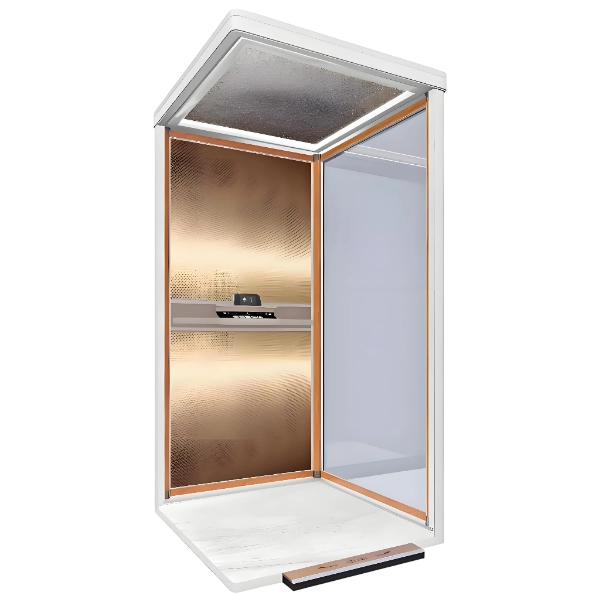
Procurement Guide: Choosing the Best Residential Elevator Model-A
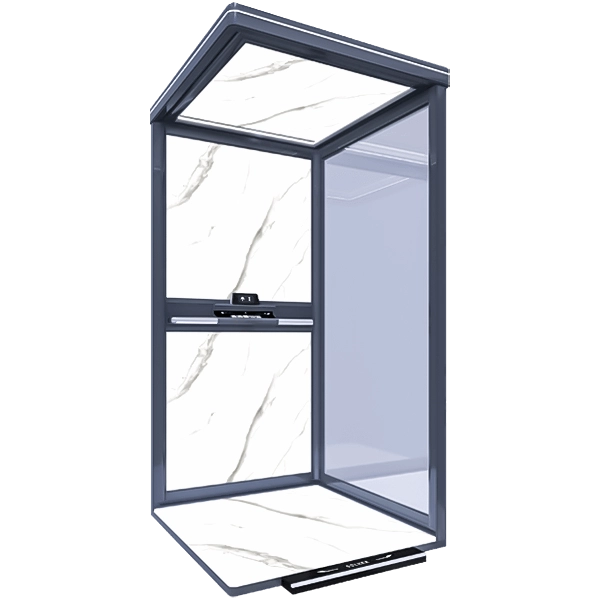
Preparing your villa for outdoor home elevator installation
How the Model-mini Villa Home Elevator Enhances Curb Appeal
Product
How long is the production date required?
Under normal circumstances, the production time is 35 to 45 days.
Can it be customized as required?
Yes.
Customize
Can the elevator design be matched to my home's architecture?
Absolutely. Our designers tailor each cabin to complement your interior layout and style.
How does the customization process work?
Our design team will guide you through the steps: style selection, material choice, and 3D visualization before confirmation.
Do I need architectural drawings to start customization?
Not required initially. We can start with basic dimensions or photos and assist with full planning.
Minimalist design high-end and elegant villa home elevator Model-S
The Model-S is a home villa elevator in the Italian minimalist style. It features the most advanced elevator technology and has comprehensive safety protection measures. It is the most reliable guarantee for your passage in villa homes.
Simple and elegant villa home elevator Model-mini
The Model-Mini is a home villa elevator in the Italian minimalist style. It features the most advanced elevator technology and has comprehensive safety protection measures. It is the most reliable guarantee for your passage in villa homes
High-end and elegant villa home elevator Model-A
The Model A is a home villa elevator in the Italian minimalist style. It features the most advanced elevator technology and has comprehensive safety protection measures. It is the most reliable guarantee for your passage in villa homes.
Minimalist design high-end and elegant villa home elevator Model-Q
The Model-Q is a home villa elevator in the Italian minimalist style. It features the most advanced elevator technology and has comprehensive safety protection measures. It is the most reliable guarantee for your passage in villa homes.
Let's get in touch
Email: lin@solkerelevator.com
Tel: +86 133 1668 7566
Address: Floor 1, Building D, Nanxin Industry International, Nancheng District, Dongguan, China.
 Taiwan, China
 No. 21, Lane 38, 206 Yingtai Road, Yingge District, New Taipei City
 +886 0975-299-830
 United Arab Emirates
Capital Mall, Abu Dhabi, United Arab Emirates, 3rd floor, Luxera elevator +971 52 541 4685 Ceo@maharacare.com
 Melbourne, Australia
 19/12 Natalia Av, Oakleigh South, VIC 3167
+61 1300 771 86 sales@goldenhomelifts.com.au
Sydney, Australia
U28/323 Chisholm Road, Auburn, NSW 2144
+61 1300 771 86 sales@goldenhomelifts.com.au
SOLKER
SOLKER