


Space Planning and Architectural Coordination for Home Elevators
- Space Planning and Architectural Coordination for Home Elevators
- Introduction: Why careful planning matters for an elevator for home
- Product brief: Minimalist design high-end and elegant villa home elevator Model-S
- Understand the spatial requirements for an elevator for home
- Typical dimensional ranges and what they mean
- Early-stage architectural coordination for an elevator for home
- Key stakeholders to involve early
- Positioning the elevator for best flow and value
- Structural and foundation considerations for an elevator for home
- Shaft construction options and recommendations
- Mechanical, electrical and fire-safety coordination for an elevator for home
- Power, ventilation and backup
- Fire, smoke and egress
- Design integration: achieving a seamless villa interior with an elevator for home
- How Model-S complements minimalist villa interiors
- Safety, standards and certification for an elevator for home
- Standards to reference
- Cost, timeline and sequence of works for installing an elevator for home
- Design checklist and practical tips for a successful elevator for home project
- Brand advantages: Why choose the Model-S elevator for home villas
- FAQs — common questions about installing an elevator for home
- 1. How much space do I need to install an elevator for home?
- 2. Can I install an elevator in an existing villa without major structural work?
- 3. What codes and standards apply to residential elevators?
- 4. Is a machine room always required?
- 5. How long does installation typically take?
- Contact and next steps — view the Model-S or speak with a specialist
- Authoritative references and further reading
Space Planning and Architectural Coordination for Home Elevators
Introduction: Why careful planning matters for an elevator for home
Integrating an elevator into a villa or private residence delivers convenience, accessibility and adds long-term value. Yet successful integration depends on early architectural coordination and precise space planning. This article walks architects, builders and homeowners through practical steps — from footprint and shaft sizing to mechanical and electrical coordination — and shows how the Minimalist design high-end and elegant villa home elevator Model-S can fit into refined Italian minimalist interiors while meeting safety and performance expectations. After proper planning and installation readiness, long-term reliability is protected through well-structured after-sales service contracts for high-end villa home elevators.
Product brief: Minimalist design high-end and elegant villa home elevator Model-S
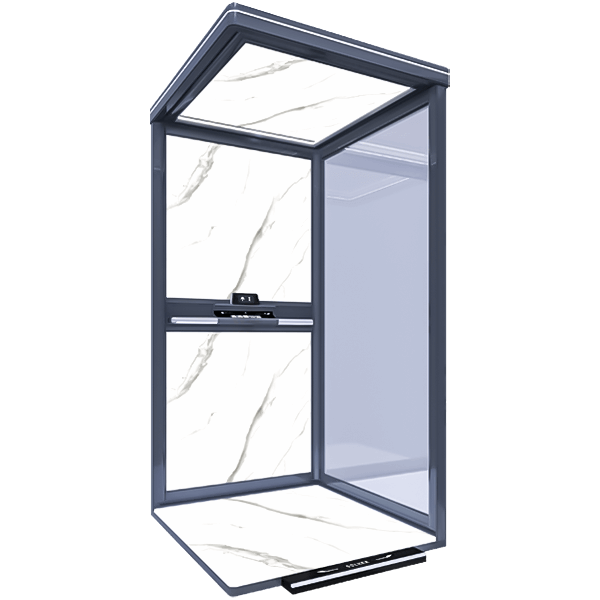
The Model-S is a home villa elevator in the Italian minimalist style. It features the most advanced elevator technology and has comprehensive safety protection measures. It is the most reliable guarantee for your passage in villa homes.
Understand the spatial requirements for an elevator for home
Before fixing a location, you need to understand the physical space an elevator will occupy: shaft footprint, pit depth, overhead clearance, and machine-room requirements (if any). Different drive systems (hydraulic, machine-room-less traction, cable-driven) have different space envelopes. Early coordination lets you avoid costly changes to structure and finishes.
Typical dimensional ranges and what they mean
Below are typical ranges used in residential installations. These are industry-typical values to aid early design; exact requirements come from the chosen model/manufacturer and local codes.
| Parameter | Typical Range (Residential) | Design Note |
|---|---|---|
| Shaft footprint (internal) | 0.8 m × 0.9 m to 1.4 m × 1.6 m | Compact cars fit smaller shafts; two-person luxury cars need larger footprints |
| Pit depth | 100 mm to 450 mm | Depends on buffer type and bottom-clearance requirements |
| Overhead clearance (from car top at highest stop) | 2.2 m to 3.0 m | Higher-speed or larger-travel installations may need more headroom |
| Rated capacity | 250 kg (2–3 people) to 630 kg | Choose capacity based on use case and design intent |
| Power | Single-phase 220–240V typical; or three-phase for larger units | Backup power advisable for emergency operations |
Note: These figures are illustrative; confirm specifics with the elevator supplier and local regulations before finalizing architectural plans.
Early-stage architectural coordination for an elevator for home
Integrating an elevator into a residence is multidisciplinary. The earlier the elevator concept is locked into architectural drawings, the lower the risk of later clashes with structure, MEP and finishes.
Key stakeholders to involve early
- Architect / interior designer — ensures aesthetic and spatial integration.
- Structural engineer — checks shaft load paths and foundation/pit requirements.
- MEP engineer / electrician — plans power supply, emergency power and ventilation.
- Elevator supplier / installer — provides dimensional drawings and installation tolerances.
- Local building code official — verifies permitting requirements and code compliance early.
Shared BIM or coordinated CAD drawings reduce clashes. Request the supplier’s installation drawings (schematic and dimensional pack) as early as possible.
Positioning the elevator for best flow and value
Typical placement strategies for a villa or luxury home:
- Central vertical core: Connects main floors and is near staircases — great for circulation but demands generous space.
- Edge/side placement: Less intrusive to living spaces; ideal for glass shafts or courtyard-facing solutions.
- Integrated with staircase void: Allows dramatic architectural expression but needs precise coordination for safety and egress.
Structural and foundation considerations for an elevator for home
Elevators transfer loads to structure differently than typical gravity loads — dynamic loading, point loads from rails or guides, and pit foundation requirements must be assessed.
Shaft construction options and recommendations
- Concrete shaft: High rigidity and sound insulation; often used in new builds.
- Lightweight shaft (steel frame or stud wall with lining): Faster and cheaper in renovations; requires careful bracing and acoustic treatment.
- Glass shaft: Visually striking, especially for Italian minimalist designs like Model-S, but needs engineered framing and safety glazing.
Reinforce floors where guide rails mount; coordinate anchor sizes and positions with the structural engineer. In retrofit situations, consider rail-mounted guide systems that minimize structural intrusion.
Mechanical, electrical and fire-safety coordination for an elevator for home
MEP considerations are critical both for functionality and regulatory compliance. Discuss these with your supplier to ensure the elevator for home interfaces correctly with the building services.
Power, ventilation and backup
- Power supply: Typical residential elevators run on single-phase 220–240V; larger or faster elevators may require three-phase.
- Emergency lowering: Prepare for low-voltage or battery-powered lowering in power loss scenarios.
- Ventilation: Machine rooms and enclosed shafts need ventilation or forced air to dissipate heat generated by drives or electrical panels.
Fire, smoke and egress
Local codes may demand shaft and lobby fire ratings, automatic return-to-home features, or controlled access. Ensure that elevator doors do not impede egress routes and that fire-stopping between floors is continuous around the shaft.
Design integration: achieving a seamless villa interior with an elevator for home
A well-designed elevator becomes part of the interior language. For villas aiming at an Italian minimalist aesthetic, components such as glass cabins, slender frames and concealed fixtures contribute to elegance without bulk.
How Model-S complements minimalist villa interiors
The Model-S is purpose-built for refined villa spaces. Its Italian minimalist aesthetic emphasizes clean lines, high-quality finishes and low visual noise — making it ideal where an elevator for home must feel like a design element rather than a utility. Options such as frameless glass, matte metallic finishes, soft integrated lighting and custom carpentry panels enable bespoke integration with interiors.
Safety, standards and certification for an elevator for home
Safety features and compliance are non-negotiable. Residential elevators still must meet rigorous safety standards and commonly include: door interlocks, overspeed detection, emergency lowering, door obstruction sensors, and alarm/phone communication.
Standards to reference
- ASME (United States) — safety codes and standards for elevators and related equipment (general guidance for compliance and best practice).
- EN standards (Europe) — EN 81 series defines safety rules for the construction and installation of lifts.
- Local building codes — always consult municipal or national codes which control permits and inspections.
Manufacturers should provide certification documents and a maintenance schedule to ensure ongoing E-E-A-T (experience, expertise, authoritativeness, trustworthiness) in operation.
Cost, timeline and sequence of works for installing an elevator for home
Budget and lead time vary by model, shaft construction and finish level. Typical phases and approximate sequences:
- Design & approvals (2–8 weeks): Coordinate with architect/supplier for drawings and permits.
- Construction of shaft/pit (1–4 weeks): Depending on new build vs retrofit.
- Equipment delivery & installation (1–3 weeks): Supplier installs rails, car, doors and control systems.
- Inspection & commissioning (1 week): Testing and final sign-offs by authorities.
Costs: Expect a wide range depending on finishes and drive systems. Provide homeowners with a staged budget that separates core equipment and installation from High Quality finishes and bespoke integration.
Design checklist and practical tips for a successful elevator for home project
Use this checklist during schematic and design development:
- Obtain manufacturer dimensional pack early and place it on the architect’s drawing set.
- Verify pit and overhead clearances and document tolerances.
- Reserve clear access for installation lifts, rigging and maintenance.
- Confirm power supply location and capacity with MEP engineer.
- Decide on door swing/landing configurations and locking/security strategies.
- Plan finishes and lighting so the elevator complements interior spaces.
Brand advantages: Why choose the Model-S elevator for home villas
Model-S offers a combination of minimalist Italian styling and advanced technology. Its strengths for villa projects include:
- Design harmony: Clean lines and customizable finishes suited to high-end interiors.
- Space efficiency: Engineered to integrate into compact shafts without sacrificing comfort.
- Safety & reliability: Comprehensive protection measures and modern drive controls.
- High Quality experience: Smooth ride quality and low noise levels for residential contexts.
FAQs — common questions about installing an elevator for home
1. How much space do I need to install an elevator for home?
Typical shaft footprints for residential elevators range from roughly 0.8 m × 0.9 m up to 1.4 m × 1.6 m, depending on car size and capacity. Exact dimensions vary by model — obtain manufacturer drawings early in design.
2. Can I install an elevator in an existing villa without major structural work?
Many retrofits are possible with careful planning. Options such as through-floor elevators or smaller footprint shaft systems reduce structural work. However, pit creation, guide anchorage and headroom must be evaluated by a structural engineer.
3. What codes and standards apply to residential elevators?
Applicable standards include national building codes and elevator safety standards such as ASME codes in the US and EN standards in Europe. Local permitting authorities confirm the final requirements.
4. Is a machine room always required?
No. Modern machine-room-less (MRL) traction systems eliminate the need for a separate machine room, saving space. Some hydraulic systems may require a small space for a power unit.
5. How long does installation typically take?
From delivery to commissioning, installation often takes 1–3 weeks for a straightforward residential shaft. Total project time depends on permitting and construction of the shaft/pit.
Contact and next steps — view the Model-S or speak with a specialist
If you are planning a villa project and want a refined elevator for home integration, contact our design specialists for dimensional packs, finish options and a site coordination checklist. View product details, request drawings or schedule a consultation to determine how the Model-S can fit your project.
Contact us: — Request drawings, quotes and site visits to begin architectural coordination.
Authoritative references and further reading
- Elevator — Wikipedia: https://en.wikipedia.org/wiki/Elevator
- ASME — Codes & Standards (elevators): https://www.asme.org/codes-standards
- International Code Council (ICC) — Building Safety & Codes: https://www.iccsafe.org
- European Committee for Standardization (CEN) — EN 81 series overview: https://www.cen.eu
Note: Use manufacturer-provided installation drawings and consult local authorities for final compliance and permitting. This guide is intended to support informed early-stage decisions for integrating an elevator for home installations, especially in high-end villa contexts.
Custom personal home lift Manufacturers and Suppliers
Top 10 design trends for outdoor home elevator installations
How Much Do Luxury Residential Elevators Cost in 2025?
Tips for buy cheapest home lift from China
Customize
Can I customize the elevator to match my home style?
Absolutely. We offer multiple cabin styles, materials, and finishes to suit modern, classic, or minimalist interiors.
Can I choose specific materials or colors for the cabin?
Yes. We offer a wide range of premium materials and finishes — from stone to wood to glass.
How does the customization process work?
Our design team will guide you through the steps: style selection, material choice, and 3D visualization before confirmation.
Do I need architectural drawings to start customization?
Not required initially. We can start with basic dimensions or photos and assist with full planning.
Product
How long is the production date required?
Under normal circumstances, the production time is 35 to 45 days.
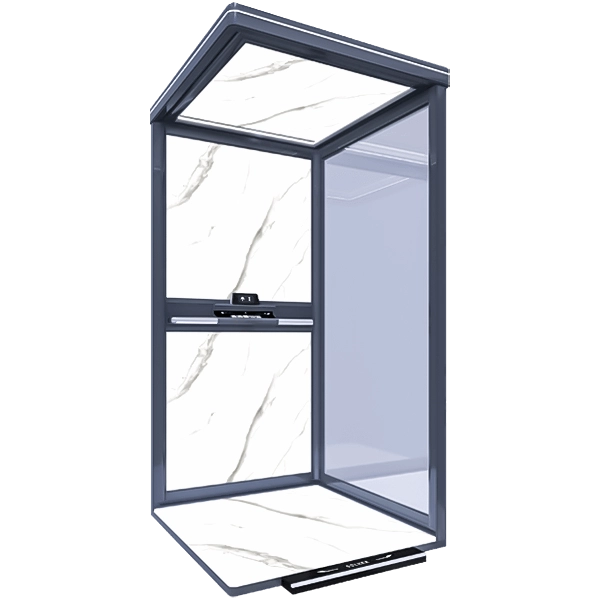
Minimalist design high-end and elegant villa home elevator Model-S
The Model-S is a home villa elevator in the Italian minimalist style. It features the most advanced elevator technology and has comprehensive safety protection measures. It is the most reliable guarantee for your passage in villa homes.
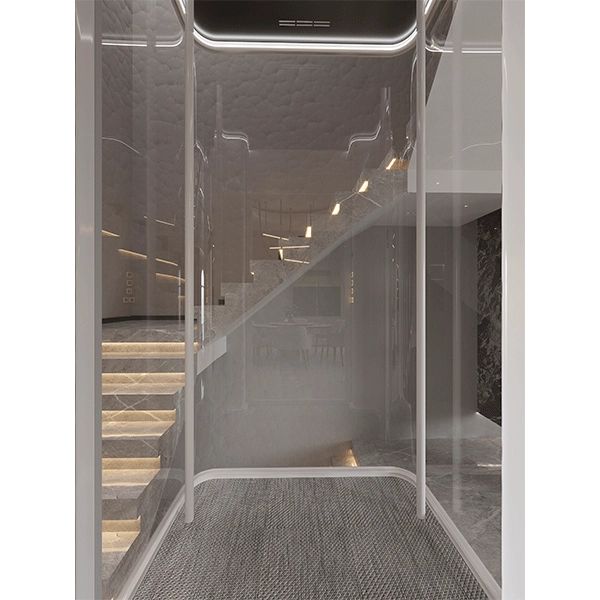
Simple and elegant villa home elevator Model-mini
The Model-Mini is a home villa elevator in the Italian minimalist style. It features the most advanced elevator technology and has comprehensive safety protection measures. It is the most reliable guarantee for your passage in villa homes
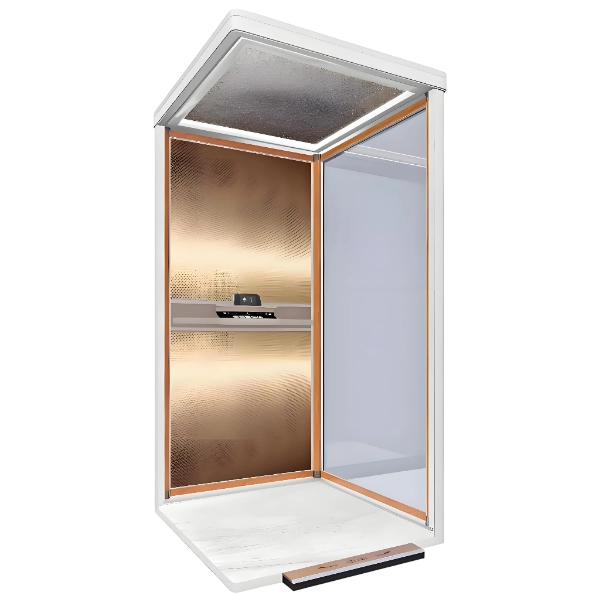
High-end and elegant villa home elevator Model-A
The Model A is a home villa elevator in the Italian minimalist style. It features the most advanced elevator technology and has comprehensive safety protection measures. It is the most reliable guarantee for your passage in villa homes.
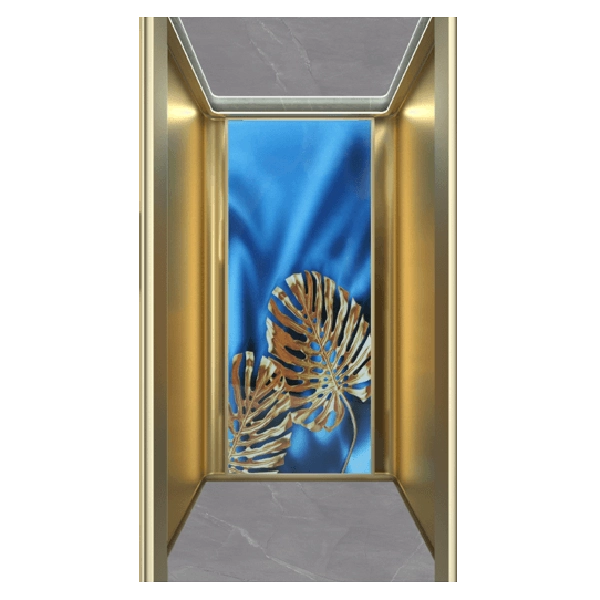
Minimalist design high-end and elegant villa home elevator Model-Q
The Model-Q is a home villa elevator in the Italian minimalist style. It features the most advanced elevator technology and has comprehensive safety protection measures. It is the most reliable guarantee for your passage in villa homes.
Let's get in touch
Email: lin@solkerelevator.com
Tel: +86 133 1668 7566
Address: Floor 1, Building D, Nanxin Industry International, Nancheng District, Dongguan, China.
 Taiwan, China
 No. 21, Lane 38, 206 Yingtai Road, Yingge District, New Taipei City
 +886 0975-299-830
 United Arab Emirates
Capital Mall, Abu Dhabi, United Arab Emirates, 3rd floor, Luxera elevator +971 52 541 4685 Ceo@maharacare.com
 Melbourne, Australia
 19/12 Natalia Av, Oakleigh South, VIC 3167
+61 1300 771 86 sales@goldenhomelifts.com.au
Sydney, Australia
U28/323 Chisholm Road, Auburn, NSW 2144
+61 1300 771 86 sales@goldenhomelifts.com.au
SOLKER
SOLKER