


Integration of Model-S Elevator with Smart Home Systems
- Integration of Model-S Elevator with Smart Home Systems
- Why Model-S is an ideal elevator for home integration
- Smart home compatibility and supported protocols for elevator for home
- Control options and user experience for elevator for home
- Safety, compliance, and redundancy when integrating elevator for home
- Installation workflow: integrating Model-S with a smart home system
- Energy efficiency, monitoring and predictive maintenance for elevator for home
- Comparison: Traditional Home Elevator vs Model-S integrated with Smart Home
- Privacy and cybersecurity best practices for elevator for home
- Brand advantages: Why choose the Minimalist design high-end and elegant villa home elevator Model-S
- Frequently Asked Questions (FAQ)
- Can Model-S connect to Apple HomeKit, Google Home, or Amazon Alexa?
- Is it possible to retrofit Model-S into an existing villa without a machine room?
- What happens during a power outage—can I still use the elevator for home?
- How long does installation and commissioning usually take?
- What are the maintenance requirements and costs?
- How does Model-S protect privacy when sending telemetry to cloud services?
- Contact us / View the product
- Authoritative references and further reading
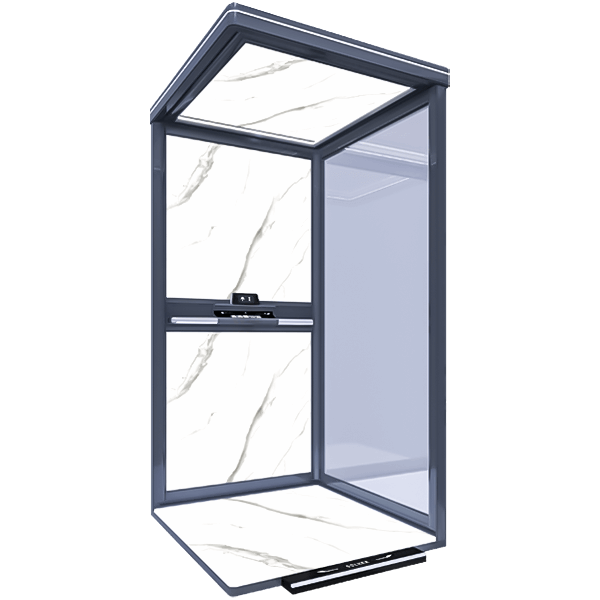
Integration of Model-S Elevator with Smart Home Systems
Why Model-S is an ideal elevator for home integration
The Minimalist design high-end and elegant villa home elevator Model-S is designed to blend luxury, reliability, and modern connectivity—making it an excellent elevator for home environments where design and smart features matter equally. The Model-S pairs Italian minimalist aesthetics with advanced drive and control technologies that enable integration with smart home platforms, while retaining comprehensive safety protections for family use.
The Model-S is a home villa elevator in the Italian minimalist style. It features the most advanced elevator technology and has comprehensive safety protection measures. It is the most reliable guarantee for your passage in villa homes.
Smart home compatibility and supported protocols for elevator for home
When choosing an elevator for home, compatibility with common smart home ecosystems (Apple HomeKit, Google Home, Amazon Alexa) and building automation protocols (Zigbee, Z-Wave, BACnet, Modbus, MQTT) is important. The Model-S is engineered to be integration-ready through these methods:
- API and Gateway: The elevator control system exposes secured APIs and can be connected through a gateway device to translate messages to MQTT, BACnet or RESTful HTTP for smart home controllers.
- Voice and Scene Integration: Integration modules allow voice commands (e.g., Call elevator to first floor) and inclusion in scenes (e.g., Goodnight to send elevator to standby).
- Third-party Hub Support: The Model-S supports connection to commercial smart home hubs and professional automation systems used in high-end villas.
This flexibility ensures Model-S functions both as a standalone elevator for home convenience and as a fully coordinated element of a modern smart home.
Control options and user experience for elevator for home
Homeowners expect simple, elegant interfaces. The Model-S offers multiple control layers to satisfy safety and convenience:
- Local Controls: High-quality cabin panel with tactile buttons and an optional glass touchscreen for direct control.
- Mobile App: Secure mobile app access for authorized users to call the elevator, select floors, and monitor status remotely.
- Voice Control: When integrated with Amazon Alexa or Google Assistant via a validated skill/action, simple voice commands can operate non-emergency functions.
- Access Management: Card/fob readers and PIN pads can be integrated to limit floor access, suitable for villas with staff or guest access needs.
- Notifications: Push alerts and email for faults, routine maintenance reminders, or emergency events (sent to owner, service provider, or property manager).
These control options enhance the daily experience while preserving essential elevator safeguards.
Safety, compliance, and redundancy when integrating elevator for home
Integrating an elevator with a smart home must never compromise its safety functions. For an elevator for home like Model-S, these principles apply:
- Preserve Hardware Safety Logic: All critical safety functions (door interlocks, emergency stop, overspeed protection, buffer systems, and obstruction detection) remain controlled by dedicated safety-grade hardware and PLCs, independent from the smart home network.
- Regulatory Compliance: Model-S is designed to meet applicable local standards for residential lifts. Common references include international and regional standards such as ASME A17.1/CSA B44 (North America) and EN 81 series (Europe); installers should confirm local codes before commissioning.
- Emergency Operation: Manual lowering, independent battery backup for cabin lighting and alarm, and a local phone or emergency call system must remain available even if the smart home network fails.
- Fail-Safe Defaults: Network commands that could affect safety (e.g., disabling interlocks) are blocked by default and require multi-step validation, secure authentication, and service-level access only.
These measures ensure that smart integration increases convenience without reducing occupant protection.
Installation workflow: integrating Model-S with a smart home system
Professional planning and a clear step-by-step work plan are vital to integrate an elevator for home into a villa's smart ecosystem. Typical workflow:
- Site Survey: Evaluate shaft footprint, machine room needs (or confirm shaftless design), electrical supply, network connectivity, and physical integration points for sensors and controls.
- Specification & Design: Define integration scope (voice, app, building automation), select gateways and protocols, and document safety boundaries.
- Pre-wiring & Network: Install dedicated Ethernet/Wi-Fi access or a wired backbone to the elevator controller area. Use segregated VLANs for safety-critical communications in professional installations.
- Hardware Installation & Commissioning: Install Model-S components, door sensors, call stations, and integration gateway. Commission elevator per manufacturer and local code procedures.
- Integration & Testing: Connect the elevator gateway to the smart home hub, verify commands, test emergency scenarios, test failover and cybersecurity protections, and confirm logging and alerting.
- User Training & Handover: Provide homeowner and building staff training on regular operation, emergency procedures, and maintenance routines.
Coordination between the elevator manufacturer, smart home integrator, and local authorities ensures a safe, reliable deployment.
Energy efficiency, monitoring and predictive maintenance for elevator for home
Smart integration can reduce energy use and increase uptime for an elevator for home. Model-S supports advanced monitoring and options that allow owners to lower operating costs and preempt failures:
- Regenerative Drives & Standby Modes: Regenerative braking can return energy to the house grid or reduce net consumption. Intelligent standby places the elevator in a low-energy state when unused for a configurable period.
- Remote Monitoring: Telemetry data (motor current, travel cycles, door cycles, error codes) is sent to cloud or local analytics to identify trends.
- Predictive Maintenance: Machine learning models can detect vibration or current anomalies and schedule service before a failure occurs, minimizing downtime and emergency repairs.
Comparison: Traditional Home Elevator vs Model-S integrated with Smart Home
Below is a practical comparison that highlights typical differences when an elevator for home is integrated versus a traditional standalone installation. Values represent typical relative performance ranges and benefits rather than exact guarantees; actual results depend on configuration and usage.
| Metric | Traditional Home Elevator | Model-S + Smart Home Integration |
|---|---|---|
| Energy Efficiency | Baseline (100%) | ~10–35% lower consumption (regenerative drives, standby) |
| Unplanned Downtime | Higher—reactive maintenance | Lower—predictive alerts reduce emergency faults |
| Security & Access Control | Local key or PIN only | Integrated access with logs, remote lockout, time-based permissions |
| User Convenience | Manual calls, local panel | App, voice, scene integration, remote diagnostics |
| Maintenance Cost (annual) | Standard contracted rates | Often lower total lifecycle cost due to fewer emergencies and optimized service intervals |
Privacy and cybersecurity best practices for elevator for home
Smart integration introduces cybersecurity considerations. Best practices for a secure elevator for home deployment include:
- Network Segmentation: Place elevator control gateways and devices on a separate VLAN from general guest Wi-Fi to limit attack surfaces.
- Strong Authentication: Use certificate-based authentication, strong passwords, and two-factor authentication for administrative access to elevator systems.
- Encrypted Communications: All remote telemetry and control commands should use TLS/SSL or equivalent end-to-end encryption.
- Software Updates: Maintain an update policy for elevator control firmware and smart home components; test updates in staging before production.
- Access Logging and Alerts: Keep an audit trail of remote commands and authorize changes only by verified personnel. Configure alerts on anomalous behavior.
Following these practices helps ensure the convenience of a connected elevator for home does not come at the expense of homeowner safety or privacy.
Brand advantages: Why choose the Minimalist design high-end and elegant villa home elevator Model-S
When evaluating an elevator for home, the Model-S stands out in several areas:
- Design and Fit: Italian minimalist aesthetics that integrate seamlessly into high-end villa interiors, preserving architectural intent while providing High Quality finishes.
- Integration-Ready: Built-in support for industry-standard integration pathways—APIs, gateways, and cloud telemetry—so Model-S can be part of a unified smart-home experience.
- Safety First: Dedicated safety PLCs and hardware interlocks ensure all regulatory and emergency functions remain independent from consumer smart systems.
- Serviceability: Remote diagnostics and predictive maintenance reduce downtime and lower lifecycle costs compared with traditional home elevators.
- Customization: Configurable access control, control panels, and cabin finishes to meet homeowner preferences and villa design requirements.
Combined, these advantages make Model-S a compelling elevator for home projects that value design, modern convenience, and long-term reliability.
Frequently Asked Questions (FAQ)
Can Model-S connect to Apple HomeKit, Google Home, or Amazon Alexa?
Yes. Model-S supports integration via validated gateways and APIs that can be connected to Google Home and Amazon Alexa for non-emergency voice commands. Apple HomeKit compatibility can be provided via a certified gateway. All voice integrations are configured to avoid exposing safety-critical functions to casual voice access.
Is it possible to retrofit Model-S into an existing villa without a machine room?
Model-S offers flexible installation options including compact, shaftless or self-contained drive configurations for many villas. A site survey is necessary to confirm feasibility, shaft dimensions, power availability, and access for installation teams.
What happens during a power outage—can I still use the elevator for home?
Model-S includes emergency features: cabin lighting and communication remain available via backup power. Manual lowering or battery-powered lowering procedures are provided to return the cabin to a safe landing. Critical emergency functions do not rely on the smart home network.
How long does installation and commissioning usually take?
Typical installation time varies by project complexity. For a standard two- to three-stop villa installation with pre-approved plans, on-site mechanical installation and electrical connections can take several days to a few weeks, with additional time for control integration and commissioning. Retrofitting older structures may require additional structural work and therefore more time.
What are the maintenance requirements and costs?
Model-S is designed for predictable maintenance intervals. Regular preventive maintenance (inspection, lubrication, safety checks) is recommended, typically on a quarterly or semi-annual schedule based on usage. Smart monitoring reduces emergency call-outs and can lower annual maintenance costs over the life of the elevator. Exact costs depend on local service agreements.
How does Model-S protect privacy when sending telemetry to cloud services?
Telemetry is transmitted securely with encryption. Data collection is configurable—owners can opt for local-only analytics or secure cloud services. Access controls, data retention periods, and anonymization options are available to align with homeowner privacy preferences and applicable laws.
Contact us / View the product
Successful smart integration depends heavily on early-stage design, making space planning and architectural coordination for home elevators essential for both aesthetics and performance.To learn more about integrating the Minimalist design high-end and elegant villa home elevator Model-S into your smart home, contact our sales team or request a site survey. Visit our product page at /products/model-s or contact sales at sales@yourcompany.com to schedule a consultation and see configuration options tailored to your villa.
Authoritative references and further reading
For regulatory and technical background referenced consult the following authoritative sources:
- Wikipedia — Home elevator: https://en.wikipedia.org/wiki/Home_elevator
- ASME — A17.1 / CSA B44 Elevator and Escalator Safety Code information: https://www.asme.org/codes-standards/find-codes-standards/a17-1
- European Committee for Standardization (CEN): https://www.cen.eu
- European Lift Association (ELA): https://www.ela-aisbl.eu
- Occupational Safety and Health Administration (OSHA): https://www.osha.gov (Search: elevator safety)
Note: Local code requirements and permitted smart home integrations vary by country and municipality—always consult local authorities and a certified elevator professional before ordering or integrating an elevator for home.
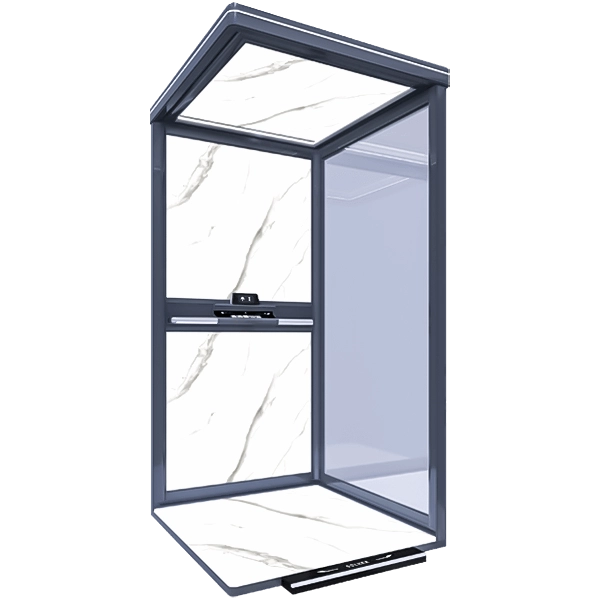
Warranty and Support: What Owners Should Verify
Top Residential Elevator Brands Compared
How a Luxury Elevator Enhances Villa Property Value and Appeal
Energy Efficiency of Villa Home Elevators: What to Expect
Product
Can it be customized as required?
Yes.
How to install an elevator and what is the warranty?
We have overseas technicians who are at your service 24 hours a day, 365 days a year.
Customize
Do I need architectural drawings to start customization?
Not required initially. We can start with basic dimensions or photos and assist with full planning.
How does the customization process work?
Our design team will guide you through the steps: style selection, material choice, and 3D visualization before confirmation.
Can I choose specific materials or colors for the cabin?
Yes. We offer a wide range of premium materials and finishes — from stone to wood to glass.
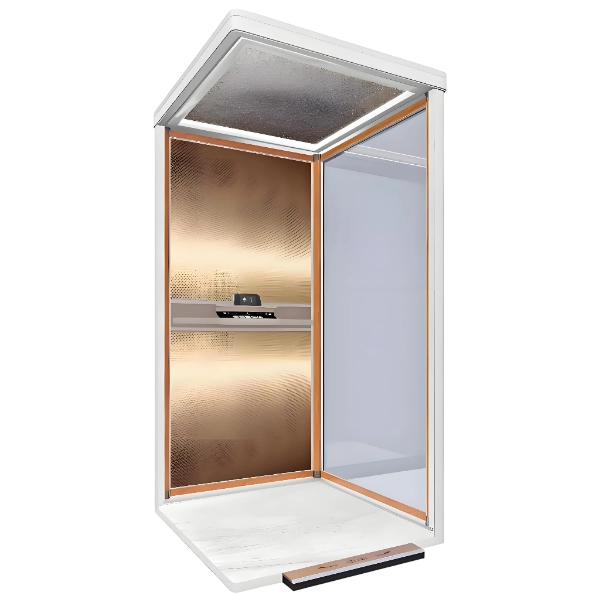
Minimalist design high-end and elegant villa home elevator Model-S
The Model-S is a home villa elevator in the Italian minimalist style. It features the most advanced elevator technology and has comprehensive safety protection measures. It is the most reliable guarantee for your passage in villa homes.
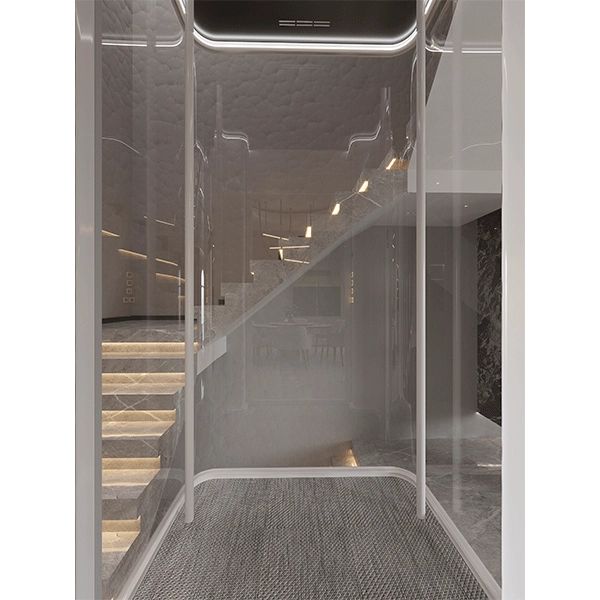
Simple and elegant villa home elevator Model-mini
The Model-Mini is a home villa elevator in the Italian minimalist style. It features the most advanced elevator technology and has comprehensive safety protection measures. It is the most reliable guarantee for your passage in villa homes
High-end and elegant villa home elevator Model-A
The Model A is a home villa elevator in the Italian minimalist style. It features the most advanced elevator technology and has comprehensive safety protection measures. It is the most reliable guarantee for your passage in villa homes.
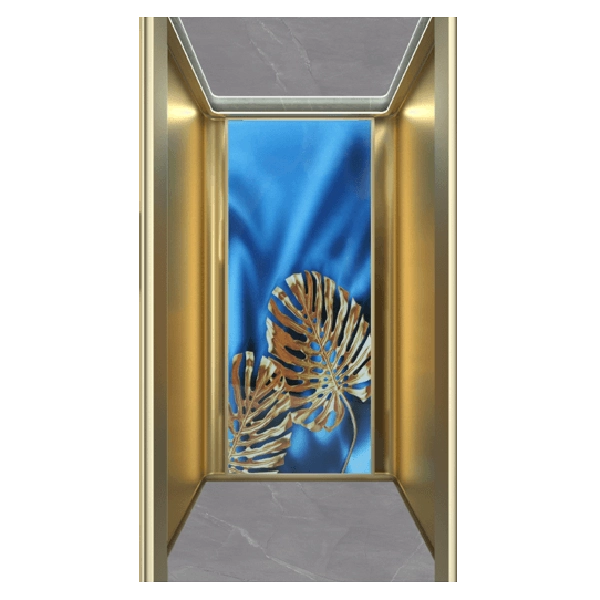
Minimalist design high-end and elegant villa home elevator Model-Q
The Model-Q is a home villa elevator in the Italian minimalist style. It features the most advanced elevator technology and has comprehensive safety protection measures. It is the most reliable guarantee for your passage in villa homes.
Let's get in touch
Email: lin@solkerelevator.com
Tel: +86 133 1668 7566
Address: Floor 1, Building D, Nanxin Industry International, Nancheng District, Dongguan, China.
 Taiwan, China
 No. 21, Lane 38, 206 Yingtai Road, Yingge District, New Taipei City
 +886 0975-299-830
 United Arab Emirates
Capital Mall, Abu Dhabi, United Arab Emirates, 3rd floor, Luxera elevator +971 52 541 4685 Ceo@maharacare.com
 Melbourne, Australia
 19/12 Natalia Av, Oakleigh South, VIC 3167
+61 1300 771 86 sales@goldenhomelifts.com.au
Sydney, Australia
U28/323 Chisholm Road, Auburn, NSW 2144
+61 1300 771 86 sales@goldenhomelifts.com.au
SOLKER
SOLKER