


Energy Efficiency of Villa Home Elevators: What to Expect
- Energy Efficiency of Villa Home Elevators: What to Expect
- Understanding energy use in a small home elevator
- How home elevators consume energy (and what to expect)
- Typical energy usage: practical calculations for homeowners
- Drive technologies and their impact on the energy profile of a villa home elevator
- Why regenerative drives and smart controls matter
- Design and detailing: how Model-S addresses energy efficiency in a villa
- Installation considerations that affect long-term energy use
- Lifecycle costs: energy, maintenance and total cost of ownership
- Comfort, safety and efficiency: trade-offs to watch
- How to choose an energy-efficient small home elevator: a checklist
- Regulations, standards and safety — energy-efficient does not mean cutting corners
- Brand strengths: why Model-S is a strong choice for villas
- Common FAQs about energy use in villa home elevators
- Q1: How much electricity will a small home elevator add to my monthly bill?
- Q2: Are regenerative drives worth the extra cost in a residential elevator?
- Q3: Does a machine room-less (MRL) elevator consume more energy than a gearless traction elevator?
- Q4: Can I retrofit an older home elevator to be more energy-efficient?
- Q5: How does Model-S compare to other small home elevators on energy and design?
- Contact / View Model-S
- References and authoritative sources
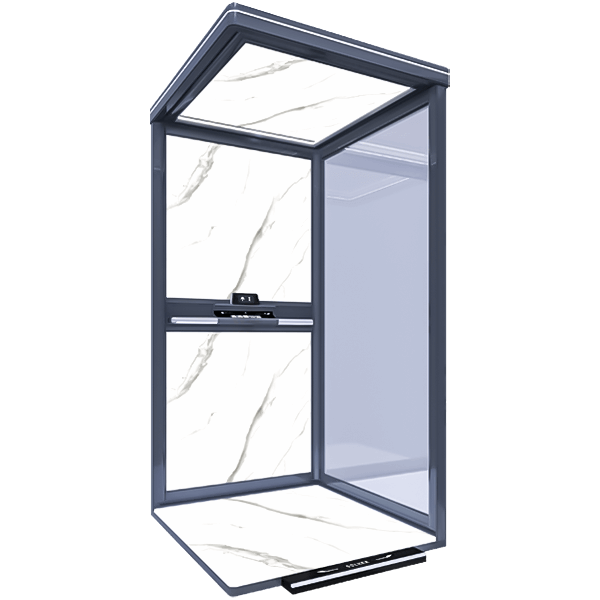
Energy Efficiency of Villa Home Elevators: What to Expect
Understanding energy use in a small home elevator
When homeowners research a small home elevator for a villa, energy consumption is a top concern alongside safety, comfort and aesthetics. Elevators in villas are different from commercial lifts: they operate with lower duty cycles, smaller loads and at lower speeds, so their overall energy footprint tends to be modest. Still, a well-designed villa home elevator — such as the Minimalist design high-end and elegant villa home elevator Model-S — can further reduce both operational energy and lifecycle costs by combining efficient drive technologies, low-loss controls and smart standby features. A quiet, smooth ride is also crucial in creating a peaceful environment. The Model-S elevator excels in noise and vibration control, ensuring minimal disturbance. Discover how its design leads to quieter operation, enhancing comfort in your villa.
How home elevators consume energy (and what to expect)
Home elevators draw energy primarily for: 1) moving the car (overcoming gravity and friction), 2) powering auxiliary systems (lighting, ventilation, control electronics), and 3) occasional standby and diagnostic loads. Unlike HVAC systems that run continuously, a small home elevator’s movement energy occurs in short bursts; therefore, the average power draw over a day depends heavily on usage patterns (number of trips, average travel distance, and load weight).
Typical energy usage: practical calculations for homeowners
Rather than promise a single number, it’s more useful to calculate expected annual energy using motor power and daily usage. Below is a conservative example table showing typical annual energy consumption for three representative motor power ratings and three daily use scenarios. These calculations assume only movement energy (does not include negligible standby electronics or lighting, which we address below).
| Motor rating (kW) | Daily movement minutes | Hours per day | Annual energy (kWh/year) | Notes |
|---|---|---|---|---|
| 0.75 kW | 10 min | 0.167 | 45.6 kWh | Light residential use (few trips) |
| 1.5 kW | 20 min | 0.333 | 182.6 kWh | Moderate family use |
| 3.0 kW | 30 min | 0.5 | 547.5 kWh | High traffic / heavier loads |
Calculation note: Annual energy = motor power (kW) × hours per day × 365. These figures provide an order-of-magnitude expectation. Real-world consumption will also include losses (drive inefficiency, idling, braking) and auxiliary loads.
Drive technologies and their impact on the energy profile of a villa home elevator
Drive type is the single biggest technical variable that affects energy efficiency. Below is a concise comparison of commonly used drives for small home elevators and what to expect in terms of energy, space and maintenance.
| Drive type | Typical efficiency | Typical power draw (movement) | Space impact | Pros / Cons |
|---|---|---|---|---|
| Machine Room-Less (MRL) Traction | High (especially with IE3/IE4 motors) | Low to moderate | Compact; no separate machine room | Efficient, compact, modern controls; good for villas |
| Gearless Traction | Very high | Low | Usually needs machine space but can be compact | Very efficient and smooth; best energy performance |
| Hydraulic (conventional) | Moderate to low | High (pump-driven) | Requires pit and/or machine room | Cheaper initially in some cases, less energy efficient |
| Electric hydraulic with accumulator / eco-hydraulic | Improved versus conventional hydraulic | Moderate | Smaller footprint than conventional hydraulic | Better efficiency and smoother operation than basic hydraulic |
Key takeaway: For villa settings where energy efficiency, space and aesthetics matter, gearless traction or modern MRL traction with high-efficiency motors and variable-frequency drives (VFD/ inverter) usually delivers the best combination of energy performance and installation flexibility.
Why regenerative drives and smart controls matter
Modern inverter drives (VFDs) with regenerative capability can return braking energy back to the building electrical system or reuse it to power auxiliaries, reducing net energy use. Smart control algorithms (destination control, batching of trips, sleep/standby modes) further lower energy consumption by avoiding unnecessary movements and reducing idle time. For a small home elevator, intelligent sleep modes that shut down non-essential electronics and dim LED lighting after inactivity are simple and effective energy savers.
Design and detailing: how Model-S addresses energy efficiency in a villa
The Minimalist design high-end and elegant villa home elevator Model-S is engineered to blend Italian minimalist aesthetics with advanced elevator technology, delivering an energy-conscious solution for luxury homes.
The Model-S is a home villa elevator in the Italian minimalist style. It features the most advanced elevator technology and has comprehensive safety protection measures. It is the most reliable guarantee for your passage in villa homes.
Energy-focused design elements in Model-S include:
- High-efficiency gearless/MRL traction options with IE3/IE4 motor choices.
- Modern VFD/inverter control with optional regenerative braking to recover descent energy.
- Low-energy LED cabin lighting and intelligent ventilation controls.
- Smart standby and sleep modes that reduce electronics draw when idle.
- Lightweight cabin materials and optimized counterweighting to minimize required motor torque.
- Compact footprint (no separate machine room in many configurations), reducing conditioned space requirements.
Installation considerations that affect long-term energy use
Energy efficiency is influenced by more than the elevator itself; site decisions matter. Important considerations include:
- Drive choice and motor sizing — oversized motors run inefficiently at low load.
- Proper counterweight balance to reduce net lifting energy.
- Hoistway sealing and door quality — tight doors reduce drafts and heat transfer near shaft penetrations.
- Control placement — locating control gear in conditioned space can simplify thermal management of electronics.
- Lighting and ventilation zoning — use presence sensors and timers to limit auxiliary energy when the elevator is unused.
Lifecycle costs: energy, maintenance and total cost of ownership
Energy is only one component of a home elevator’s lifecycle cost. Typical lifecycle categories include:
- Initial purchase and installation
- Annual energy usage
- Routine maintenance and parts replacement
- Periodic modernization or major overhauls
To illustrate, the table below shows a simplified example of relative annual costs for two hypothetical villa installations (figures are illustrative; actual costs depend on local electricity prices and maintenance contracts).
| Item / System | Efficient MRL Traction (Model-S-like) | Conventional Hydraulic |
|---|---|---|
| Annual energy (kWh) | ~150–300 kWh | ~400–800 kWh |
| Energy cost (at $0.18/kWh) | $27–$54 | $72–$144 |
| Annual maintenance | $300–$600 | $400–$700 |
| Typical lifecycle notes | Lower energy, lower modernization cost due to modular electronics | Higher pump/valve wear, more fluid-related maintenance |
Over a 20-year period, energy savings combined with reduced maintenance can make efficient traction systems cost-competitive or superior to hydraulic options for many villa installations.
Comfort, safety and efficiency: trade-offs to watch
In luxury villas, owners expect silence, smooth starts/stops, and refined finishes. Fortunately, efficient traction systems with modern inverters can deliver these characteristics while using less energy than older hydraulic designs. When selecting a small home elevator, ask about noise ratings, ride quality tuning, and safety systems — efficient operation must never compromise safety. Model-S integrates comprehensive safety protections while prioritizing low-noise, energy-conscious operation.
How to choose an energy-efficient small home elevator: a checklist
Use this short checklist when evaluating options for a villa:
- Preferred drive: gearless or modern MRL traction with high-efficiency motor.
- Regeneration capability: can braking energy be recovered?
- Standby/ sleep modes and lighting controls included?
- Properly sized motor (not oversized) and balanced counterweighting?
- Low-power auxiliary components (LEDs, efficient fans)?
- Maintenance plan details and expected modernization timeline?
- Certifications and compliance with local safety standards?
Regulations, standards and safety — energy-efficient does not mean cutting corners
All elevators must comply with applicable safety standards and local codes. Efficient systems should meet the same regulatory requirements as any other elevator: door safety, emergency lowering, backup power options, and appropriate enclosure fire ratings. Choosing a reputable manufacturer and certified installer will ensure your small home elevator satisfies both energy and safety expectations.
Brand strengths: why Model-S is a strong choice for villas
When evaluating villa elevators with energy performance in mind, Model-S stands out for these reasons:
- Italian minimalist design that integrates seamlessly into high-end interiors without requiring a separate machine room in many configurations.
- Advanced drive and control options (high-efficiency traction, VFD/regenerative systems) that reduce net energy use.
- Comprehensive safety protections and high build quality that align with industry standards.
- Attention to auxiliary energy savings — LED lighting, intelligent ventilation, and standby strategies.
- Designed for low lifecycle cost through modular components and accessible maintenance points.
Common FAQs about energy use in villa home elevators
Q1: How much electricity will a small home elevator add to my monthly bill?
A: For typical villa use with a modern efficient traction elevator, expect a very modest increase — often less than 10 USD per month depending on local electricity rates and family use. Use the motor-power calculation in this article to estimate more precisely for your situation.
Q2: Are regenerative drives worth the extra cost in a residential elevator?
A: Regenerative drives can reduce net energy use, especially in homes with frequent trips or heavy loads. For low-frequency use, payback may take longer, but regenerative systems also improve ride control and reduce mechanical wear. It's a valuable option when combined with other efficiency measures.
Q3: Does a machine room-less (MRL) elevator consume more energy than a gearless traction elevator?
A: Not necessarily. Modern MRL traction systems with efficient inverters and motors are often very close to gearless systems in energy performance while offering installation flexibility and a smaller footprint.
Q4: Can I retrofit an older home elevator to be more energy-efficient?
A: Yes. Common retrofit options include upgrading to a variable-frequency drive, installing LED cabin lighting, adding sleep-mode controls, and rebalancing counterweights. Consult an authorized technician for a retrofit assessment.
Q5: How does Model-S compare to other small home elevators on energy and design?
A: Model-S combines Italian minimalist aesthetics with advanced drive and control options, offering a strong balance of low energy use, safety and visual refinement. Its compact configurations and energy-conscious features make it particularly suitable for villa owners who value both design and efficiency.
Contact / View Model-S
If you’d like to learn how the Minimalist design high-end and elegant villa home elevator Model-S can meet your villa’s comfort, safety and energy goals, contact our sales team or request a product brochure and site assessment. Schedule a consultation to review configurations, estimated energy consumption for your layout, and a transparent lifecycle cost analysis.
References and authoritative sources
The following authoritative resources were consulted for general industry guidance, standards and background information:
- Elevator — Wikipedia: https://en.wikipedia.org/wiki/Elevator
- European Lift Association (industry association): https://www.europeanliftassociation.eu/
- ASME (American Society of Mechanical Engineers) — main site and codes overview: https://www.asme.org/
- CEN / EN standards on lifts (European Committee for Standardization) — general info: https://www.cen.eu/
- Elevator manufacturer and industry technical articles (example resources for drive technologies and regenerative systems): https://www.elevatorworld.com/
For a tailored energy estimate and to discuss Model-S configurations appropriate for your villa, please contact our team today — we can provide site-specific calculations, technical datasheets, and installation planning support.
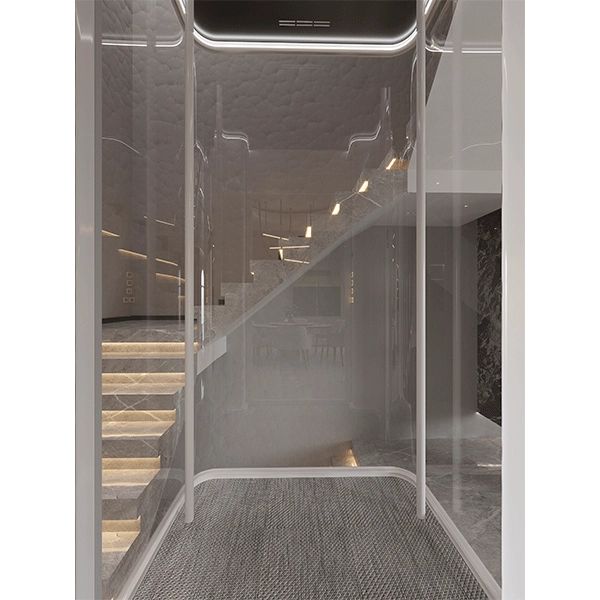
Energy Efficiency and Maintenance of the Model-mini Outdoor Elevator
How to Finance an In-Home Elevator: Loans and Options
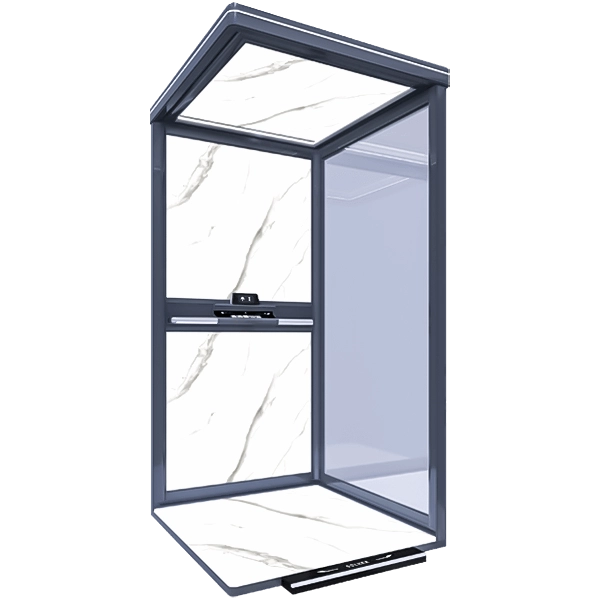
Why Choose a Small Home Elevator for Modern Villas?
Top Design Ideas for Luxury Villa Elevators
Product
Can it be customized as required?
Yes.
Customize
Can I choose specific materials or colors for the cabin?
Yes. We offer a wide range of premium materials and finishes — from stone to wood to glass.
Can the elevator design be matched to my home's architecture?
Absolutely. Our designers tailor each cabin to complement your interior layout and style.
Can I customize the elevator to match my home style?
Absolutely. We offer multiple cabin styles, materials, and finishes to suit modern, classic, or minimalist interiors.
How long does a custom order take to deliver?
On average, production takes 30–45 days after confirmation, depending on your configuration.
Simple and elegant villa home elevator Model-mini
The Model-Mini is a home villa elevator in the Italian minimalist style. It features the most advanced elevator technology and has comprehensive safety protection measures. It is the most reliable guarantee for your passage in villa homes
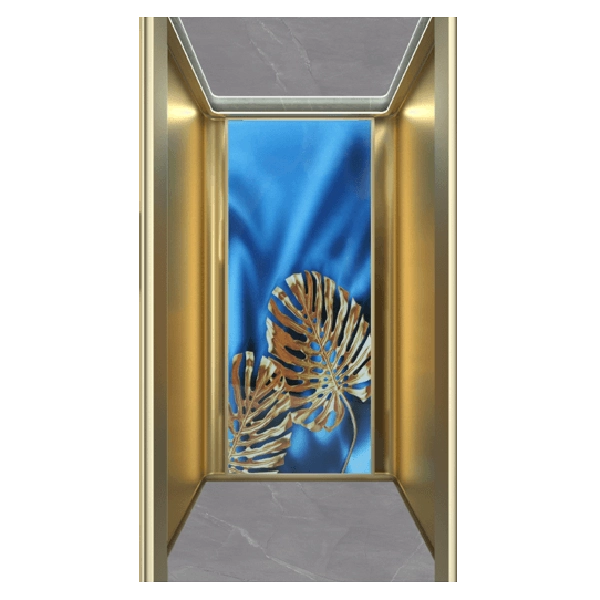
Minimalist design high-end and elegant villa home elevator Model-Q
The Model-Q is a home villa elevator in the Italian minimalist style. It features the most advanced elevator technology and has comprehensive safety protection measures. It is the most reliable guarantee for your passage in villa homes.
Minimalist design high-end and elegant villa home elevator Model-S
The Model-S is a home villa elevator in the Italian minimalist style. It features the most advanced elevator technology and has comprehensive safety protection measures. It is the most reliable guarantee for your passage in villa homes.
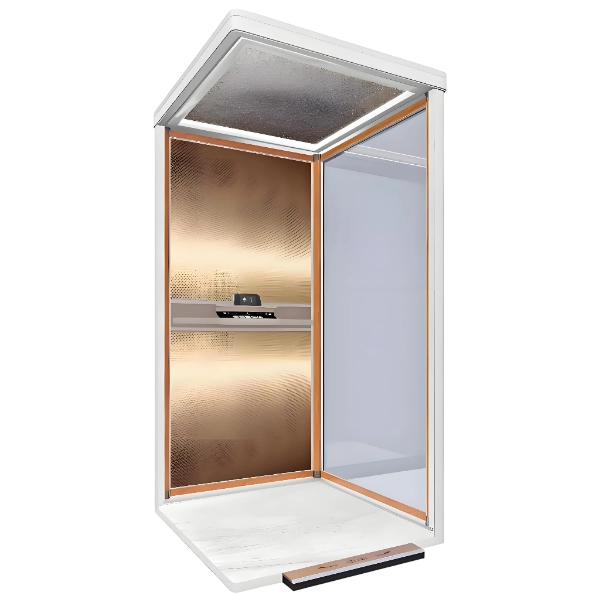
High-end and elegant villa home elevator Model-A
The Model A is a home villa elevator in the Italian minimalist style. It features the most advanced elevator technology and has comprehensive safety protection measures. It is the most reliable guarantee for your passage in villa homes.
Let's get in touch
Email: lin@solkerelevator.com
Tel: +86 133 1668 7566
Address: Floor 1, Building D, Nanxin Industry International, Nancheng District, Dongguan, China.
 Taiwan, China
 No. 21, Lane 38, 206 Yingtai Road, Yingge District, New Taipei City
 +886 0975-299-830
 United Arab Emirates
Capital Mall, Abu Dhabi, United Arab Emirates, 3rd floor, Luxera elevator +971 52 541 4685 Ceo@maharacare.com
 Melbourne, Australia
 19/12 Natalia Av, Oakleigh South, VIC 3167
+61 1300 771 86 sales@goldenhomelifts.com.au
Sydney, Australia
U28/323 Chisholm Road, Auburn, NSW 2144
+61 1300 771 86 sales@goldenhomelifts.com.au
SOLKER
SOLKER