


Noise and Vibration: Quiet Operation in Model-S Elevators
- Noise and Vibration: Quiet Operation in Model-S Elevators
- Understanding the challenge: why noise and vibration matter in a small home elevator
- Sources of elevator noise and vibration
- Design strategies in Model-S for quiet operation (small home elevator)
- Why gearless matters: comparing drive types for a small home elevator
- Materials and cabin design choices that reduce perceived noise
- Installation and building integration best practices
- Maintenance routines that preserve quiet performance
- Performance metrics: how quiet is quiet?
- Case study: Model-S in a three-storey villa (summary)
- Cost vs. benefit: High Quality quieting measures for small home elevator buyers
- Brand advantages: why choose the Minimalist design high-end and elegant villa home elevator Model-S
- FAQ — Noise and Vibration for Model-S (common buyer questions)
- Contact us / View Model-S
- References and authoritative resources
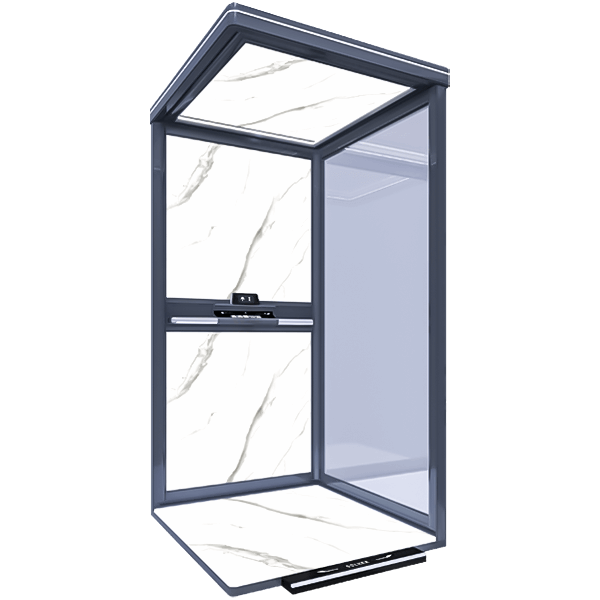
Noise and Vibration: Quiet Operation in Model-S Elevators
Understanding the challenge: why noise and vibration matter in a small home elevator
For villa owners and designers, a small home elevator must be more than functional — it must integrate seamlessly with living spaces. Excessive noise or perceptible vibration undermines comfort and perceived luxury. In residential settings, sounds and vibrations travel through structure and air, affecting bedrooms, studies, and living rooms. The Minimalist design high-end and elegant villa home elevator Model-S is engineered specifically to address this: combining Italian minimalist aesthetics with advanced noise- and vibration-mitigation technologies to deliver quiet, comfortable travel.
Sources of elevator noise and vibration
Identifying sound and vibration sources helps target solutions. The main contributors are:
- Mechanical drive noise: motors, gearboxes (geared traction) or traction machines can produce tonal and broadband sound.
- Guide-rail and guide-shoe interaction: friction, misalignment, and rail irregularities create structure-borne noise.
- Cabin resonance and panel vibrations: thin cabin panels and loose fittings can amplify vibration.
- Hydraulic systems: pumps and fluid flow create low-frequency hums in hydraulic lifts.
- Ropes, belts or linear drives: dynamic forces from traction ropes or belts produce noise if not tensioned or isolated properly.
- Building-transmitted vibration: the interface between the elevator structure and building frame conducts vibration into adjacent rooms.
Design strategies in Model-S for quiet operation (small home elevator)
The Model-S applies a layered approach: eliminate noise at source, isolate what's left, and absorb or damp residual sound. Key design choices include:
- Gearless traction machine: Model-S uses a compact gearless permanent-magnet machine or belt-driven gearless system to minimize mechanical noise compared with geared traction or older hydraulic drives.
- High-quality guide systems: precision-ground rails, low-friction guide shoes with polymer or composite liners, and tight alignment reduce structure-borne noise.
- Cabin acoustic treatment: multi-layer cabin panels, resilient mounting points, and sound-absorbing liners reduce airborne noise and cabin resonance without compromising the minimalist interior.
- Vibration isolators: elastomeric or spring-isolation mounts between elevator pit/foundation and shaft structure limit transmission into the building.
- Soft start/stop control: advanced variable-frequency drive (VFD) profiles reduce jerk and abrupt acceleration, cutting transient noise and low-frequency vibration felt by passengers.
- Precision installation tolerances: the Model-S is installed with emphasis on rail flatness, anchoring torque control, and rope tensioning to avoid late-life noise issues.
Why gearless matters: comparing drive types for a small home elevator
Choosing the right drive technology greatly affects noise and vibration. The following table summarizes typical sound and vibration characteristics for common drive types used in residential lifts.
| Drive Type | Typical noise range (dB at 1 m, indicative) | Vibration characteristics | Suitability for villas / small home elevator |
|---|---|---|---|
| Gearless traction (permanent magnet) | 35–45 dB | Low; smooth torque, minimal gearbox impact | Excellent — preferred for quiet, high-end Model-S |
| Geared traction | 45–60 dB | Moderate; gear meshing creates tonal noise | OK for mid-range homes, less ideal for luxury villas |
| Hydraulic | 45–60+ dB (pump noise) | Low-frequency hum from pump and fluid movement | Used in retrofit or low-rise, but pump location critical |
| Vacuum / pneumatic | Variable; can be quiet but limited lift height | Unique vibration modes, generally low structural transmission | Specialty choice, less common in villas |
Notes: these ranges are indicative and depend on installation quality and building acoustics. The Model-S utilizes gearless traction and acoustic design to reliably stay in the lower end of these ranges.
Materials and cabin design choices that reduce perceived noise
Perceived quietness is not only a matter of decibels. Human perception emphasizes tonal sounds, low-frequency vibration, and unexpected transient noises. Model-S addresses perception through:
- Solid core cabin panels with sound-absorbing layers to prevent panel rattles.
- High-mass flooring systems with resilient underlays to damp footsteps and mechanical impulses.
- Minimalist fixtures fixed with vibration-resistant fasteners and sealed joints to avoid creaks.
- Soft-close doors with dampers to eliminate slamming noise.
Installation and building integration best practices
Even the best elevator design can perform poorly with bad installation. Common installation measures that keep Model-S quiet include:
- Isolated pit footing and non-rigid wall anchors where appropriate, preventing rigid paths for vibration into the structure.
- Precision rail alignment and shimming: misaligned rails increase guide-shoe friction and noise.
- Correct rope/belt tension and use of vibration-damped rope clamps; imbalance or loose components increase noise over time.
- Pump room placement and acoustic enclosures if hydraulic components are used nearby — not typically required for Model-S’ gearless design but relevant for retrofit scenarios.
- Access panel gasketing and sealing to prevent airborne noise leakage from machine rooms or shafts.
Maintenance routines that preserve quiet performance
Quiet operation is a lifecycle attribute. Routine maintenance that Model-S service follows includes:
- Guide-rail inspection and lubrication with low-noise lubricants specifically formulated for guide shoes.
- Periodic re-tensioning of ropes/belts and inspection of traction surfaces.
- Replacement of wear items (guide liners, dampers, buffers) before they cause noise.
- VFD firmware updates and control tuning to maintain smooth acceleration profiles as components age.
- Acoustic checks during annual service to detect early tonal or high-frequency changes.
Performance metrics: how quiet is quiet?
Noise measurements are often reported in decibels (dB A-weighted). For residential comfort, the target ranges are:
- <40 dB(A): very quiet, comparable to a quiet library or residential night background.
- 40–45 dB(A): acceptable for living areas, typically unnoticeable in day-to-day life.
- 45–55 dB(A): noticeable in quiet rooms; may be acceptable near mechanical rooms or busy areas.
The Model-S is designed and tested to operate within the <40–45 dB(A) range under normal conditions when properly installed — a level suitable for high-end villa environments.
Case study: Model-S in a three-storey villa (summary)
In a recently completed installation, a Model-S was installed in a three-storey villa where mastersuite and study bordered the elevator shaft. Key outcomes:
- Measured cabin pass-by noise at 1 m from shaft wall: 38–42 dB(A).
- Resident feedback: no disturbance during night or work hours; doors and start/stop operation described as smooth and unobtrusive.
- Actions taken: gearless machine, rail isolation pads, and custom acoustic lining on shaft interior.
Cost vs. benefit: High Quality quieting measures for small home elevator buyers
High-end quieting measures add cost but significantly impact perceived value in a luxury villa. Typical trade-offs include:
- Gearless machine: higher initial cost vs. long-term comfort and lower maintenance.
- Acoustic cabin finishes: small incremental cost for large comfort gains.
- Vibration-isolated mounts: moderate cost, high benefit in sensitive rooms.
When evaluating a small home elevator, consider lifecycle cost and occupant comfort — Model-S is positioned to offer the High Quality balance expected in luxury homes.
Brand advantages: why choose the Minimalist design high-end and elegant villa home elevator Model-S
Model-S combines Italian minimalist design with elevator engineering optimized for villas and small home elevator applications. Brand advantages include:
- Purpose-built for residential comfort: gearless drive, acoustic cabin treatments, and soft motion control tuned for quietness.
- Comprehensive safety measures and compliance with widely accepted safety codes and best practices.
- Customization: finishes and acoustic options that match villa interiors while maintaining noise performance.
- Service network and maintenance programs aimed at preserving low-noise operation over decades.
FAQ — Noise and Vibration for Model-S (common buyer questions)
Q1: How loud will the Model-S be inside my home?
A1: When properly installed, Model-S typically operates in the <40–45 dB(A) range measured near the shaft — comparable to a quiet room. Factors include shaft construction and proximity to living spaces.
Q2: Will I feel vibration in adjacent rooms?
A2: No — Model-S uses vibration isolation and precision rail systems to minimize structural transmission. Properly isolated pit/floor and resilient mounts further reduce felt vibration.
Q3: Is gearless drive necessary for quiet operation?
A3: Gearless drives produce less mechanical noise and smoother motion, making them the preferred choice for high-end small home elevators. Model-S is engineered around this technology.
Q4: What maintenance keeps the elevator quiet?
A4: Annual service including guide rail inspection, lubrication, rope tension checks, damper replacement and control tuning maintains quiet performance.
Q5: Can quieting upgrades be added to an existing elevator?
A5: Yes — upgrades like guide liners, cabin acoustic panels, isolation mounts, and VFD control tuning can reduce noise. For best results, a site survey by an experienced installer is recommended.
Contact us / View Model-S
As you think about the noise and vibration levels, don’t forget about accessibility. A small home elevator, like the Model-S, offers significant benefits for families with aging members. Read about the accessibility benefits of home elevators for aging in place, allowing loved ones to stay independent while moving freely between floors.To learn more about the Minimalist design high-end and elegant villa home elevator Model-S, request a site survey, or schedule a demo, please contact our sales team or view product details. Our specialists will provide a noise and vibration assessment specific to your villa and recommend the optimal configuration for a truly quiet small home elevator experience.
References and authoritative resources
For further reading and technical context, consult these authoritative sources:
- Elevator (general): https://en.wikipedia.org/wiki/Elevator
- ASME A17.1 Safety Code for Elevators and Escalators (summary and info): https://www.asme.org/codes-standards/find-codes-standards/a17-1-safety-code-for-elevators-and-esc
- World Health Organization — Environmental Noise Guidelines: https://www.who.int/health-topics/environmental-noise
- ISO — Acoustics and vibration topics overview: https://www.iso.org/committee/47972.
End of article.
Custom Cabin Designs for Residential Elevators
Where to Buy villa elevators in UAE
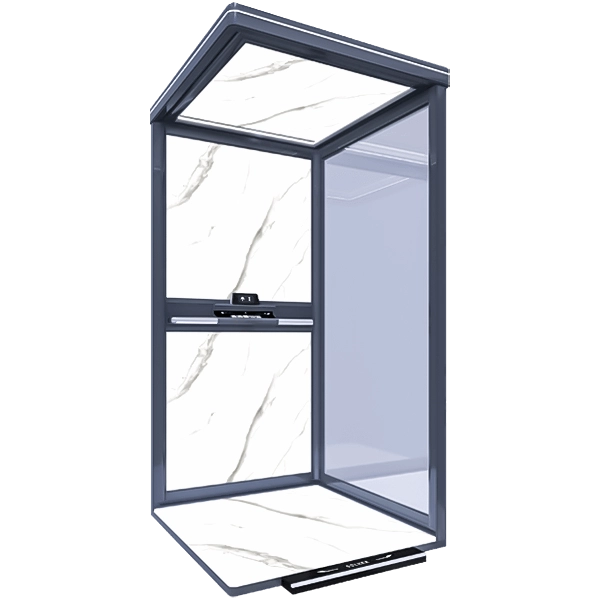
Top 10 design trends for outdoor home elevator installations
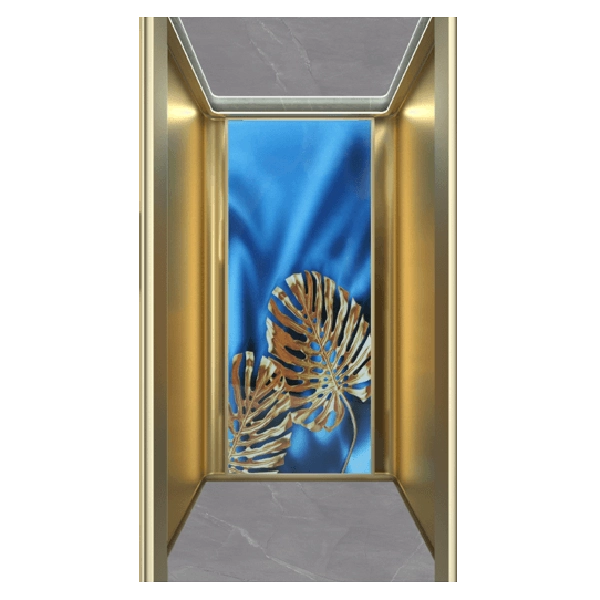
Energy Efficiency and Sustainability of Small Home Elevators
Customize
Is customization available for both indoor and outdoor elevators?
Yes. All custom options apply to indoor and weatherproof outdoor models.
How does the customization process work?
Our design team will guide you through the steps: style selection, material choice, and 3D visualization before confirmation.
How long does a custom order take to deliver?
On average, production takes 30–45 days after confirmation, depending on your configuration.
Can the elevator design be matched to my home's architecture?
Absolutely. Our designers tailor each cabin to complement your interior layout and style.
Product
How long is the production date required?
Under normal circumstances, the production time is 35 to 45 days.
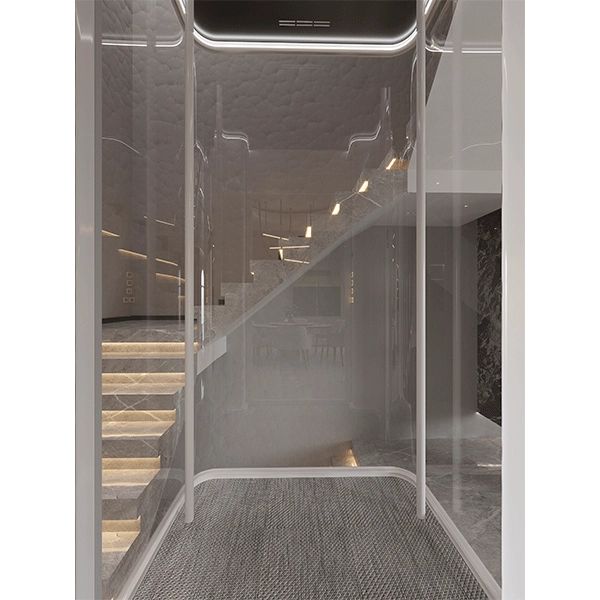
Simple and elegant villa home elevator Model-mini
The Model-Mini is a home villa elevator in the Italian minimalist style. It features the most advanced elevator technology and has comprehensive safety protection measures. It is the most reliable guarantee for your passage in villa homes
Minimalist design high-end and elegant villa home elevator Model-Q
The Model-Q is a home villa elevator in the Italian minimalist style. It features the most advanced elevator technology and has comprehensive safety protection measures. It is the most reliable guarantee for your passage in villa homes.
Minimalist design high-end and elegant villa home elevator Model-S
The Model-S is a home villa elevator in the Italian minimalist style. It features the most advanced elevator technology and has comprehensive safety protection measures. It is the most reliable guarantee for your passage in villa homes.
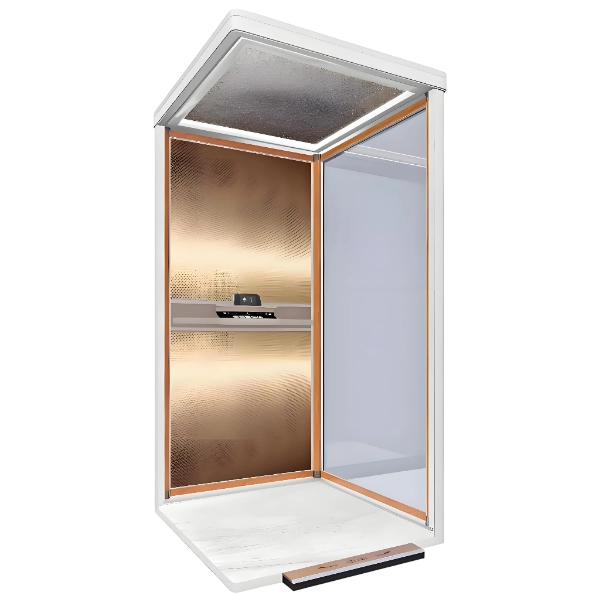
High-end and elegant villa home elevator Model-A
The Model A is a home villa elevator in the Italian minimalist style. It features the most advanced elevator technology and has comprehensive safety protection measures. It is the most reliable guarantee for your passage in villa homes.
Let's get in touch
Email: lin@solkerelevator.com
Tel: +86 133 1668 7566
Address: Floor 1, Building D, Nanxin Industry International, Nancheng District, Dongguan, China.
 Taiwan, China
 No. 21, Lane 38, 206 Yingtai Road, Yingge District, New Taipei City
 +886 0975-299-830
 United Arab Emirates
Capital Mall, Abu Dhabi, United Arab Emirates, 3rd floor, Luxera elevator +971 52 541 4685 Ceo@maharacare.com
 Melbourne, Australia
 19/12 Natalia Av, Oakleigh South, VIC 3167
+61 1300 771 86 sales@goldenhomelifts.com.au
Sydney, Australia
U28/323 Chisholm Road, Auburn, NSW 2144
+61 1300 771 86 sales@goldenhomelifts.com.au
SOLKER
SOLKER