


Pneumatic Vacuum Elevators (PVE) Price: Are They Worth the Hype in 2026?
- What Are Pneumatic Vacuum Elevators (PVE)?
- Key Takeaways: Quick Summary of PVE Costs and Benefits
- The Real Cost of Pneumatic Vacuum Elevators in 2026
- Base Unit Pricing
- Vacuum Elevator Installation and Labor
- Long-Term Maintenance
- Pros and Cons: Are Vacuum Elevators Worth the Hype?
- The Advantages
- The Drawbacks
- Resale Value Impact
- Expert Tips & Common Mistakes When Buying a Home Elevator
- Mistake 1: Ignoring the Acoustic Impact
- Mistake 2: Underestimating Future Mobility Needs
- Expert Tip: Consult a Structural Engineer
- PVE vs. Luxury Villa Elevators: Which Fits Your Home Better?
- Data Comparison: PVE vs. Custom Villa Elevators
- Aesthetic Flexibility
- SOLKER: The Ultimate Alternative for Custom Villa Elevators
- Conclusion
- FAQs About Pneumatic Vacuum Elevators
- How much does a pneumatic vacuum elevator cost?
- Are vacuum elevators noisy?
- Do pneumatic elevators require a pit or machine room?
- How safe are air-driven residential elevators during a power outage?
- What are the standard sizes for vacuum home lifts?
- Can a wheelchair fit in a pneumatic vacuum elevator?
- How long does it take to install a pitless home elevator?
- What is the maintenance schedule for a vacuum elevator?
The home elevator market has evolved dramatically, and by 2026, homeowners are looking for sleek, modern solutions that do not require massive architectural overhauls. Enter Pneumatic Vacuum Elevators. Often compared to a sci-fi teleporter, these futuristic, transparent tubes are turning heads in luxury real estate. But beyond their striking aesthetics, what is the true Pneumatic Vacuum Elevator cost, and are they the right fit for your home?
In this comprehensive guide, we will break down the pricing, installation realities, and operational pros and cons of these unique air-driven systems. We will also compare them directly against traditional luxury villa elevators to help you make an informed, long-term investment for your property.
What Are Pneumatic Vacuum Elevators (PVE)?
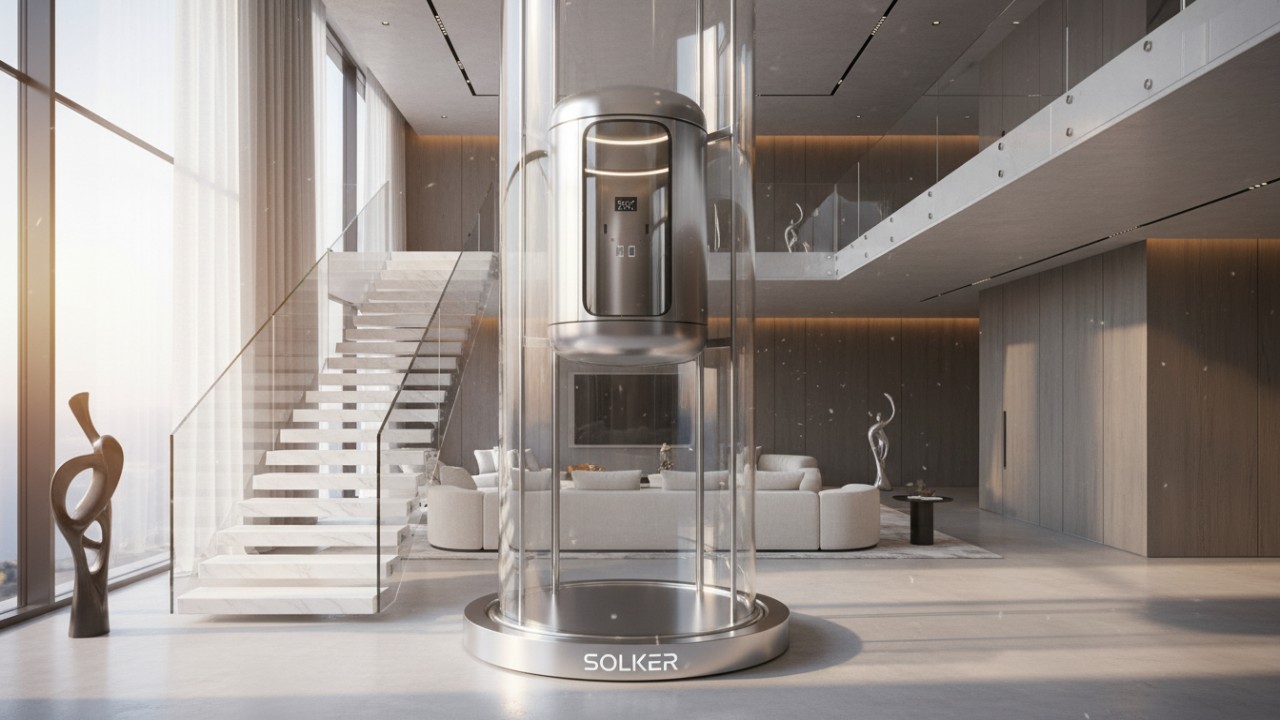
Pneumatic Vacuum Elevators (PVE) are innovative, air-driven residential lifts that use air pressure and turbine systems to move the cabin between floors. They feature a self-supporting, pitless design encased in a transparent polycarbonate cylinder, requiring no machine room or traditional hoistway.
By utilizing the piston effect, these shaftless home elevators offer a modern, space-saving solution for multi-story homes. The system relies on a powerful vacuum pump that extracts air from above the cabin, creating a low-pressure environment that pulls the elevator upward. For the descent, electronic valves slowly release air back into the cylinder, allowing gravity to gently and safely lower the cabin. This elegant application of physics completely eliminates the need for cables, pulleys, counterweights, or hydraulic fluids found in traditional elevator setups.
Key Takeaways: Quick Summary of PVE Costs and Benefits
The average Pneumatic Vacuum Elevator cost ranges from $35,000 to $60,000+ depending on the model (PVE30, PVE37, PVE52) and installation complexity. Installation is remarkably fast, often completed in 2 to 3 days due to the lack of extensive structural modifications.
While visually striking, homeowners must carefully weigh the modern aesthetic against practical considerations like strict weight limits and operational noise.
- Speed of Installation: Because they are pitless residential lifts, you avoid the weeks of chaotic construction associated with digging a concrete pit or framing a dedicated hoistway.
- Space Efficiency: A PVE takes up minimal square footage. The self-supporting structure can rest on any perfectly level ground floor, making it ideal for retrofitting into existing floor plans.
- Operational Realities: They are not silent. The vacuum turbines generate noticeable noise during the ascent, which can be a deciding factor for quiet, open-concept luxury homes.
The Real Cost of Pneumatic Vacuum Elevators in 2026
In 2026, the total cost of a vacuum elevator spans $35,000 to over $100,000, factoring in base unit pricing, professional labor, and site preparation. Long-term expenses are generally low, requiring routine maintenance like seal replacements only every five years or 15,000 lifts.
Base Unit Pricing
The equipment cost is heavily dictated by the size and passenger capacity of the unit you choose. According to 2026 pricing data from HomeGuide, homeowners can expect distinct price tiers based on the specific model:
- PVE30 (Single Passenger): Starting around $35,000, this compact 30-inch diameter model is strictly for one standing passenger (up to 350 lbs). It is the most affordable entry point.
- PVE37 (Double Passenger): Ranging from $50,000 to $75,000, this 37-inch unit accommodates two people (up to 450 lbs) and is the most popular choice for standard residential use.
- PVE52 (Wheelchair Accessible): Costing between $75,000 and $100,000+, this expansive 52-inch model is the only PVE large enough to comfortably fit a wheelchair and an attendant (up to 525 lbs).
Vacuum Elevator Installation and Labor
While you save money on building a traditional shaft, vacuum elevator installation still carries significant labor costs. You will need a professional contractor team to create precise circular floor cutouts between levels, which typically costs $1,000 to $3,000 per floor. Additionally, these lifts require a dedicated 220-volt electrical hookup, which may necessitate an electrical panel upgrade by a licensed electrician.
Long-Term Maintenance
One of the major selling points of a PVE is its low maintenance profile. Because there are no messy hydraulic fluids or complex cable systems to inspect, ongoing expenses are minimal. Routine maintenance is generally limited to inspecting the turbine motor health and replacing the main air seal every four to five years (or roughly every 15,000 lifts).
Pros and Cons: Are Vacuum Elevators Worth the Hype?
These pitless residential lifts offer exceptional advantages like a minimal footprint, 360-degree visibility, and eco-friendly operation. However, significant drawbacks include noticeable ascent noise reaching up to 85 decibels, strict weight capacities, and limited aesthetic customization compared to high-end luxury alternatives.
The Advantages
- Minimal Footprint: The self-supporting polycarbonate cylinder can be placed almost anywhere, even in the center of a wrap-around spiral staircase or attached to an interior balcony.
- Eco-Friendly Operation: The elevator uses zero electricity during its descent, relying entirely on gravity and controlled air release, making it highly energy efficient.
- Panoramic Views: The clear tube provides a stunning 360-degree view of your home's interior, acting as a functional piece of modern art.
The Drawbacks
- Acoustic Impact: Are vacuum elevators noisy? Yes. During the ascent, the turbine motors can generate noise levels between 72 and 85 decibels—comparable to a household vacuum cleaner or a washing machine. Research from Angi highlights that while the descent is quiet, the upward journey can be disruptive in serene residential spaces.
- Strict Weight Limits: Even the largest PVE maxes out at 525 lbs, which is significantly lower than the 1,000+ lbs capacity standard in traditional luxury lifts.
- Limited Customization: You are largely restricted to the industrial, tubular look. You cannot customize the cabin walls with rich woods, custom glass, or marble flooring.
Resale Value Impact
Installing a "Star Trek" style elevator undoubtedly adds a "wow" factor to luxury urban renovations. However, highly personalized or ultra-modern aesthetics can be polarizing to future buyers. Some may love the futuristic vibe, while others might view the rigid polycarbonate tube as a visual clash with classic, traditional, or transitional home decor.
Expert Tips & Common Mistakes When Buying a Home Elevator

A common mistake when buying a home elevator is ignoring acoustic impacts and underestimating future mobility needs. Experts recommend consulting a structural engineer to ensure your flooring can support the cylinder load safely and evaluating whether a wheelchair-accessible unit is necessary for long-term aging-in-place.
Mistake 1: Ignoring the Acoustic Impact
Failing to plan for noise mitigation in quiet residential spaces is a frequent regret. If you install a PVE right next to a master bedroom, a home theater, or a quiet study, the 85-decibel turbine noise during the ascent will be highly noticeable. It is crucial to strategically place the unit away from noise-sensitive zones.
Mistake 2: Underestimating Future Mobility Needs
Many homeowners opt for the smaller PVE30 to save space and money. However, if the primary goal is aging-in-place, a single-rider, standing-only unit will not accommodate a wheelchair or a walker. Always consider the long-term utility of the lift and opt for a wheelchair-accessible design if mobility is a future concern.
Expert Tip: Consult a Structural Engineer
While a PVE is lightweight compared to traditional elevators, the entire weight of the unit and its passengers rests directly on the ground floor. Always consult with a structural engineer to ensure your home's flooring can support the localized load of the cylinder safely without settling or cracking over time.
PVE vs. Luxury Villa Elevators: Which Fits Your Home Better?
When comparing a PVE vs traditional elevator, vacuum systems excel in tight spaces, while luxury villa elevators provide superior ride smoothness, whisper-quiet operation, and bespoke aesthetics. Classic or highly customized homes often benefit more from the tailored interior finishes of a traditional luxury lift.
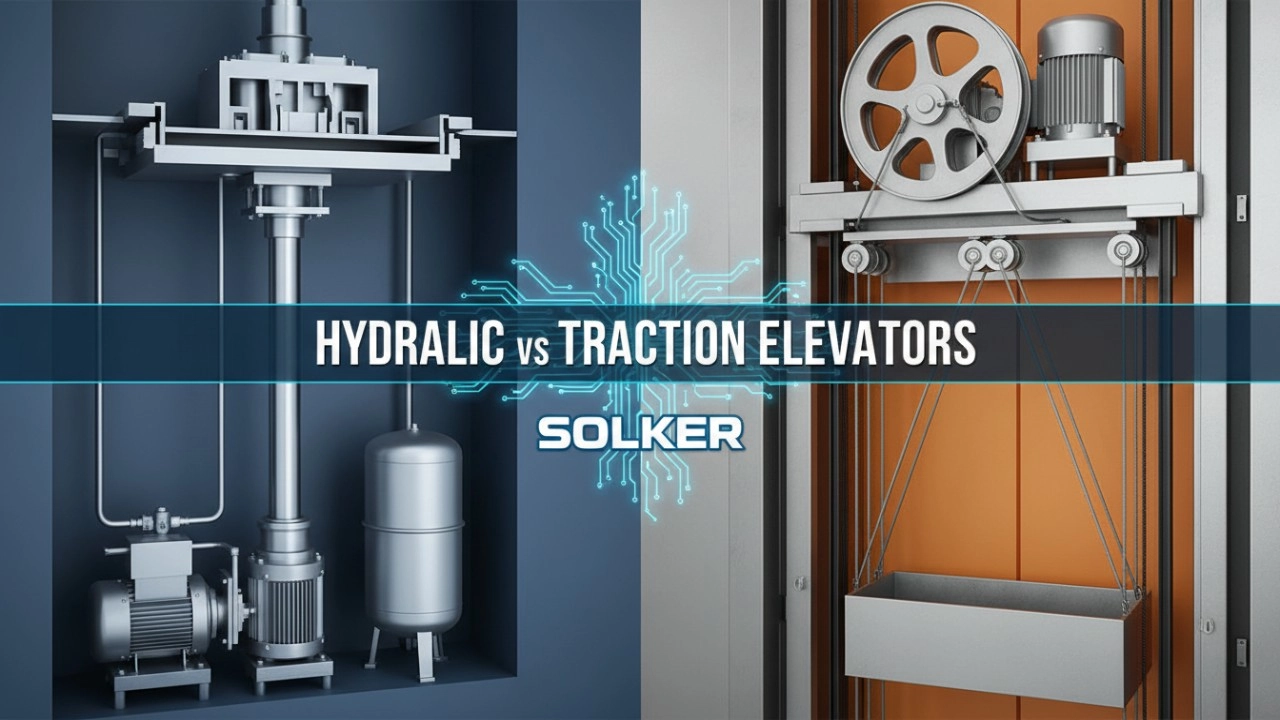
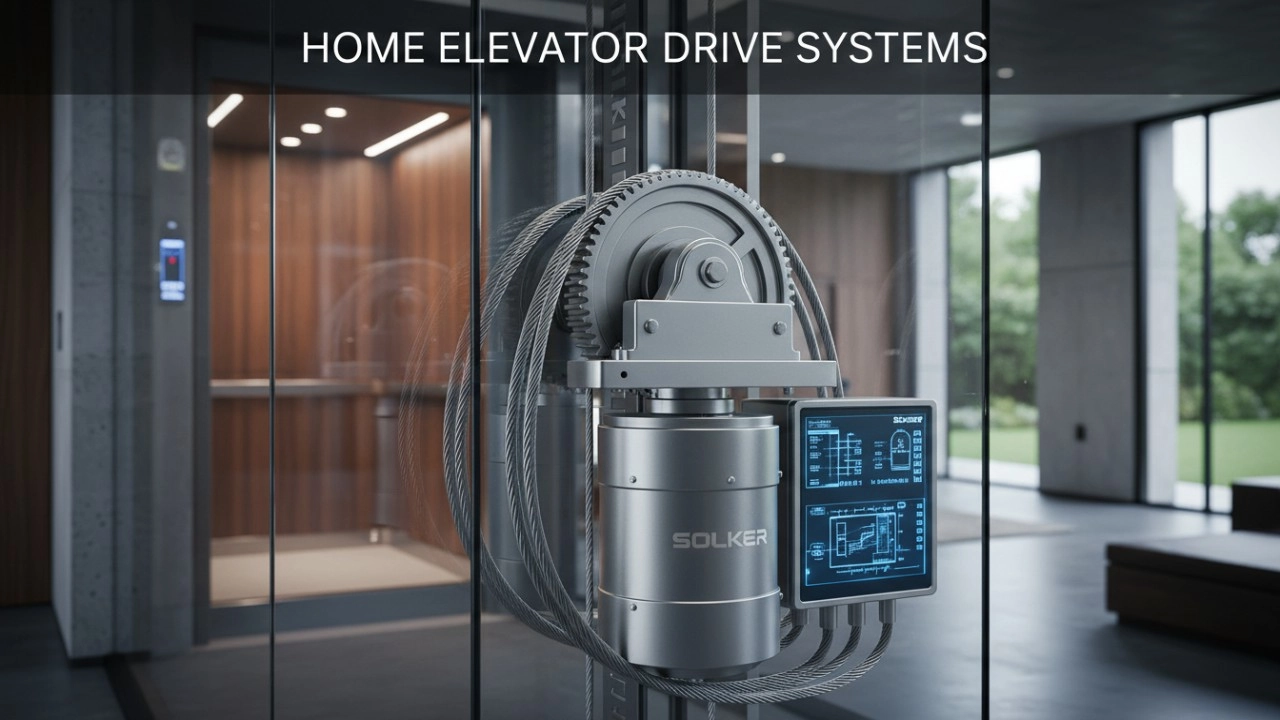
To truly understand which system aligns with your lifestyle, it is essential to look at the data. For a comprehensive look at the underlying mechanics of different systems, check out our Home Elevator Drive Systems & Pricing: The Complete 2026 Guide.
Data Comparison: PVE vs. Custom Villa Elevators
| Feature | Pneumatic Vacuum Elevators (PVE) | SOLKER Luxury Villa Elevators |
|---|---|---|
| Drive System | Air pressure & vacuum turbines | Advanced high-end traction / Hydraulic |
| Noise Level | ~75 - 85 decibels (Ascent) | Whisper-quiet operation |
| Customization | Limited (Polycarbonate cylinder) | Fully bespoke (Glass, wood, metal, marble) |
| Space Required | Minimal (Pitless, shaftless) | Flexible, integrated configurations |
| Weight Capacity | 350 lbs - 525 lbs | High capacity (1,000+ lbs available) |
| Best For | Ultra-modern, space-restricted homes | High-end luxury homes & custom villas |
Aesthetic Flexibility
The rigid polycarbonate tube of a vacuum lift has a very specific, hyper-modern look. In contrast, luxury villa elevators offer boundless customization. You can match the cabin interior perfectly to your home's architecture, incorporating premium materials, custom LED lighting, and elegant automated doors that blend seamlessly into your hallways.
SOLKER: The Ultimate Alternative for Custom Villa Elevators
For homeowners seeking bespoke aesthetics and whisper-quiet operation, Dongguan SOLKER Elevator Technology Co., Ltd. provides the ultimate premium alternative to air-driven systems. With over two decades of industry experience, SOLKER specializes in high-end, customizable villa elevators designed to match any luxury home decor perfectly.
If the noise or design limitations of a vacuum elevator do not match your vision, the SOLKER brand offers a superior vertical transportation solution. As a premier manufacturer of villa lifts and luxury home elevators, we understand that an elevator should be more than just a functional utility—it should be a seamless extension of your home's elegance.
At Dongguan SOLKER Elevator Technology Co., Ltd., our vision is to become the world's top villa elevator manufacturer. We have won the trust and affection of a wide range of users through our outstanding quality and innovative design. Unlike the rigid aesthetic of a PVE, SOLKER Elevators offer private customization services. Whether your home features a classic, contemporary, or transitional style, we provide comfortable, safe, and elegant vertical transportation solutions without the acoustic drawbacks of air-driven systems.
Conclusion
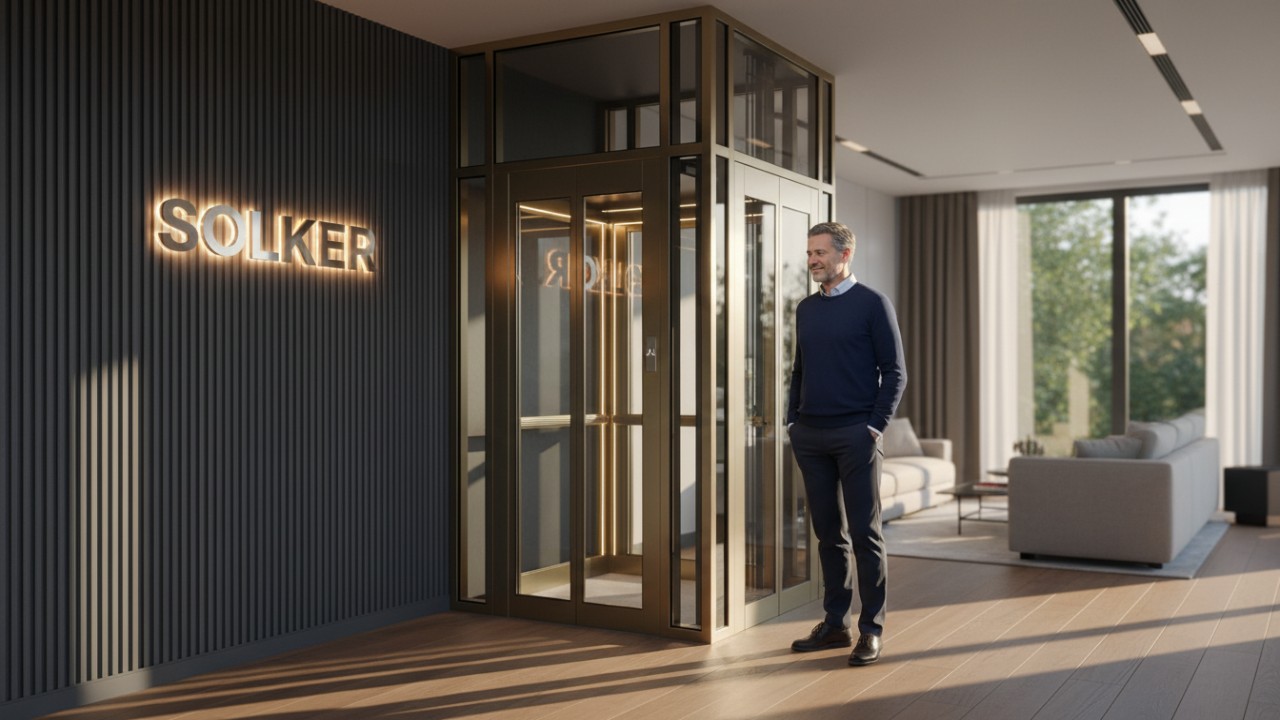
Pneumatic vacuum elevators offer a futuristic, space-saving design, but their price point and noise levels mean they aren't the perfect fit for every homeowner. For those seeking a truly customized, whisper-quiet, and elegant addition to their home, luxury villa elevators often provide a better long-term investment.
Contact us today at lin@solkerelevator.com to optimize your luxury villa elevator strategy.
FAQs About Pneumatic Vacuum Elevators
How much does a pneumatic vacuum elevator cost?
A standard pneumatic vacuum elevator typically costs between $35,000 and $60,000. This price includes the unit, standard installation, and necessary electrical work, but can vary based on the specific model and site preparation.
Are vacuum elevators noisy?
Yes, vacuum elevators generate noticeable noise, particularly during the ascent as the turbine pumps air out of the cylinder. The descent is generally much quieter since it relies on gravity and controlled air release.
Do pneumatic elevators require a pit or machine room?
No, one of the biggest advantages of a PVE is its self-supporting, pitless design. The turbine system is usually housed directly on top of the elevator cylinder, eliminating the need for a separate machine room.
How safe are air-driven residential elevators during a power outage?
They are very safe; in the event of a power failure, gravity slowly brings the cabin down to the lowest level. Mechanical safety brakes and battery backups ensure that the doors can be opened once the cabin reaches the ground.
What are the standard sizes for vacuum home lifts?
The most common models are the PVE30 (single passenger, 30-inch diameter), PVE37 (two passengers, 37-inch diameter), and PVE52 (wheelchair accessible, 52-inch diameter).
Can a wheelchair fit in a pneumatic vacuum elevator?
Yes, but only in the largest model, the PVE52. The smaller PVE30 and PVE37 models are designed for standing passengers only.
How long does it take to install a pitless home elevator?
Once the site preparation (like floor cutouts and electrical hookups) is complete, the actual installation of a vacuum elevator usually takes just 2 to 3 days.
What is the maintenance schedule for a vacuum elevator?
Routine maintenance is generally required every 4 to 5 years or after 15,000 lifts. Key service tasks include inspecting the main seal, checking the turbine motors, and ensuring the door locks and battery backups are functioning.
Customize
Do I need architectural drawings to start customization?
Not required initially. We can start with basic dimensions or photos and assist with full planning.
Can the elevator design be matched to my home's architecture?
Absolutely. Our designers tailor each cabin to complement your interior layout and style.
What parts of the elevator can be customized?
You can personalize wall panels, flooring, lighting, control panels, handrails, and door finishes.
How does the customization process work?
Our design team will guide you through the steps: style selection, material choice, and 3D visualization before confirmation.
Product
Can it be customized as required?
Yes.
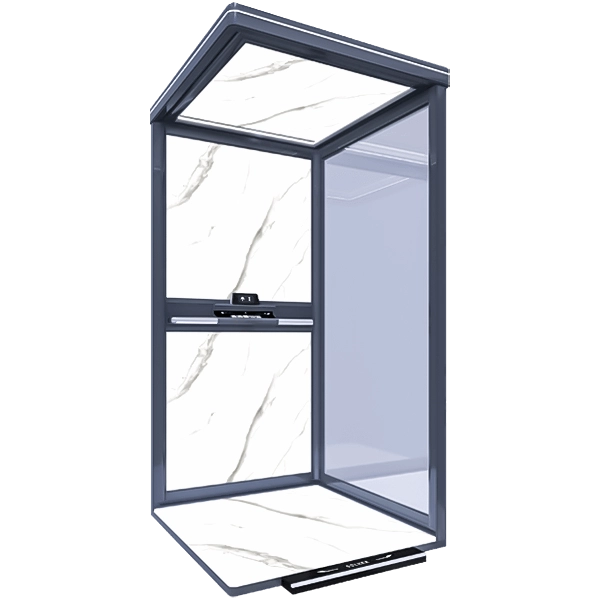
The Model-S is a home villa elevator in the Italian minimalist style. It features the most advanced elevator technology and has comprehensive safety protection measures. It is the most reliable guarantee for your passage in villa homes.
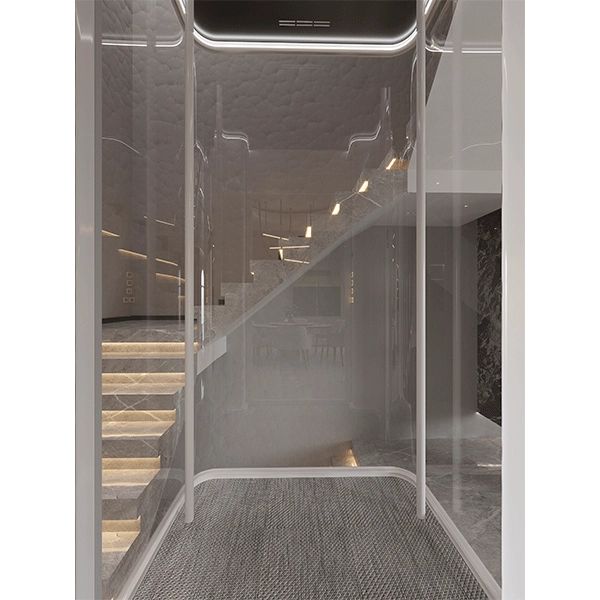
The Model-Mini is a home villa elevator in the Italian minimalist style. It features the most advanced elevator technology and has comprehensive safety protection measures. It is the most reliable guarantee for your passage in villa homes
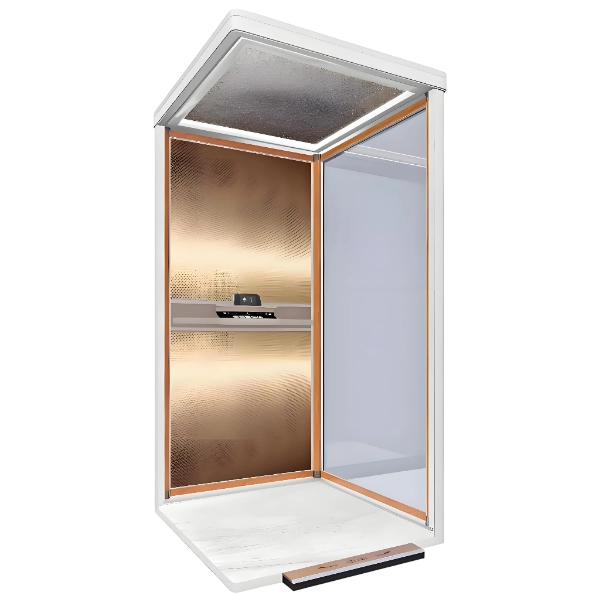
The Model A is a home villa elevator in the Italian minimalist style. It features the most advanced elevator technology and has comprehensive safety protection measures. It is the most reliable guarantee for your passage in villa homes.
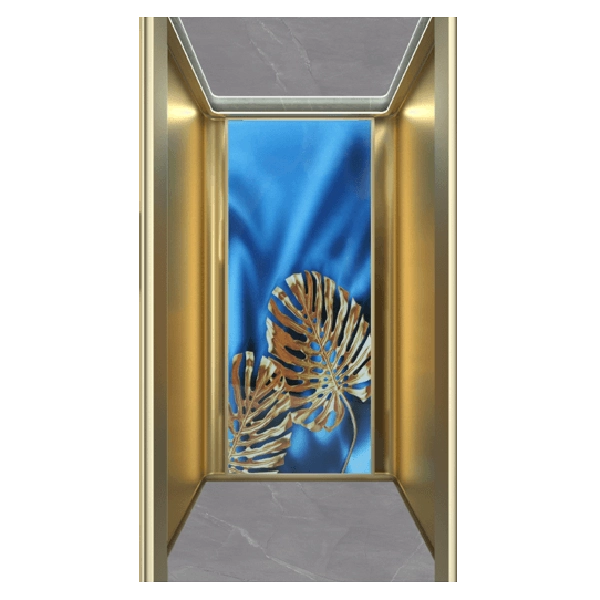
The Model-Q is a home villa elevator in the Italian minimalist style. It features the most advanced elevator technology and has comprehensive safety protection measures. It is the most reliable guarantee for your passage in villa homes.
Looking for custom villa lifts manufacturing solutions?
We provide full-service OEM & ODM solutions—from concept to delivery.
Design, prototyping, production, and shipping—all in one place.
Fill out the form below for a free quote or consultation.
👉 Contact us today to start an exclusive customized partnership.
📦 Get product catalogs and wholesale prices.
🔧 Submit your design requirements for 1-to-1 exclusive matchmaking.
🌍 Become our global distribution partner.
Rest assured that your privacy is important to us, and all information provided will be handled with the utmost confidentiality.
Let's get in touch
Email: lin@solkerelevator.com
Tel: +86 133 1668 7566
Address: Floor 1, Building D, Nanxin Industry International, Nancheng District, Dongguan, China.
 Taiwan, China
 No. 21, Lane 38, 206 Yingtai Road, Yingge District, New Taipei City
 +886 0975-299-830
 United Arab Emirates
Capital Mall, Abu Dhabi, United Arab Emirates, 3rd floor, Luxera elevator +971 52 541 4685 Ceo@maharacare.com
 Melbourne, Australia
 19/12 Natalia Av, Oakleigh South, VIC 3167
+61 1300 771 86 sales@goldenhomelifts.com.au
Sydney, Australia
U28/323 Chisholm Road, Auburn, NSW 2144
+61 1300 771 86 sales@goldenhomelifts.com.au
SOLKER
SOLKER