Discover the top 10 shaftless home elevator manufacturers for 2026, featuring SOLKER’s innovative and space-saving shaftless elevators. Explore trusted brands offering safe, stylish, and efficient shaftless home elevator solutions designed to enhance modern homes.
Introduction
If you are planning to age in place or simply want to add a touch of modern convenience to your multi-story residence, the shaftless home elevator has emerged as the premier solution in 2026. Unlike traditional lifts that require extensive construction and deep pits, these innovative systems are designed to fit into your existing floor plan with minimal disruption. In this guide, we will explore the best shaftless elevators on the market, compare the top types of home elevators, and dive into why brands like SOLKER are leading the industry’s technological shift this year.
What is a Shaftless Home Elevator?
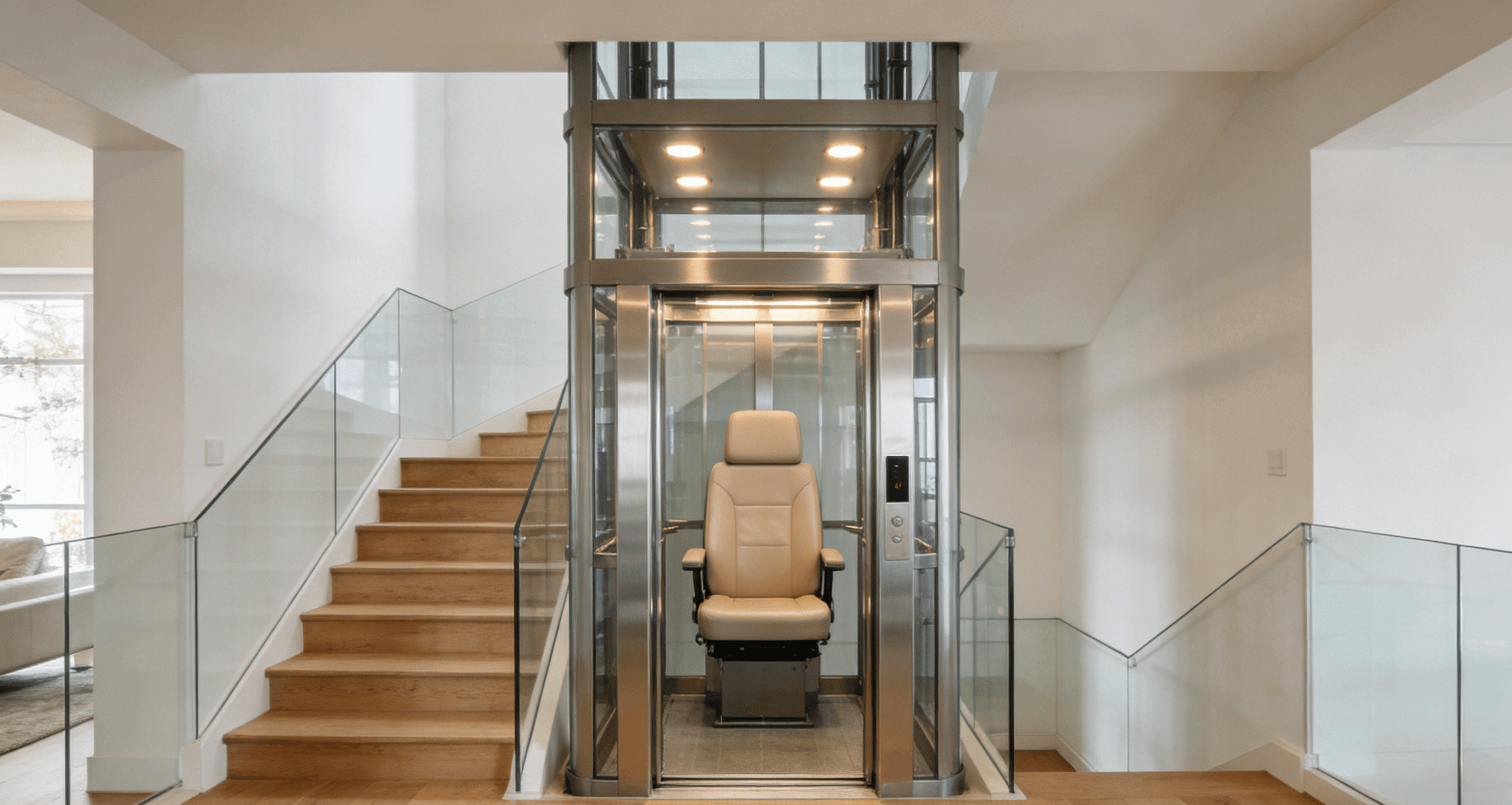
A shaftless home elevator is a compact, residential lift designed to travel between two floors without the need for a built-in hoistway or a dedicated machine room. By eliminating the heavy masonry work required for a traditional machineless elevator, these units offer one of the top options for installing an elevator in a house that is already finished.
Often referred to as "through-the-floor" lifts, they utilize a self-supporting rail system. This "vanishing" effect means that when the elevator is on the upper floor, the lower space is completely clear and usable. If you want to explore more compact lift options, you can also read Top 10 Small Home Elevators: Cost, Sizes, and Installation, which compares popular small residential elevator models and their installation requirements.
What Exactly is Shaftless?
The "shaft-less" design is made possible by relocating the drive mechanisms and safety sensors directly onto the cab or the guide rails.
-
Small Footprint: Most small elevators of this type occupy less than 10 square feet—comparable to a standard armchair.
-
Pitless Design: These are truly pitless home elevators, sitting directly on your finished floor without the need for excavation.
-
Plug-and-Play: Many models are powered by standard 220V/240V outlets, similar to a common household appliance.
-
Top 10 Shaftless Home Elevator Manufacturers for Homes 2026
As of 2026, the global market for shaftless residential elevators is dominated by European and North American engineering. Here is our expert ranking of the top 10 manufacturers:
-
1. Stiltz Lifts (United Kingdom)
-
The global pioneer of the dual-rail through-floor lift. Their Duo and Trio Alta models remain the gold standard for minimalist design and ease of retrofitting. Stiltz focuses on "plug-in" simplicity, making them a household name in Europe and North America.
-

2. SOLKER (China / Global)
-
The 2026 Innovation Leader. SOLKER has surged to the 2 spot by perfecting ultra-quiet traction technology. Known for their "Model-S" series, they offer the industry's highest space utilization and advanced AI-integrated safety sensors. SOLKER is particularly praised in recent home elevator reviews for its smooth ride and smart-home connectivity.
-

3. Savaria (Canada)
-
A titan in the mobility industry. Their Telecab series is highly respected for its robust build quality and its "vanishing" effect that leaves floor space clear. Savaria is the go-to brand for homeowners who require a slightly higher weight capacity without a full shaft.
-

4. Wessex Lifts (United Kingdom)
-
Specialists in healthcare-grade accessibility. The Wessex Elesse is famous for its 30-minute fire-rated floor seals and luxury interior finishes, ensuring that safety never compromises the home’s interior design.
-

5. Pollock Lifts (Ireland)
-
Known for sleek, wall-mounted dual-rail systems. Their lifts feature a unique "soft start/stop" traction drive that provides an exceptionally smooth ride, making them a favorite for luxury residential projects.
-

6. Pneumatic Vacuum Elevators - PVE (USA)
-
The world leader in vacuum technology. These cylindrical shaftless elevators use air suction to move the cab, offering a stunning 360-degree panoramic view that serves as a centerpiece for modern architectural homes.
-

7. Terry Lifts (United Kingdom)
-
Their Lifestyle Lift is a European favorite, noted for its compact "corner-fit" design and rigorous compliance with international safety standards, making it an excellent shaftless residential elevator for tight spaces.
-
8. Ascendor (Austria)
-
Austrian precision engineering at its finest. Ascendor specializes in premium materials like stainless steel and glass for high-end architectural integration, targeting the luxury segment of the home elevator for sale market.
-
9. Aritco (Sweden)
-
Famous for Scandinavian minimalism. Their HomeLift Compact is perhaps the most space-efficient screw-driven model on the market today, featuring an integrated "DesignWall" with customizable lighting.
-

10. Inclinator Co. of America (USA)
-
America’s oldest home elevator company. They provide highly customizable home elevator kits for traditional residences and historic retrofits, blending heritage craftsmanship with modern safety.
-
-
Advantages of The Shaftless Elevator
When reading home elevator reviews, the benefits of shaftless models consistently outweigh traditional traction or hydraulic systems for existing homes.
Detailed Advantage Table
| Feature |
Shaftless Home Elevator |
Traditional Traction/Hydraulic |
| Space Required |
Minimal (~0.8 – 1.2 m²) |
Large (~2.5 – 4.0 m²) |
| Construction Impact |
Minor (Ceiling aperture only) |
Major (Shaft, Pit, Machine Room) |
| Installation Time |
2–3 Days |
2–4 Weeks |
| Pit Depth |
0 (Pitless) |
200mm – 1200mm |
| Portability |
High (Can be removed/relocated) |
None (Permanent structure) |
| Cost Efficiency |
High (Saves on masonry/labor) |
Lower (High construction overhead) |
Are Shaftless Elevators Safe?
One of the most common questions regarding shaftless home elevators is whether they are as safe as enclosed ones. Because the cab is not hidden behind walls, safety is managed through high-tech active sensors and mechanical interlocks.
How Safe is SOLKER Elevator?
SOLKER has set a new benchmark for safety in 2026. Their systems include:
-
360° Smart Sensors: If a pet or an object is detected under the lift, it stops instantly before contact.
-
Emergency Battery Backup: In the event of a power outage, the lift automatically returns to the ground floor.
-
Overload Protection: Prevents operation if the weight limit is exceeded, ensuring mechanical longevity.
-
Shaftless Home Elevator Cost
The shaftless home elevator cost is typically 30% to 50% lower than a full-sized elevator because you bypass the $15,000+ cost of building a shaft.
How much does it cost to install a shaftless elevator?
In 2026, the average total project cost (unit + installation) ranges from:
-
Standard Units: $22,000 – $28,000.
-
Premium/Wheelchair Models: $29,000 – $36,000.
-
Luxury/Panoramic Models: $38,000+.
-
Installation Process for Shaftless Elevator
Retrofitting a shaftless residential elevator is a non-invasive process that typically follows these steps:
-
Site Survey: Technicians verify home elevator sizes and check for joist alignment.
-
Floor Cut: A professional carpenter creates the opening in the ceiling/floor.
-
Rail Mounting: The self-supporting rails are installed (often in just a few hours).
-
Cab Assembly: The modular cab is built and connected to the drive system.
Total Project Time: Usually completed within 3 to 5 business days.
-
Home Elevator Maintenance
Maintenance for a shaftless residential elevator is remarkably straightforward. Because they use winding drum or screw-and-nut technology, there are no hydraulic fluids to leak.
-
Annual Inspection: We recommend a professional check once a year to test safety sensors and lubricate moving parts.
-
Battery Check: Ensure the emergency lowering battery is charged and functional.
-
Removal
Should you decide to sell your home or no longer require the lift, a shaftless model is the only type that is easily reversible. It can be dismantled in 24 hours, and the floor opening can be closed with standard building materials, restoring the room to its original state.
-
How Do Shaftless Home Elevators Work?
Most units use a winding drum drive or a traction belt system. The motor is located within the cab or at the top of the rails (MRL - Machine Room-Less). When you hold the "constant pressure" button, the motor reels in high-strength cables, moving the cab smoothly along the vertical rails.
-
Conclusion
Whether you choose the British legacy of Stiltz or the high-tech smart solutions from SOLKER, a shaftless home elevator is the most practical way to future-proof your home in 2026. It combines luxury, safety, and a minimal footprint into a single mobility solution. If you are still comparing different vertical mobility options, you can also explore The Freedom to Move: Discover the Comprehensive Benefits of an Outside Elevator 2026, which explains how outdoor lift systems can complement indoor solutions and improve accessibility for multi-story homes.
-
FAQs
-
What is the smallest footprint available?
The Stiltz Duo and SOLKER Compact both take up less than 0.7m², making them some of the most space-efficient shaftless elevators available. This compact footprint allows homeowners to install a home elevator even in small houses, apartments, or tight interior layouts.
Can I find a home elevator for sale online?
Yes, you can browse and compare many home elevator for sale options online through manufacturer websites and distributors. However, a professional site assessment is mandatory before installation to provide an accurate quotation and ensure the elevator fits your home structure.
Do Shaftless Elevators require a lot of electricity?
No, most shaftless elevator systems are designed to be highly energy-efficient. During operation, a Shaftless Elevator typically uses less electricity than a standard toaster, making it suitable for everyday residential use.
Are Shaftless Elevators noisy?
Modern 2026 shaftless elevator models operate at under 48 decibels, which is extremely quiet for indoor equipment. This noise level is often compared to light rain, allowing the elevator to run without disturbing daily activities in the home.
Can I take a wheelchair in a shaftless elevator?
Yes, many manufacturers offer larger shaftless elevator models designed specifically as an elevator for wheelchair users. These "Large" or "Trio" models provide enough interior space to accommodate wheelchairs, walkers, and caregivers comfortably.
Are home elevator kits safe for DIY?
No, home elevator kits are not designed for DIY installation because they involve electrical systems, structural requirements, and safety components. Professional installation is required to meet local building codes, safety regulations, and insurance requirements.
What happens in a Shaftless Home Elevator during a fire?
High-end brands like Wessex and SOLKER include advanced safety features such as fire-rated seals and safety systems. These components help prevent smoke from traveling between floors and improve overall fire safety within the home.
How many stops can a Shaftless Elevator have?
Most shaftless elevator models are designed for residential use and are limited to two stops. This means they typically travel between two floors, which is ideal for houses with ground and upper levels.




![How an Elevator for Home Can Increase Your Property Value by 10% [2026 Case Study] - SOLKER](https://static.gooecloud.com/upload/img/GY076088693142/how-an-elevator-for-home-can-increase-your-property-value-by-10-2026-case-study.png?x-oss-process=image/format,webp/quality,Q_100 "How-an-Elevator-for-Home-Can-Increase-Your-Property-Value-by-10%-[2026-Case-Study] - SOLKER")



 Taiwan, China
 No. 21, Lane 38, 206 Yingtai Road, Yingge District, New Taipei City
 +886 0975-299-830
 United Arab Emirates
 Ceo@maharacare.com
 Melbourne, Australia
 19/12 Natalia Av, Oakleigh South, VIC 3167
SOLKER
SOLKER