


Ultimate Guide to Choose and Install In Home Elevator 2026
Choose & install your perfect in-home elevator with SOLKER. Luxury, safety & customization for your villa.
- Introduction: Elevating Your Everyday Living with an In Home Elevator
- Understanding the "In Home Elevator": More Than Just a Lift
- The Unparalleled Benefits of Installing an In Home Elevator
- Exploring Your Options: Types of In Home Elevators
- Key Considerations Before Installing Your In Home Elevator
- The In Home Elevator Installation Process: From Consultation to Completion
- Demystifying the Cost of an In Home Elevator
- Safety First: Essential Features and Standards
- Maintaining Your In Home Elevator for Lasting Performance
- In Home Elevators vs. Stair Lifts: Which is Right for You?
- Choosing the Perfect In Home Elevator for Your Unique Needs
- Conclusion
- FAQ
- How much does an in home elevator cost?
- How long does it take to install an in home elevator?
- Can an in home elevator be installed in an existing house?
- What are the different types of in home elevators?
- Do in home elevators require a lot of maintenance?
- Are in home elevators safe?
- What are the space requirements for an in home elevator?
- Do in home elevators increase property value?
Introduction: Elevating Your Everyday Living with an In Home Elevator
Picture a home where multi-level living is no problem—where carrying heavy laundry up the stairs or accommodating a grandparent is as easy as pressing a button. An in-home elevator isn't just for the super rich anymore. It's become a cool mix of luxury, convenience, and practical accessibility.
As architectural trends shift toward vertical living and the concept of "aging in place" gains popularity, so does home lift installation. People are increasingly realizing that a home elevator is more than just an extra gadget; it is a true game changer for a variety of needs. Whether you're a young family with strollers or an older person, an elevator can make life easier.
In this guide, we will look at residential vertical transport. We'll look at the different types of home elevators, talk about the pros and cons, and go over the best home elevator options for your specific layout. We'll also break down how to install one. Whether you need a small home elevator for a tight space or a show-stopping centerpiece, this guide has you covered.
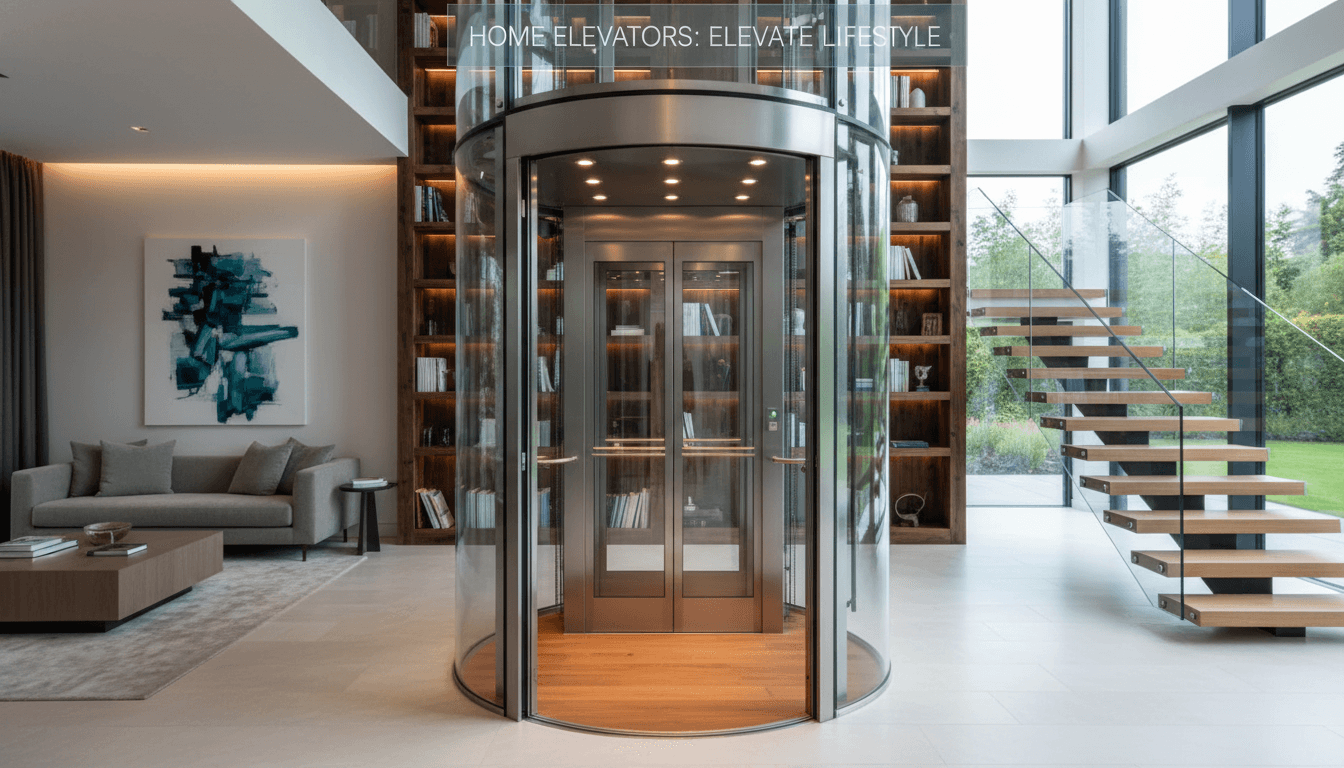
Understanding the "In Home Elevator": More Than Just a Lift
At its core, an in-home elevator is a lifting system designed specifically for private residences. It's based on the same idea as commercial elevators, but it's designed for homes.
Commercial elevators are designed to be extremely fast, handle a high volume of traffic, and carry a significant amount of weight. Residential elevators, on the other hand, are designed to be compact, blend in with the rest of your home, and be simple to operate. They run at lower speeds (usually standard safety speeds set by code) and are designed to be quieter and more energy-efficient.
Home lifts have really come a long way. Those days of clunky, industrial-looking cages are over. Today's market has sleek, glass-encased pneumatic tubes and shaftless residential elevators that really stand out as architectural features. This change has made it possible for these lifts to fit in with modern architecture, showing that you can have a nice-looking building and a practical lift at the same time.
The Unparalleled Benefits of Installing an In Home Elevator
Investing in a residential elevator has numerous advantages. It's not just about getting from floor A to floor B.
· Enhanced Accessibility and Mobility: It's especially hard on people's ability to move around. If you've got a disability, an injury, or you're planning to age in place, an elevator can be a lifesaver. It makes sure that the whole house is still accessible, which helps keep people independent and dignified.
· Unmatched convenience: Your daily chores will become a lot easier. It's simple to transport groceries, luggage, laundry, or heavy furniture between floors. It makes multi-story living way more comfortable because it reduces the physical strain on all family members.
· Boosted Home Value and Appeal: A home elevator is a high-value asset. Real estate pros often say that having mobility features can really boost a property's marketability and resale value. It makes the home seem like a "forever home," which appeals to more buyers.
· Luxury and Style Integration: These days, elevators can be customized. You've got options from wood veneers to brushed steel and panoramic glass walls, so you can pick finishes that go with your interior decor and add a touch of sophistication.
· Safety and Peace of Mind: Accidents in the home are a common occurrence, and stairs are often involved. An elevator is a safe way to travel because it's enclosed, so there's less chance of someone falling. This is ideal for families with elderly relatives or young children.
Exploring Your Options: Types of In Home Elevators
Selecting the right system depends on your budget, space, and aesthetic preferences. Here are the primary categories:
| Elevator Type | Description | Key Features | Best For | Pros | Cons |
|---|---|---|---|---|---|
| Traditional Hydraulic Elevators | Uses a hydraulic arm to lift the cab. Known for smooth, quiet travel. Typically requires a machine room and pit below the shaft. | - Smooth and quiet ride- High weight capacity- Ideal for large families or wheelchair users- Reliable and proven technology | Larger families, wheelchair accessibility | - Quiet and smooth- High capacity- Excellent reliability- Good for heavy-duty use | - Requires machine room- Pit required- Higher installation costs |
| Traction (MRL) Elevators | Machine Room-Less system that uses counterweights and cables for movement. The motor is housed within the shaft. | - Energy-efficient- Space-saving design (no machine room)- Smooth and quiet ride- Scalable for different home sizes | New construction, energy-conscious users | - Space-saving- Energy-efficient- Smooth ride- Lower maintenance costs | - May require structural changes for installation- Higher initial cost compared to hydraulic elevators |
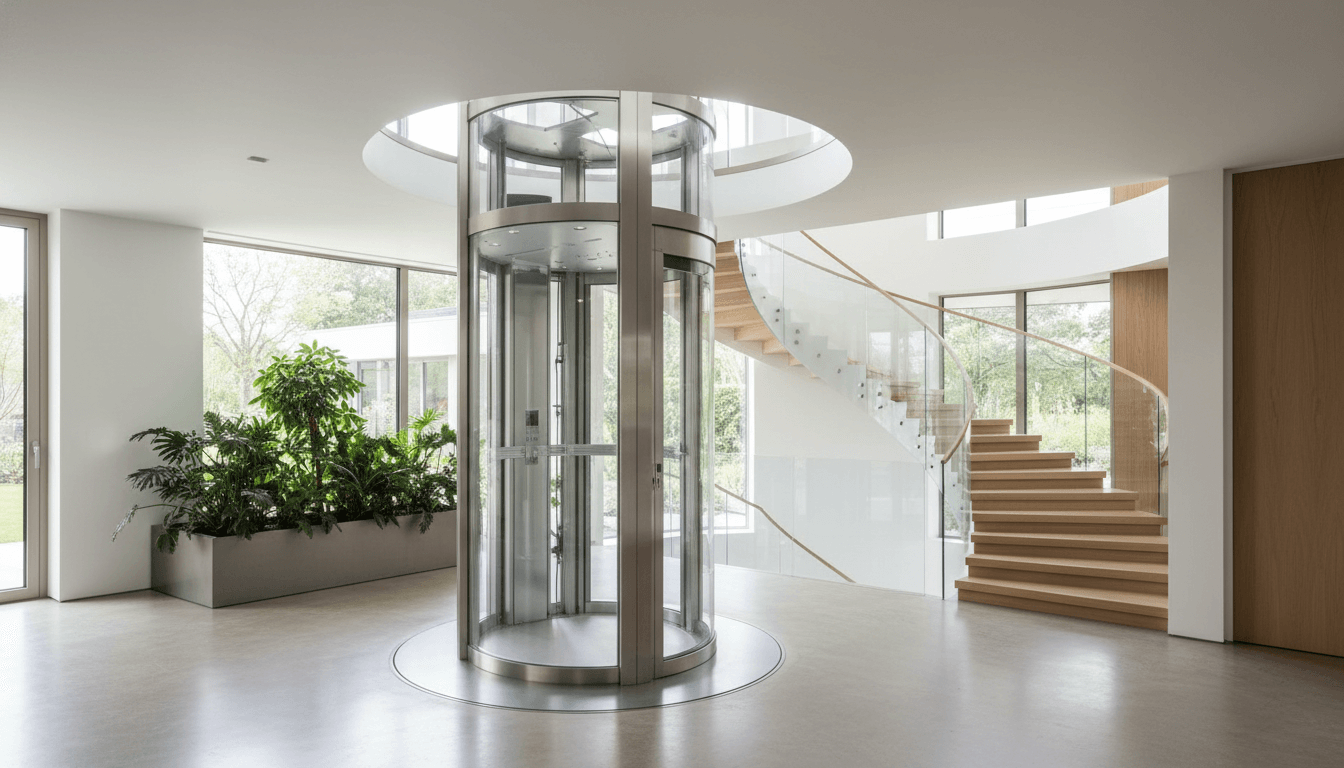
| Pneumatic Vacuum Elevators | Cylindrical glass tubes that use air pressure for movement. They are "pit-less" and self-supporting, offering 360-degree visibility. | - Air pressure-driven- No need for a machine room- Stunning visual feature- Minimal structural changes required- Pit-less design | High-end homes, design-focused buyers | - Unique design- No need for a machine room- Visually striking- Quiet operation | - Limited weight capacity- Expensive- Limited customization options- Requires a smooth, even floor for installation |
| Through-the-Floor / Shaftless Elevators | No enclosed shaftway; the elevator travels through a floor opening on a guide rail system. Ideal for retrofitting homes. | - Minimal footprint- No shaftway required- Can be installed in tight spaces- Hatch cover seals the opening when not in use | Retrofitting existing homes, tight spaces | - Ideal for space-restricted homes- Easy to retrofit- No enclosed shaftway- Lower installation time and cost | - Limited lifting height- May not have high weight capacity- Limited aesthetic options compared to other elevator types |
| Specialty and Outdoor Lifts | Includes Vertical Platform Lifts (VPLs) for short distances and outdoor lifts designed for weather resistance. | - Simple solution for short distances- Ideal for outdoor use- Weather-resistant materials- Can provide access to decks, porches, or upper entries | Short-distance, outdoor accessibility | - Simple to install- Weather-resistant for outdoor use- Suitable for split levels and raised platforms | - Limited distance- Not as customizable- Less aesthetically pleasing than other elevator types |
Key Considerations Before Installing Your In Home Elevator
Before breaking ground, there are a few things to consider:
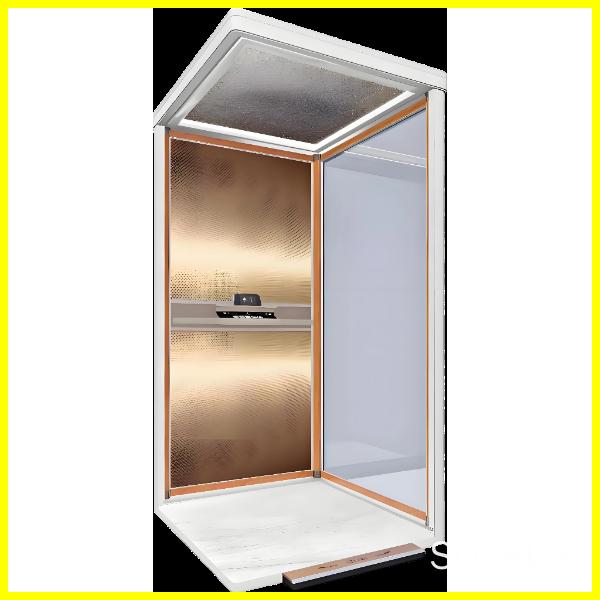
· Space Requirements: You've got to assess the available footprint. While a small home elevator might only need 15 square feet, traditional models require more. Residential elevators are usually about 12 to 15 square feet of interior cab space, but the hoistway will need more.
· Home Structure: New constructions make it easy to plan shafts and pits. If you're retrofitting into an existing home, you'll need to find a space that's the right height (like stacked closets) or build a shaftless model.
· Number of floors/stops: The distance to travel and the number of stops will determine the type of drive system needed, and they'll have a big impact on the cost of the home elevator.
· Power and Electrical Needs: Most elevators need a dedicated 220V circuit and a separate 110V lighting circuit. You'll also need a landline or a cellular connection for the emergency phone.
· Local Building Codes: Every municipality has its own rules about residential lifts, safety features, and permits. It's critical for safety and insurance reasons, so getting everyone on the same page is unavoidable.
The In Home Elevator Installation Process: From Consultation to Completion
Installing a home lift is a step-by-step process.
1. Initial Consultation: A technician will come to your home to check if it's structurally feasible and talk about what you need.
2. Design and Customization: You pick the style of the cab, the gates, the fixtures, and the drive system.
3. Preparation: Contractors get the site ready. This means framing the hoistway (if needed), pouring a pit, and running electrical lines.
4. Installation: The elevator mechanics arrive to install the guide rails, motor, cabin, and doors. For a shaftless elevator for a home, this can sometimes be done in as little as 1-2 days. Traditional systems can take a week or more.
5. Testing: We put the system through some rigorous weight tests and safety checks before giving it to you.
Demystifying the Cost of an In Home Elevator
The cost of a home elevator is complicated because it depends on customization. Here's a general breakdown of costs:
· Equipment Cost: The physical elevator unit has a wide range. Pneumatic and custom hydraulic models are more expensive, while basic cable-driven or shaftless models may be more affordable.
· Installation Labor: It depends on the region and how complex it is. Retrofitting is usually more expensive than new construction installation because you have to demolish and re-frame the structure.
· Maintenance: And don't forget to factor in the cost of annual service contracts to keep the warranty valid.
Prices for these lifts can vary a lot. You're looking at about $20,000 for the most basic ones, and for high-end, custom glass-enclosed systems, you're looking at over $100,000, including construction costs. An outdoor home elevator can cost more because of the weatherproofing needed.
Safety First: Essential Features and Standards
These days, residential elevators are built with strong safety measures. Here are some of the main features:
· Emergency Battery Backup: Make sure the cab can go down to the nearest floor and open the door if there's a power outage.
· Door Interlocks: These keep the elevator from moving unless the gate is closed and locked and prevent the landing door from opening unless the cab is present.
· Sensors: Infrared sensors and pressure plates stop the elevator if something gets in the way above or below the cab.
· Code Compliance: Reputable lifts meet the ASME A17.1 code (Safety Code for Elevators and Escalators), which sets the standard for design, installation, and operation in the United States.
Maintaining Your In Home Elevator for Lasting Performance
To make sure your lift stays the best home elevator for your family for years to come, regular maintenance is key. Most manufacturers recommend getting it serviced by a pro at least once or twice a year. The technicians will lubricate the rails, check the hydraulic fluid levels, test the emergency phone, and verify that all the door locks are working right. If you ignore unusual noises or jerky movements, you might end up with some costly repairs down the line.
In Home Elevators vs. Stair Lifts: Which is Right for You?
While stairlifts are a cheaper alternative, they offer different functionality. A stair lift can carry a seated passenger up the stairs, but it can't handle a wheelchair, a vacuum cleaner, or a basket of laundry.
An in-home elevator gives everyone—users, caregivers, and cargo—access to all parts of the house. While an elevator costs more upfront, it adds equity to your home and offers a more dignified, comfortable experience compared to the open seating of a stair lift.
Choosing the Perfect In Home Elevator for Your Unique Needs
To wrap up your search:
1. Determine Needs: Is this for a wheelchair user? (We'd need to know the dimensions of the residential elevator). Or for carrying groceries?
2. Evaluate Space: Do you have room in your closet for a shaft, or do you need a shaftless home elevator?
3. Get Quotes: You can contact several certified installers. Check out their warranty offers, service plans, and portfolios. For inspiration, explore small home elevators and check out the Top 10 Small Home Elevators, featuring the best models for various needs and spaces."
Conclusion
Picking and installing an in-home elevator is a big decision that changes how your house works. It's an investment in your future, making sure your home stays a place of comfort and independence, no matter how you change with age or mobility. Understanding the types, costs, and installation requirements has prepared you to take your living standards to the next level, both literally and metaphorically. Give SOLKER a call to check out our top-notch villa elevator options and see for yourself how easy our installation services are.
FAQ
How much does an in home elevator cost?
The cost varies widely based on the type (e.g., hydraulic, pneumatic, shaftless), number of stops, customizations, and installation complexity. Generally, prices can range from $20,000 to over $100,000 including installation and necessary construction work.
How long does it take to install an in home elevator?
Installation time depends on the elevator type and home modifications needed. Shaftless or 'through-the-floor' models can often be installed in as little as 1-2 days, while traditional hydraulic or traction models requiring a shaftway might take several weeks to complete.
Can an in home elevator be installed in an existing house?
Yes, many types of in home elevators are specifically designed for retrofitting into existing homes. Shaftless home elevators and pneumatic vacuum elevators are particularly suitable for existing structures because they minimize the need for major construction and pit excavation.
What are the different types of in home elevators?
Common types include hydraulic elevators (smooth, heavy lifting), traction/MRL elevators (energy efficient), pneumatic vacuum elevators (air-driven, modern look), and shaftless/through-the-floor elevators (space-saving).
Do in home elevators require a lot of maintenance?
Like any complex machinery, in home elevators require regular professional maintenance to ensure safety and longevity. Manufacturers and safety codes typically recommend annual or bi-annual servicing to check safety systems, lubrication, and mechanical components.
Are in home elevators safe?
Yes, modern in home elevators are built with numerous safety features, including emergency stop buttons, battery backups for power failures, and door interlocks. They must adhere to strict safety codes, such as ASME A17.1, to ensure they are safe for residential use.
What are the space requirements for an in home elevator?
Space requirements vary by model. Some compact shaftless residential elevators need as little as 15-20 square feet of floor space. Traditional models require more space for the hoistway (shaft), a pit (usually 6-12 inches deep), and sometimes a separate machine room.
Do in home elevators increase property value?
Yes, an in home elevator is generally considered a luxury upgrade that can significantly increase a home's market value and appeal. It adds particular value by making the home "future-proof" and accessible to a wider range of potential buyers, including those with mobility challenges.
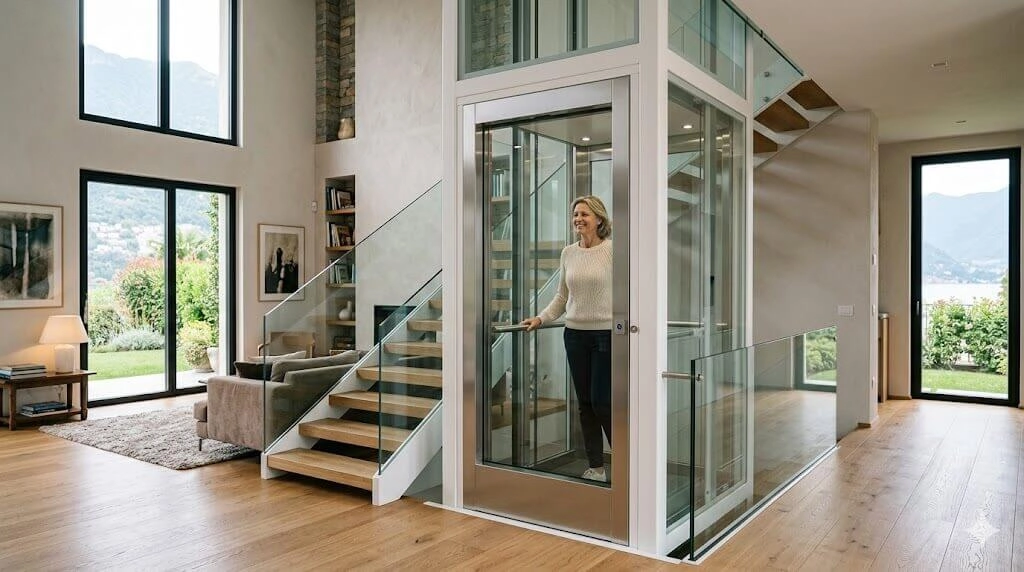

![How an Elevator for Home Can Increase Your Property Value by 10% [2026 Case Study] - SOLKER](https://static.gooecloud.com/upload/img/GY076088693142/how-an-elevator-for-home-can-increase-your-property-value-by-10-2026-case-study.png?x-oss-process=image/format,webp/quality,Q_100 "How-an-Elevator-for-Home-Can-Increase-Your-Property-Value-by-10%-[2026-Case-Study] - SOLKER")

Customize
Do I need architectural drawings to start customization?
Not required initially. We can start with basic dimensions or photos and assist with full planning.
Is customization available for both indoor and outdoor elevators?
Yes. All custom options apply to indoor and weatherproof outdoor models.
Can I customize the elevator to match my home style?
Absolutely. We offer multiple cabin styles, materials, and finishes to suit modern, classic, or minimalist interiors.
How long does a custom order take to deliver?
On average, production takes 30–45 days after confirmation, depending on your configuration.
How does the customization process work?
Our design team will guide you through the steps: style selection, material choice, and 3D visualization before confirmation.

The Model-Q is a home villa elevator in the Italian minimalist style. It features the most advanced elevator technology and has comprehensive safety protection measures. It is the most reliable guarantee for your passage in villa homes.
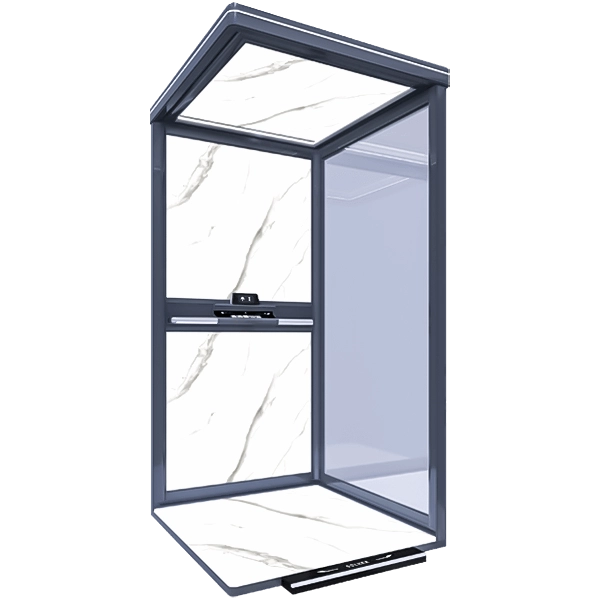
The Model-S is a home villa elevator in the Italian minimalist style. It features the most advanced elevator technology and has comprehensive safety protection measures. It is the most reliable guarantee for your passage in villa homes.
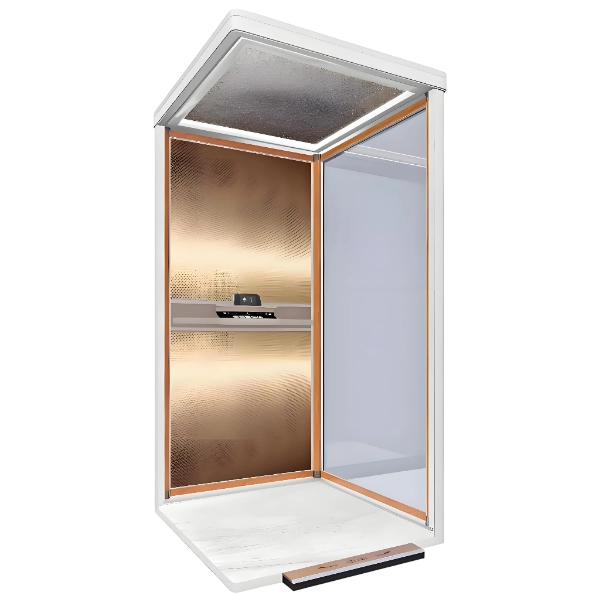
The Model A is a home villa elevator in the Italian minimalist style. It features the most advanced elevator technology and has comprehensive safety protection measures. It is the most reliable guarantee for your passage in villa homes.
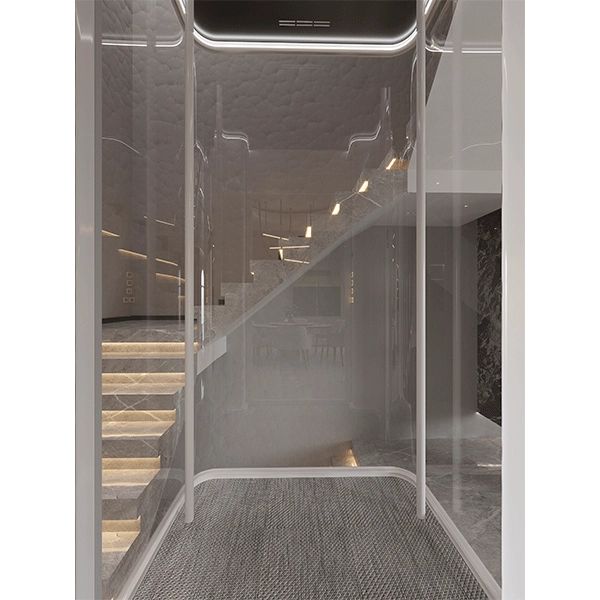
The Model-Mini is a home villa elevator in the Italian minimalist style. It features the most advanced elevator technology and has comprehensive safety protection measures. It is the most reliable guarantee for your passage in villa homes
Looking for custom villa lifts manufacturing solutions?
We provide full-service OEM & ODM solutions—from concept to delivery.
Design, prototyping, production, and shipping—all in one place.
Fill out the form below for a free quote or consultation.
👉 Contact us today to start an exclusive customized partnership.
📦 Get product catalogs and wholesale prices.
🔧 Submit your design requirements for 1-to-1 exclusive matchmaking.
🌍 Become our global distribution partner.
Rest assured that your privacy is important to us, and all information provided will be handled with the utmost confidentiality.
Let's get in touch
Email: lin@solkerelevator.com
Tel: +86 133 1668 7566
Address: Floor 1, Building D, Nanxin Industry International, Nancheng District, Dongguan, China.
 Taiwan, China
 No. 21, Lane 38, 206 Yingtai Road, Yingge District, New Taipei City
 +886 0975-299-830
 United Arab Emirates
Capital Mall, Abu Dhabi, United Arab Emirates, 3rd floor, Luxera elevator +971 52 541 4685 Ceo@maharacare.com
 Melbourne, Australia
 19/12 Natalia Av, Oakleigh South, VIC 3167
+61 1300 771 86 sales@goldenhomelifts.com.au
Sydney, Australia
U28/323 Chisholm Road, Auburn, NSW 2144
+61 1300 771 86 sales@goldenhomelifts.com.au
SOLKER
SOLKER