


How to choose elevator doors for narrow hallways?
- Comprehensive Guide to Home Elevators and Choosing Doors for Narrow Hallways
- 1. What are the different types of home elevators available?
- 2. How much space is required for installing a home elevator?
- 3. What are the typical costs associated with installing a home elevator?
- 4. How do I choose elevator doors suitable for narrow hallways?
- 5. What safety features should I look for in a home elevator?
- 6. Does installing a home elevator add value to my property?
- 7. How do I maintain a home elevator?
- 8. How do I choose a reputable home elevator manufacturer?
Comprehensive Guide to Home Elevators and Choosing Doors for Narrow Hallways
When considering the installation of a home elevator, especially in villas with narrow hallways, it's crucial to address specific concerns to ensure functionality, safety, and aesthetic appeal. Below are some frequently asked questions and their detailed answers to assist you in making informed decisions.
1. What are the different types of home elevators available?
Home elevators come in various types, each with unique features:
Hydraulic Elevators: Utilize a hydraulic pump connected to a piston, offering a smooth ride and higher weight capacity.
Machine Room-Less (MRL) Elevators: Eliminate the need for a separate machine room, making them suitable for homes with limited space.
Winding Drum Elevators: Employ a revolving drum system, often used in residential settings due to their compact design.
Pneumatic Elevators: Operate using air pressure, requiring no cables or counterweights, and are known for their modern design.
Each type has its advantages, and the choice depends on your specific needs and home layout.
2. How much space is required for installing a home elevator?
The space needed varies based on the elevator type:
Hydraulic and MRL Elevators: Typically require a pit of 6 to 12 inches and a hoistway of about 25 square feet per floor.
Winding Drum Elevators: Generally need less space, with some models fitting into existing closets.
Pneumatic Elevators: Require a shaft with a diameter of 50 to 60 inches but no pit or machine room.
It's essential to assess your home's available space and consult with professionals to determine the best fit.
3. What are the typical costs associated with installing a home elevator?
Costs can vary widely based on the elevator type, customization, and installation complexity:
Basic Models: Starting around $20,000 to $30,000 for two floors.
Custom or High-End Models: Can exceed $100,000, especially with additional features or complex installations.
It's advisable to obtain multiple quotes and consider long-term maintenance costs when budgeting.
4. How do I choose elevator doors suitable for narrow hallways?
Selecting the right elevator doors is crucial for functionality and aesthetics in narrow hallways:
Sliding Doors: Ideal for tight spaces, as they open horizontally without requiring additional clearance.
Accordion Doors: Compact and foldable, these doors are suitable for narrow openings.
Manual Gates: Traditional and space-saving, though they may require more effort to operate.
Consider the door's material, design, and ease of use to complement your home's interior.
5. What safety features should I look for in a home elevator?
Ensuring safety is paramount when selecting a home elevator:
Emergency Communication: Two-way communication system for emergencies.
Automatic Lighting: Illumination that activates during power outages.
Interlocks: Prevent doors from opening when the elevator is not at a landing.
Backup Power: Battery systems to lower the elevator to the ground during power failures.
Verify that the elevator complies with local safety codes and standards.
6. Does installing a home elevator add value to my property?
Yes, a well-installed home elevator can enhance property value:
Increased Market Appeal: Attracts buyers seeking accessibility features.
Aging in Place: Allows homeowners to remain in their homes longer as they age.
Luxury Feature: Adds a touch of luxury and convenience.
Ensure the elevator's design aligns with the home's overall aesthetic to maximize appeal.
7. How do I maintain a home elevator?
Regular maintenance is essential for longevity and safety:
Scheduled Inspections: Annual checks by certified technicians.
Cleaning: Regularly clean the elevator's interior and exterior.
Lubrication: Ensure moving parts are properly lubricated.
Prompt Repairs: Address issues immediately to prevent further damage.
Establish a maintenance contract with a reputable service provider for consistent care.
8. How do I choose a reputable home elevator manufacturer?
Selecting a trustworthy manufacturer ensures quality and reliability:
Experience: Look for companies with a proven track record.
Certifications: Ensure compliance with industry standards and codes.
Customer Reviews: Research feedback from previous clients.
Warranty: Review warranty terms and coverage.
SOLKER, for instance, offers a range of villa elevators known for their quality and customer satisfaction. ((https://www.solkerelevator.com/tips-for-buying-a-home-lift-solker-villa-elevator-guide.html))
In conclusion, selecting the right home elevator and appropriate doors for narrow hallways involves careful consideration of space, budget, safety, and aesthetic preferences. By addressing these factors, you can enhance your home's functionality and value.
SOLKER stands out in the villa elevator industry for its commitment to quality, innovative designs, and customer-centric approach, ensuring a seamless and satisfying experience for homeowners.
References:- ((https://www.solkerelevator.com/tips-for-buying-a-home-lift-solker-villa-elevator-guide.html))
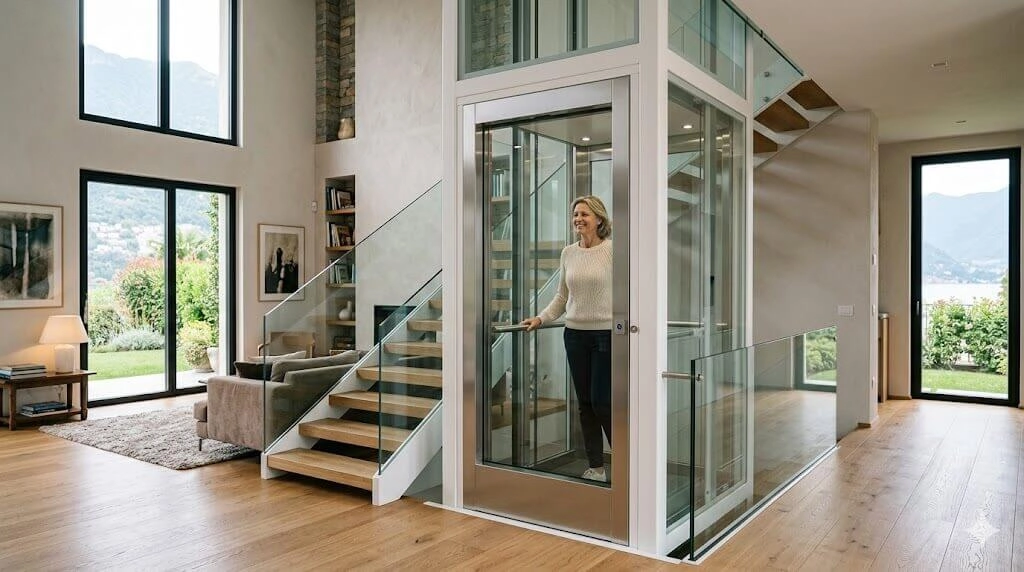

![How an Elevator for Home Can Increase Your Property Value by 10% [2026 Case Study] - SOLKER](https://static.gooecloud.com/upload/img/GY076088693142/how-an-elevator-for-home-can-increase-your-property-value-by-10-2026-case-study.png?x-oss-process=image/format,webp/quality,Q_100 "How-an-Elevator-for-Home-Can-Increase-Your-Property-Value-by-10%-[2026-Case-Study] - SOLKER")
Product
How long is the production date required?
Under normal circumstances, the production time is 35 to 45 days.
Can it be customized as required?
Yes.
Customize
How does the customization process work?
Our design team will guide you through the steps: style selection, material choice, and 3D visualization before confirmation.
Can I customize the elevator to match my home style?
Absolutely. We offer multiple cabin styles, materials, and finishes to suit modern, classic, or minimalist interiors.
Do I need architectural drawings to start customization?
Not required initially. We can start with basic dimensions or photos and assist with full planning.
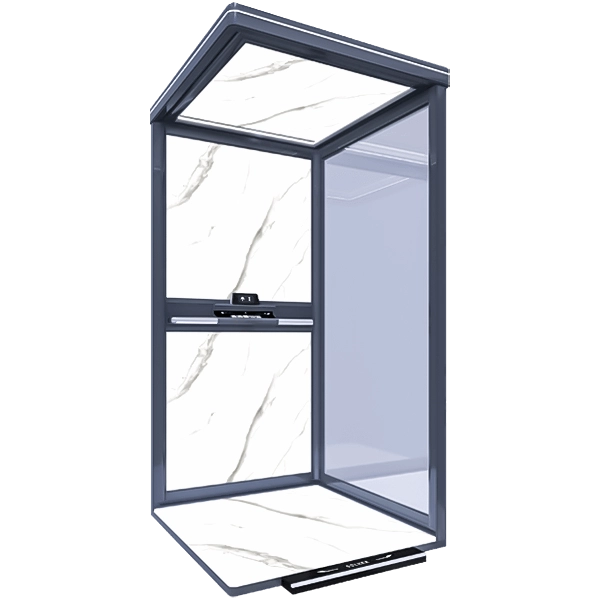
The Model-S is a home villa elevator in the Italian minimalist style. It features the most advanced elevator technology and has comprehensive safety protection measures. It is the most reliable guarantee for your passage in villa homes.
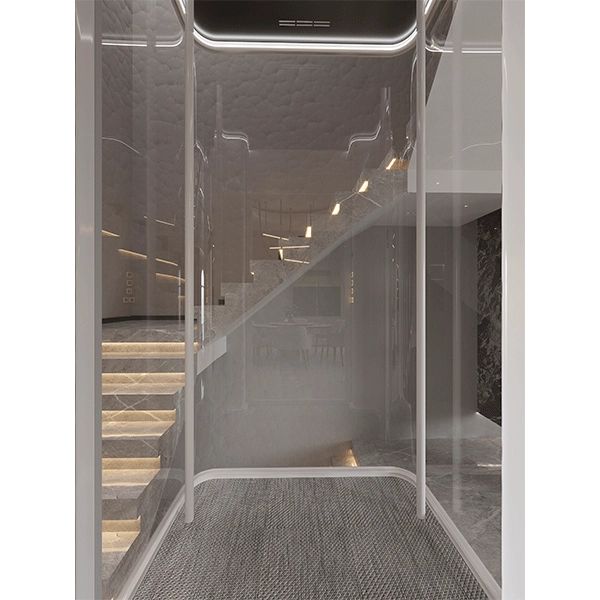
The Model-Mini is a home villa elevator in the Italian minimalist style. It features the most advanced elevator technology and has comprehensive safety protection measures. It is the most reliable guarantee for your passage in villa homes
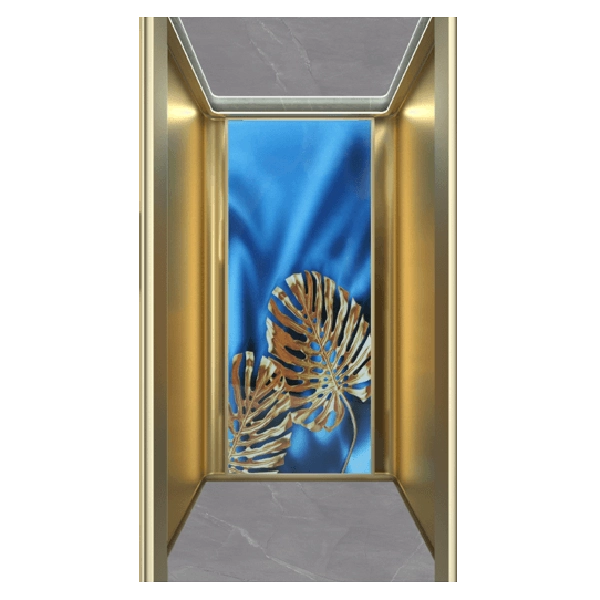
The Model-Q is a home villa elevator in the Italian minimalist style. It features the most advanced elevator technology and has comprehensive safety protection measures. It is the most reliable guarantee for your passage in villa homes.
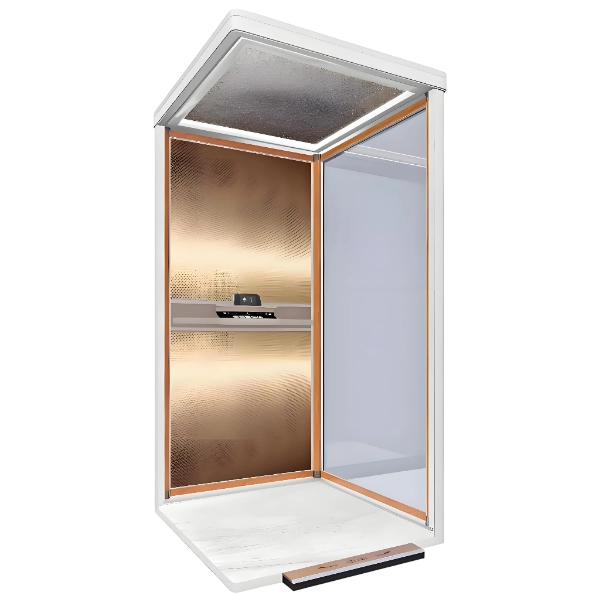
The Model A is a home villa elevator in the Italian minimalist style. It features the most advanced elevator technology and has comprehensive safety protection measures. It is the most reliable guarantee for your passage in villa homes.
Looking for custom villa lifts manufacturing solutions?
We provide full-service OEM & ODM solutions—from concept to delivery.
Design, prototyping, production, and shipping—all in one place.
Fill out the form below for a free quote or consultation.
👉 Contact us today to start an exclusive customized partnership.
📦 Get product catalogs and wholesale prices.
🔧 Submit your design requirements for 1-to-1 exclusive matchmaking.
🌍 Become our global distribution partner.
Rest assured that your privacy is important to us, and all information provided will be handled with the utmost confidentiality.
Let's get in touch
Email: lin@solkerelevator.com
Tel: +86 133 1668 7566
Address: Floor 1, Building D, Nanxin Industry International, Nancheng District, Dongguan, China.
 Taiwan, China
 No. 21, Lane 38, 206 Yingtai Road, Yingge District, New Taipei City
 +886 0975-299-830
 United Arab Emirates
Capital Mall, Abu Dhabi, United Arab Emirates, 3rd floor, Luxera elevator +971 52 541 4685 Ceo@maharacare.com
 Melbourne, Australia
 19/12 Natalia Av, Oakleigh South, VIC 3167
+61 1300 771 86 sales@goldenhomelifts.com.au
Sydney, Australia
U28/323 Chisholm Road, Auburn, NSW 2144
+61 1300 771 86 sales@goldenhomelifts.com.au
SOLKER
SOLKER