


What are the compliance standards for exterior residential elevators?
- Comprehensive Guide to Exterior Home Elevators: Compliance Standards and Essential Considerations
- 1. What Are the Compliance Standards for Exterior Residential Elevators?
- 2. How Do I Ensure My Home Elevator Meets All Regulations?
- 3. What Are the Key Safety Features to Consider in an Exterior Home Elevator?
- 4. How Do Home Lift Regulations Affect Insurance Coverage?
- 5. What Are the Maintenance Requirements for Exterior Home Elevators?
- 6. How Do I Choose the Right Exterior Home Elevator for My Villa?
- 7. What Are the Benefits of Installing an Exterior Home Elevator in My Villa?
- 8. How Does SOLKER Ensure Its Villa Elevators Meet the Highest Standards?
Comprehensive Guide to Exterior Home Elevators: Compliance Standards and Essential Considerations
When considering the addition of an exterior home elevator to your villa, it's crucial to understand the compliance standards and essential factors that ensure safety, functionality, and value. This guide addresses common questions and provides expert insights to assist you in making informed decisions.
1. What Are the Compliance Standards for Exterior Residential Elevators?
Exterior residential elevators must adhere to specific safety codes and standards to ensure safe operation. The primary standards include:
ASME A17.1/CSA B44: This code outlines safety requirements for elevators and escalators, including design, construction, installation, operation, inspection, testing, maintenance, alteration, and repair.
International Building Code (IBC): Provides guidelines on structural integrity, space requirements, and accessibility features for residential elevators.
Americans with Disabilities Act (ADA): Ensures that elevators are accessible to individuals with disabilities, specifying requirements for door sizes, control heights, and other features. ((https://www.solkerelevator.com/best-home-elevator-safety-accessibility.html))
Local and State Regulations: Compliance with local building codes and regulations is essential, as requirements can vary by jurisdiction.
2. How Do I Ensure My Home Elevator Meets All Regulations?
To ensure compliance with all relevant regulations:
Hire Certified Professionals: Engage certified elevator contractors experienced in residential installations to guarantee adherence to safety standards.
Obtain Necessary Permits: Secure all required permits and approvals from local building authorities before installation.
Conduct Regular Inspections: Schedule periodic inspections to maintain compliance and ensure ongoing safety.
3. What Are the Key Safety Features to Consider in an Exterior Home Elevator?
Essential safety features include:
Door Interlocks: Prevent elevator operation when doors are open, ensuring passenger safety.
Emergency Communication Systems: Provide a means to communicate with emergency services in case of a malfunction. ((https://www.solkerelevator.com/best-home-elevator-safety-accessibility.html))
Overspeed Governors: Detect and prevent excessive elevator speeds, reducing the risk of accidents. ((https://www.solkerelevator.com/best-home-elevator-safety-accessibility.html))
Non-Slip Flooring: Enhances traction and reduces the risk of slips and falls. ((https://www.solkerelevator.com/best-home-elevator-safety-accessibility.html))
4. How Do Home Lift Regulations Affect Insurance Coverage?
Compliance with home lift regulations can positively impact insurance coverage by:
Facilitating Coverage Approval: Insurance companies often require proof of compliance to mitigate risks associated with lift accidents.
Potentially Lowering Premiums: Elevators that meet safety standards may qualify for reduced insurance premiums.
5. What Are the Maintenance Requirements for Exterior Home Elevators?
Regular maintenance is vital for safe and reliable operation:
Scheduled Inspections: Conduct inspections every 3–6 months, with annual comprehensive evaluations. ((https://www.solkerelevator.com/best-home-elevator-safety-accessibility.html))
Certified Technicians: Utilize certified technicians for maintenance to ensure compliance with safety standards. ((https://www.solkerelevator.com/best-home-elevator-safety-accessibility.html))
Prompt Repairs: Address any issues immediately to prevent potential hazards.
6. How Do I Choose the Right Exterior Home Elevator for My Villa?
Consider the following factors:
Building Geometry: Assess the available space and structural integrity to determine the suitable elevator type. ((https://www.solkerelevator.com/best-home-elevator-safety-accessibility.html))
Aesthetics: Select a design that complements your villa's architecture.
Capacity Needs: Ensure the elevator meets your capacity requirements.
Budget: Evaluate the total cost, including installation and maintenance.
7. What Are the Benefits of Installing an Exterior Home Elevator in My Villa?
Installing an exterior home elevator offers several advantages:
Enhanced Accessibility: Improves mobility for individuals with disabilities or mobility challenges.
Increased Property Value: Adds a luxury feature that can enhance the resale value of your villa.
Convenience: Facilitates easy movement between floors, especially for transporting heavy items.
8. How Does SOLKER Ensure Its Villa Elevators Meet the Highest Standards?
SOLKER combines two decades of R&D and manufacturing experience, factory testing, customization services, and full lifecycle maintenance. SOLKER focuses on blending safety, refined aesthetics, and tailored functionality for luxury villas. ((https://www.solkerelevator.com/best-home-elevator-safety-accessibility.html))
By considering these factors and ensuring compliance with relevant standards, you can make an informed decision when selecting an exterior home elevator for your villa, enhancing both its functionality and value.
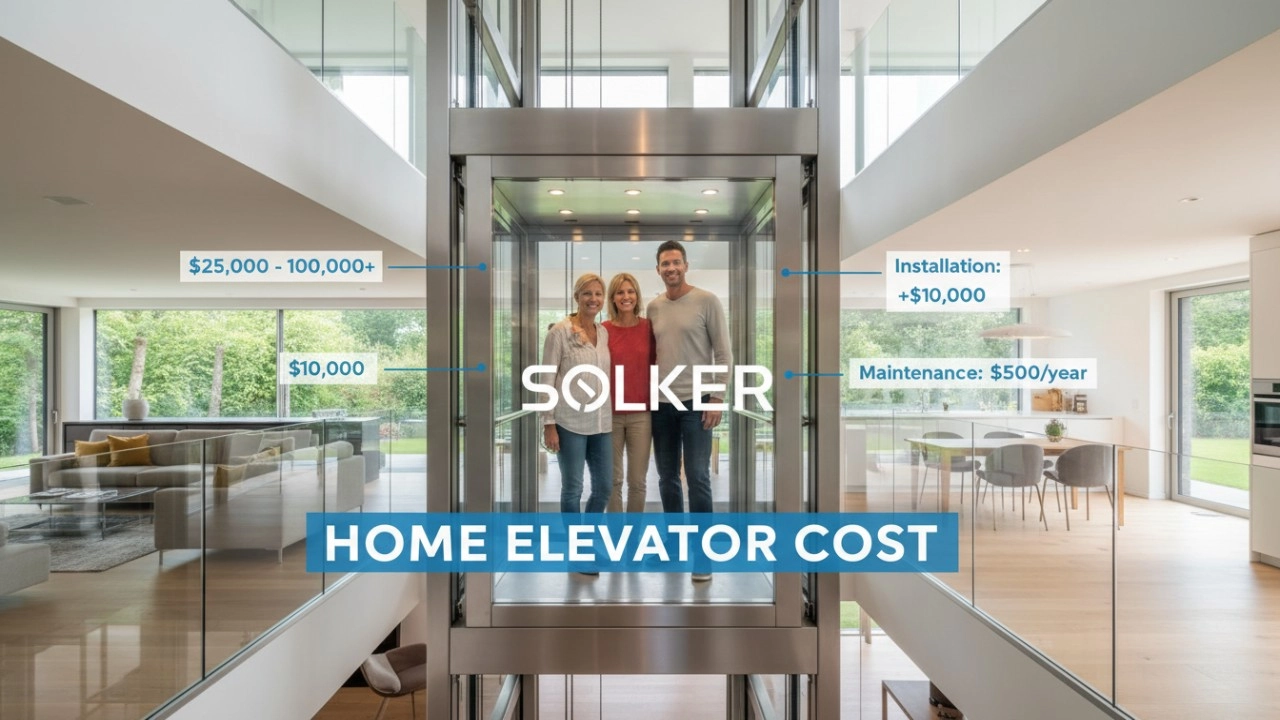
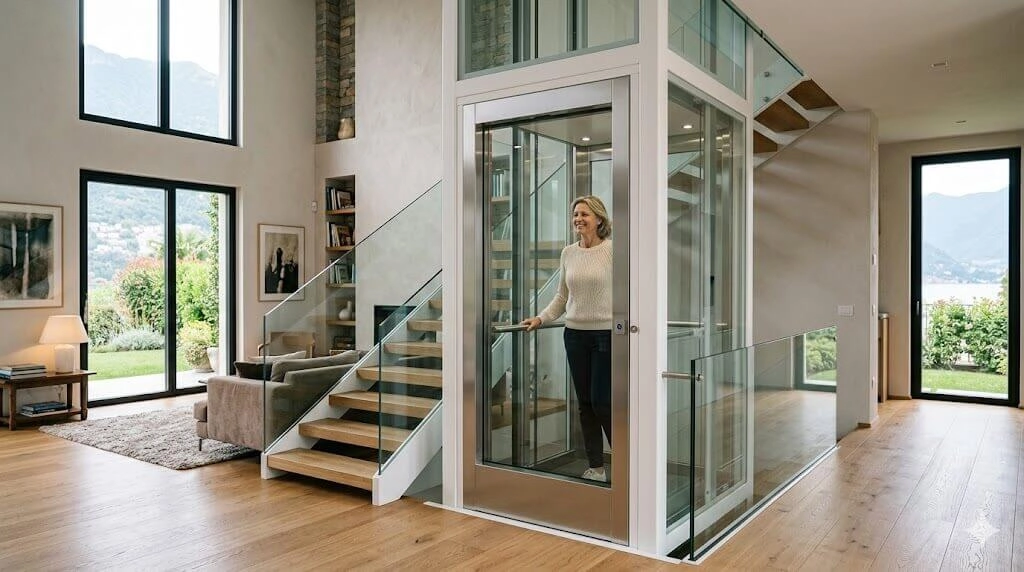

![How an Elevator for Home Can Increase Your Property Value by 10% [2026 Case Study] - SOLKER](https://static.gooecloud.com/upload/img/GY076088693142/how-an-elevator-for-home-can-increase-your-property-value-by-10-2026-case-study.png?x-oss-process=image/format,webp/quality,Q_100 "How-an-Elevator-for-Home-Can-Increase-Your-Property-Value-by-10%-[2026-Case-Study] - SOLKER")
Product
Can it be customized as required?
Yes.
Customize
Can I choose specific materials or colors for the cabin?
Yes. We offer a wide range of premium materials and finishes — from stone to wood to glass.
How does the customization process work?
Our design team will guide you through the steps: style selection, material choice, and 3D visualization before confirmation.
Can the elevator design be matched to my home's architecture?
Absolutely. Our designers tailor each cabin to complement your interior layout and style.
Is customization available for both indoor and outdoor elevators?
Yes. All custom options apply to indoor and weatherproof outdoor models.
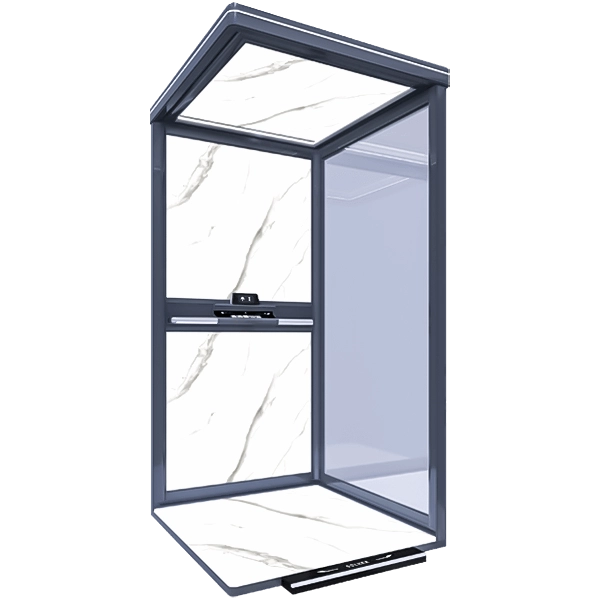
The Model-S is a home villa elevator in the Italian minimalist style. It features the most advanced elevator technology and has comprehensive safety protection measures. It is the most reliable guarantee for your passage in villa homes.
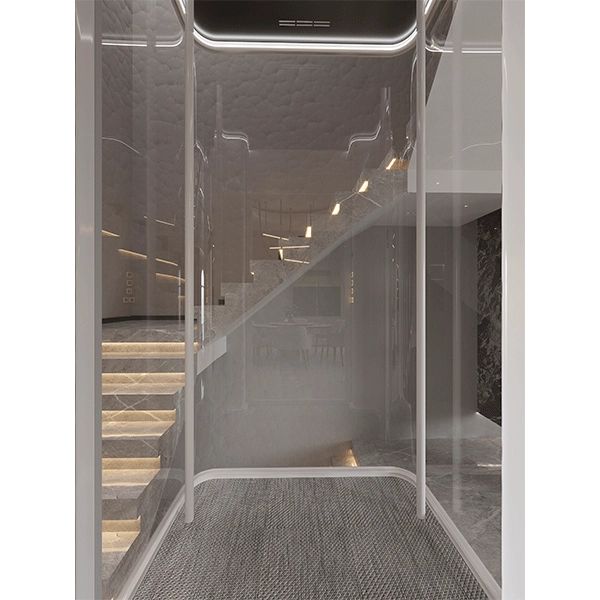
The Model-Mini is a home villa elevator in the Italian minimalist style. It features the most advanced elevator technology and has comprehensive safety protection measures. It is the most reliable guarantee for your passage in villa homes
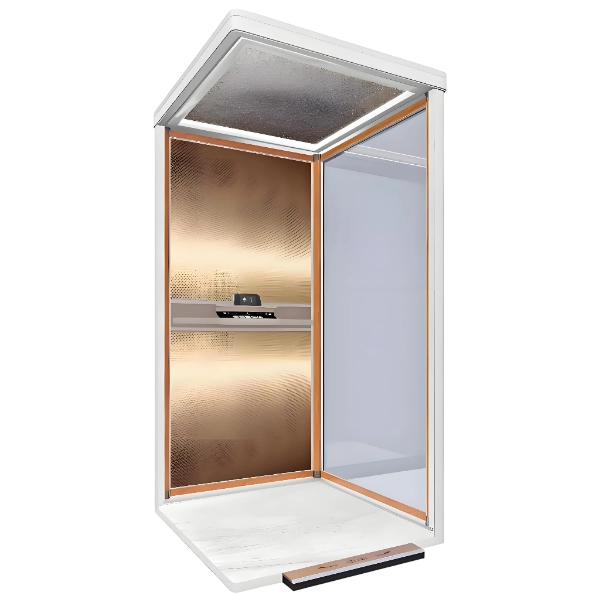
The Model A is a home villa elevator in the Italian minimalist style. It features the most advanced elevator technology and has comprehensive safety protection measures. It is the most reliable guarantee for your passage in villa homes.
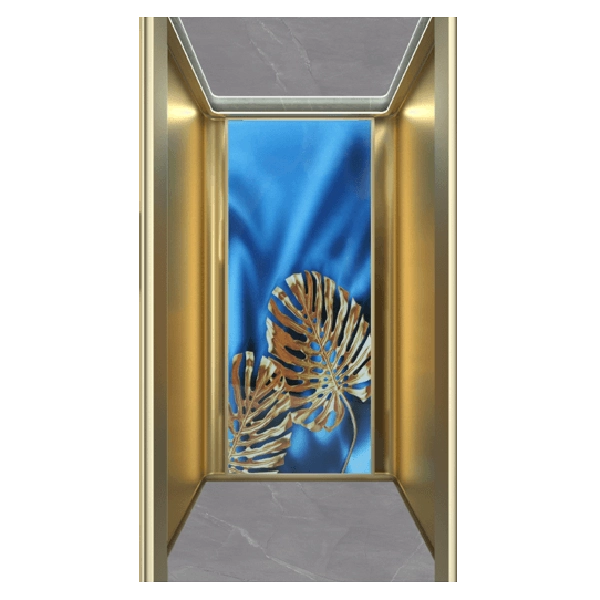
The Model-Q is a home villa elevator in the Italian minimalist style. It features the most advanced elevator technology and has comprehensive safety protection measures. It is the most reliable guarantee for your passage in villa homes.
Looking for custom villa lifts manufacturing solutions?
We provide full-service OEM & ODM solutions—from concept to delivery.
Design, prototyping, production, and shipping—all in one place.
Fill out the form below for a free quote or consultation.
👉 Contact us today to start an exclusive customized partnership.
📦 Get product catalogs and wholesale prices.
🔧 Submit your design requirements for 1-to-1 exclusive matchmaking.
🌍 Become our global distribution partner.
Rest assured that your privacy is important to us, and all information provided will be handled with the utmost confidentiality.
Let's get in touch
Email: lin@solkerelevator.com
Tel: +86 133 1668 7566
Address: Floor 1, Building D, Nanxin Industry International, Nancheng District, Dongguan, China.
 Taiwan, China
 No. 21, Lane 38, 206 Yingtai Road, Yingge District, New Taipei City
 +886 0975-299-830
 United Arab Emirates
Capital Mall, Abu Dhabi, United Arab Emirates, 3rd floor, Luxera elevator +971 52 541 4685 Ceo@maharacare.com
 Melbourne, Australia
 19/12 Natalia Av, Oakleigh South, VIC 3167
+61 1300 771 86 sales@goldenhomelifts.com.au
Sydney, Australia
U28/323 Chisholm Road, Auburn, NSW 2144
+61 1300 771 86 sales@goldenhomelifts.com.au
SOLKER
SOLKER